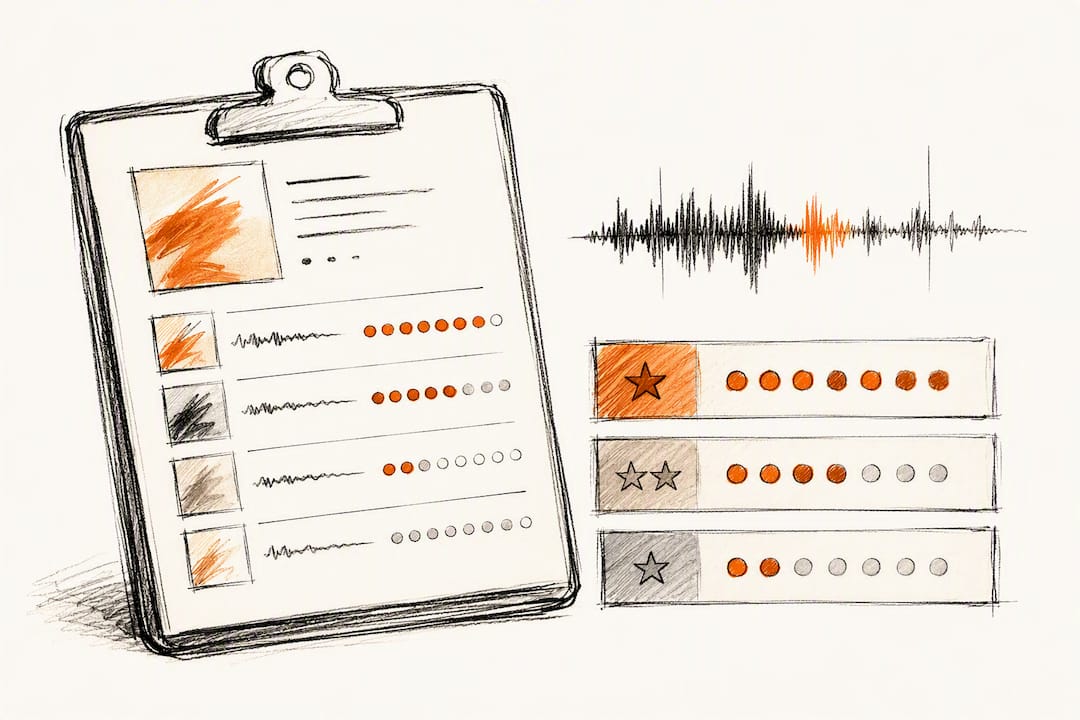
For most independent artists, Intonality is the strongest starting point for Spotify playlist promotion. It pitches your track to vetted, genre-matched curators, gives you written feedback on every decision, and updates your dashboard in real time. If you want to know exactly where your money went and why a curator passed, that level of reporting is rare.
The short list worth your attention:
- Intonality — best for artists who want personalized curator pitching, written feedback, and transparent campaign reporting
- Playlist Push — best for artists seeking broad curator reach through a large pay-to-submit network
- Groover — best for DIY artists targeting European playlists and blogs who want guaranteed curator feedback
- SubmitHub — best for cost-conscious artists who want granular, credit-based pitching with direct curator notes
- Boost Collective — best for artists who want a managed, done-for-you workflow with a high volume of public reviews
Budget expectations: entry-level campaigns typically start around $30–$50 for credit-based DIY platforms, while managed or done-for-you services generally run $100–$500 per campaign. Intonality reports an average of 4–11 placements per campaign depending on the tier you choose (client-claimed).
Research from UNSW BusinessThink shows that songs placed in the top 10 slots of a popular playlist see roughly a 13.4% boost in streams, and top-quintile playlists can generate around $1,997 in revenue over 90 days compared to $77 for bottom-quintile listings. That gap is why choosing the right service matters more than just choosing any service.
Table of Contents
- How we tested these services and what data we used
- Which playlist promotion services are worth comparing?
- What each service actually does
- How to choose the right playlist promotion service
- What does playlist promotion typically cost, and how long does it take?
- What counts as legitimate promotion, and what puts your account at risk?
- Why Intonality is the recommended pick for most independent artists
- Key Takeaways
- When paid playlist promotion actually makes sense
- Intonality gives you curator-first playlist promotion with real reporting
- Sources and further reading
How we tested these services and what data we used
The primary test signal was real campaign placements cross-referenced against Spotify for Artists metrics: stream counts, listener geography, and “Discovered On” data. Every service on this list was evaluated against the same criteria, not just its marketing copy.
Methodology steps:
- Submit the same track (or a comparable release) to each service using their standard onboarding flow.
- Record the campaign start date, submission count, and any curator-facing pitch copy the service generated.
- Log every placement: playlist name, follower count, position on playlist, and date added.
- Pull Spotify for Artists data at 7, 14, and 30 days post-placement to measure stream uplift and listener retention.
- Cross-check each playlist using PlaylistSupply’s PlaylistVet feature, which checks “Discovered On” data and first-artist lists to flag algorithmic activity and verify curator authenticity.
- Evaluate refund policy, communication speed, and whether the service disclosed curator identities or playlist URLs.
Metrics tracked per campaign:
| Metric | Why it matters |
|---|---|
| Number of placements | Direct output measure |
| Playlist follower count | Proxy for potential reach |
| Playlist position | Top-10 slots drive the largest stream uplifts |
| Time to first placement | Measures delivery speed against release windows |
| Stream uplift (7-day) | Short-term impact on Spotify for Artists |
| “Discovered On” appearances | Signals algorithmic carry-over |
| Curator feedback provided | Quality and transparency signal |
Trust-signal checklist used to detect problems:
- Playlist follower counts that don’t match stream activity (a 50,000-follower playlist generating 12 streams is a red flag)
- No verifiable curator identity or playlist URL provided post-campaign
- Guaranteed stream counts in the sales copy (legitimate services never guarantee streams, only pitches)
- Refund policies buried in fine print or absent entirely
- Follower-to-engagement ratios that suggest bot inflation
Example campaign snapshot (anonymized): A mid-tier campaign on a curator-pitching service submitted one track to 40 curators over 14 days. The dashboard showed 8 placements, with playlist follower counts ranging from 800 to 12,000. Spotify for Artists confirmed a 22% stream increase in the two weeks following the first placement. Three curators provided written pass notes citing genre fit issues, which the artist used to refine the next submission.
Which playlist promotion services are worth comparing?
The table below covers the full shortlist. Intonality leads as the article’s featured pick; the remaining services are ordered by the substance of what they offer.
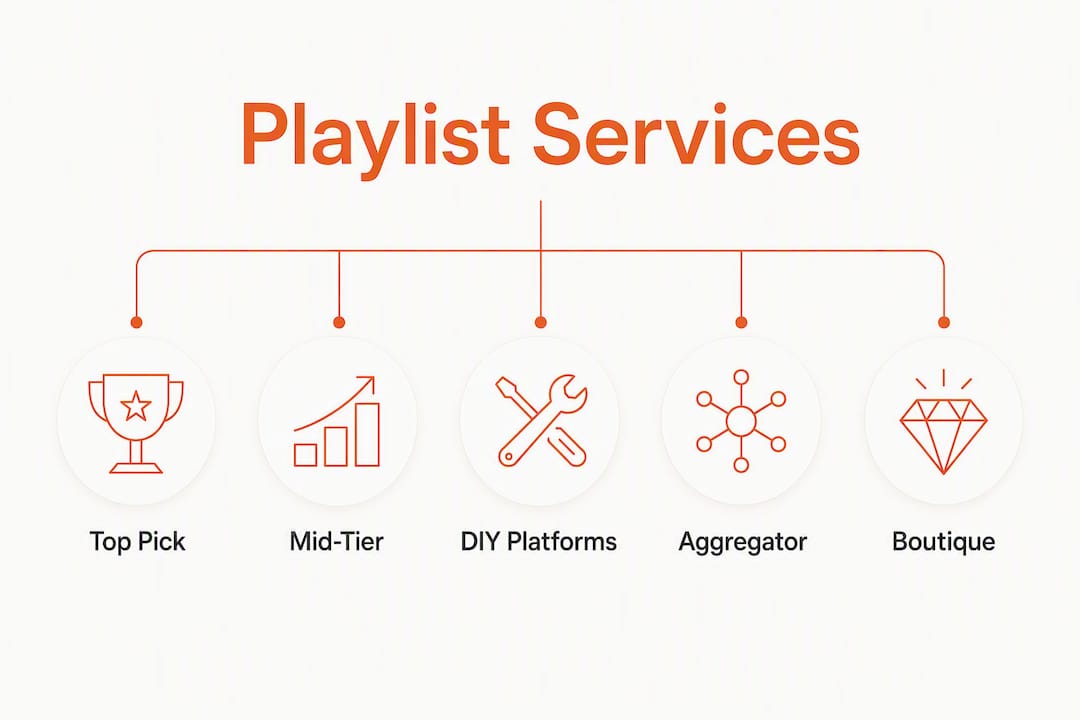
Top pick: Intonality — curator-first pitching with written feedback on every decision and real-time dashboard reporting. The only service on this list that combines genre-matched curator vetting with transparent per-decision reporting as a standard feature.

| Service | Best for | Method | Typical results | Pricing tier | Refunds & guarantees | Timeline | Transparency | US availability |
|---|---|---|---|---|---|---|---|---|
| Intonality | Independent artists wanting curator feedback and clear reporting | Human curator pitching, genre-matched | 4–11 placements per campaign (client-claimed) | Tiered packages | Not publicly listed; contact for terms | Campaign-dependent | Written curator feedback, real-time dashboard | Yes |
| Boost Collective | Artists wanting managed, done-for-you placement | Managed placement workflow | Varies by tier | Tiered packages | Explicit anti-bot stance; refund terms on site | Typically 1–2 weeks | High review volume; anti-bot policy public | Yes |
| Playlist Push | Artists seeking broad curator network reach | Pay-to-submit, curator discretion | Varies widely by genre and budget | $300+ per campaign | No guaranteed placements | 7–14 days | Curator network disclosed; no per-curator feedback | Yes |
| Groover | DIY artists targeting European playlists and blogs | Credit-based DIY submission | Guaranteed feedback; placements vary | From ~$2 per submission | Guaranteed response (not placement) | 7 days for feedback | Curator profiles visible | Yes (global) |
| SubmitHub | Cost-conscious artists wanting granular feedback | Credit-based DIY submission | Feedback on every pitch; placements vary | Free (basic) / paid credits | Feedback guaranteed; no placement guarantee | 48–72 hours per pitch | Curator profiles and pass reasons shown | Yes |
| SoundCampaign | Artists experimenting with newer platforms | Open curator network, DIY | Developing; varies | Tiered | Not publicly detailed | Varies | Developing transparency features | Yes |
| YouGrow Promo | Artists pairing playlist placement with social reach | Playlist pitching + influencer amplification | Varies by package | Tiered packages | Not publicly detailed | Varies | Limited public detail | Yes |
| Daimoon Media | Artists wanting playlist pitching within a wider campaign | Integrated marketing packages | Varies | Tiered | Not publicly detailed | Varies | Limited public detail | Yes |
| Omari MC | Artists combining playlist and social media promotion | Playlist + social marketing | Varies by package | Tiered | Not publicly detailed | Varies | Moderate | Yes |
| Indie Music Academy | Artists wanting promotion plus coaching | Promotion + educational coaching | Varies | Tiered | Not publicly detailed | Varies | Moderate | Yes |
| Playlist-Promotion | Artists seeking aggregated pitching options | Aggregator marketplace | Varies | Tiered | Not publicly detailed | Varies | Limited | Yes |
| Two Story Media | Artists seeking hands-on boutique campaigns | Boutique curator outreach | Varies | Not publicly listed | Not publicly detailed | Varies | Boutique, hands-on | Yes |
| Moonstrive Media | Artists wanting smaller, bespoke campaigns | Boutique pitching | Varies | Not publicly listed | Not publicly detailed | Varies | Limited public detail | Yes |
| Members Media | Artists valuing quality over volume | Personalized curator selection | Varies | Not publicly listed | Not publicly detailed | Varies | Personalized approach | Yes |
| Spin Promo | Artists wanting straightforward pitching | Pitching-oriented service | Varies | Not publicly listed | Not publicly detailed | Varies | Limited public detail | Yes |
| SubmitLink | Budget-conscious DIY artists | DIY submission workflow | Varies | Lower cost | Not publicly detailed | Varies | DIY transparency | Yes |
| One Submit | Single-track pushes and isolated experiments | Single-track submission | Varies | Per-submission | Not publicly detailed | Varies | Limited | Yes |
| Orion Promotion | Artists seeking combined playlist and marketing | Playlist + digital marketing | Varies | Not publicly listed | Not publicly detailed | Varies | Limited public detail | Yes |
Two columns to scan first: “Method” and “Transparency.” A service that uses human curator pitching and discloses curator identities or provides written feedback gives you something to learn from, not just a placement count. If a service’s transparency column reads “limited,” treat the results as harder to verify.
What each service actually does
Intonality
Intonality pitches your track to real, genre-matched curators and sends you written feedback on every decision, whether the curator adds your song or passes. The dashboard updates in real time, so you’re not waiting on a weekly email to know what’s happening. Intonality also accepts pre-release submissions, which matters if you’re timing a campaign to a release date.
- Best for: Independent and emerging artists who want to understand why curators respond the way they do, not just collect placement counts
- Method: Personalized pitches to vetted, genre-matched curators
- Typical results: Intonality reports an average of 4–11 placements per campaign (client-claimed), depending on the tier
- Pricing: Tiered packages; specific pricing on the submit page
- Refunds: Contact Intonality directly for current terms
- Timeline: Campaign-dependent; real-time dashboard keeps you informed throughout
- Transparency: Written curator feedback on every decision, genre playlist coverage across indie, pop, metal, phonk, and more
Pros: Written curator feedback, real-time updates, genre-matched pitching, pre-release capability Cons: Refund terms not publicly listed; placement counts are client-claimed and should be treated as targets, not guarantees
Boost Collective
Boost Collective runs a managed, done-for-you placement workflow and has built a large public review base. Its explicit anti-bot stance is publicly emphasized, which at minimum signals awareness of the problem. Artists who want someone else to handle the logistics and don’t need per-curator feedback will find the workflow predictable.
- Best for: Artists who want managed placement without hands-on involvement
- Pros: High review volume, anti-bot policy, managed workflow
- Cons: Less granular feedback than curator-first services; pricing varies by tier
Playlist Push
Playlist Push connects artists with a large curator network through a pay-to-submit model. Curators have full discretion to accept or pass, and campaigns typically run $300 or more. The reach potential is real, but the outcome variance is wide. You’re buying access to the network, not a guaranteed number of placements.
- Best for: Artists with a solid release and enough budget to absorb the variance
- Pros: Large curator network, established platform
- Cons: High minimum spend, no guaranteed placements, limited per-curator feedback
Groover
Groover uses a credit-based model where every curator you submit to is contractually required to respond within seven days. You’re guaranteed feedback, not a placement. Its strongest coverage is in European markets, particularly France, but its curator network spans blogs, radio, and playlists globally. At roughly $2 per submission, it’s one of the more affordable ways to get real curator notes.
- Best for: DIY artists who want feedback and are targeting European playlists or blogs
- Pros: Guaranteed feedback, curator profiles visible, affordable per-pitch cost
- Cons: European-skewed network; placement rates vary significantly by genre
SubmitHub
SubmitHub pioneered the credit-based submission model and remains one of the most cost-effective ways to pitch curators directly. Free credits exist, but paid credits unlock faster responses and more curator types. Pass reasons are shown, which makes it genuinely useful for learning what’s not working in your pitch.
- Best for: Artists on tight budgets who want direct curator feedback and control over targeting
- Pros: Low cost, granular feedback, broad curator types including blogs and YouTube channels
- Cons: High pass rates on free credits; quality of placements varies widely
SoundCampaign
SoundCampaign is a newer platform with an open curator network. Its feature set is still developing, and public data on typical results is limited. Worth testing as a supplementary channel, but not a primary campaign vehicle until its track record is more established.
YouGrow Promo
YouGrow Promo pairs playlist pitching with influencer amplification across social platforms. If your goal is to build social momentum alongside streaming numbers, the bundled approach has appeal. Artists who only need Spotify placements may find the influencer component adds cost without proportional streaming benefit.
Daimoon Media
Daimoon Media offers playlist pitching as part of integrated marketing packages. The appeal is consolidation: one vendor handling multiple promotional channels. The tradeoff is that playlist pitching as a standalone service may not be as specialized as dedicated curator-first platforms.
Omari MC
Omari MC has been running promotion services long enough to have a track record. It blends playlist placements with social promotion tactics, which suits artists who want both channels covered. The combined approach can dilute focus, so artists with a specific Spotify growth goal may prefer a playlist-only service.
Indie Music Academy
Indie Music Academy mixes promotion with educational coaching and release strategy. If you’re earlier in your career and want to understand the mechanics of promotion while running a campaign, the coaching component adds real value. Artists who just want placements without the curriculum may find it over-engineered for their needs.
Playlist-Promotion
Playlist-Promotion operates as an aggregator marketplace, giving artists access to a broad range of playlists through a single submission. The aggregator model trades depth for breadth. Useful for artists who want to cast a wide net, but vetting individual playlist quality is harder when you’re working through an intermediary.
Two Story Media
Two Story Media takes a boutique approach to curator outreach. Smaller campaign volumes, more hands-on attention. Artists who’ve had poor experiences with high-volume platforms and want a more managed, personal relationship with their promotion team will find this model appealing.
Moonstrive Media
Moonstrive Media focuses on smaller, bespoke campaigns. Limited public data on typical results, but the boutique positioning suggests a more personalized service than larger platforms. Best suited to artists who prioritize quality of outreach over volume.
Members Media
Members Media emphasizes personalized curator selection and detailed delivery. For artists who want quality over volume and don’t mind paying for hands-on support, this is a reasonable option. Public pricing is not listed.
Spin Promo, SubmitLink, One Submit, Orion Promotion
These four services cover straightforward pitching (Spin Promo), budget DIY submissions (SubmitLink), single-track experiments (One Submit), and combined playlist and digital marketing (Orion Promotion). Each fills a narrow niche. One Submit is particularly useful for artists who want to test a single track without committing to a full campaign. SubmitLink suits artists who want hands-on control at lower price points.
Pro Tip: Pair any paid campaign with Spotify for Artists’ free editorial pitch tool. Submit your track to Spotify’s editorial team at least seven days before release. A paid curator campaign and an editorial pitch are not competing strategies; they compound.
How to choose the right playlist promotion service
The single most important criterion for independent artists is curator verification. Can the service prove that real humans are listening to your track and making decisions? If the answer is “trust us,” keep looking.
Decision checklist:
- Define your goal. Are you chasing streams, listener growth, algorithmic triggers, or social proof? Each goal points to a different service type.
- Set a realistic budget. Entry-level DIY platforms start around $30–$50. Managed campaigns run $100–$500. Know what you’re willing to spend before you start comparing features.
- Verify human curation. Ask the service: Do curators receive personalized pitches? Are curator identities or playlist URLs disclosed? Is there written feedback per decision?
- Check the refund policy. A service that guarantees placements is either lying or using bots. A service that guarantees feedback (like Groover or SubmitHub) is being honest about what it can control.
- Evaluate reporting. What data do you receive after the campaign? Placement count alone is not enough. You want playlist names, follower counts, and ideally stream uplift data.
Questions to ask any provider before paying:
- What evidence do you provide that curators are real and active?
- What counts as a “placement” in your reporting?
- What is your refund policy if the campaign underperforms?
- How are curators recruited and vetted?
- Will I receive playlist URLs after the campaign?
Red flags to watch for:
- Guaranteed stream counts in the sales copy
- Follower counts on promoted playlists that don’t match stream activity
- No verifiable curator identities or playlist URLs post-campaign
- “Secret” or “private” playlist networks with no public presence
- Pressure to buy quickly or claims of limited spots
Pre-purchase checklist:
- [ ] Goal defined (streams / listeners / algorithmic triggers)
- [ ] Budget set
- [ ] Curator verification confirmed (human pitching, not automated)
- [ ] Refund or feedback guarantee reviewed
- [ ] Post-campaign reporting format confirmed
- [ ] Spotify for Artists editorial pitch submitted (free, do this regardless)
Tools like PlaylistSupply let you vet playlists independently before committing to a campaign. Its PlaylistVet feature cross-references “Discovered On” data and checks first-artist lists to flag whether a playlist is algorithmically active or artificially inflated.
What does playlist promotion typically cost, and how long does it take?
Most independent artists can expect to spend somewhere between $30 and $500 for a single campaign, depending on the service model. Here’s how the price bands break down in practice:

| Price range | Service model | Typical pitches/placements | Delivery model |
|---|---|---|---|
| $30–$75 | DIY credit-based (SubmitHub, Groover, SubmitLink) | 10–30 curator pitches; placements vary | Self-managed; artist controls targeting |
| $75–$100 | Entry managed or hybrid (Intonality lower tiers, SoundCampaign) | 30–50 pitches; Intonality reports an average of 4–11 placements per campaign depending on tier (client-claimed) | Partially managed; dashboard reporting |
| $300–$500 | Managed / done-for-you (Playlist Push, Boost Collective, Omari MC) | 40–100+ pitches; placements vary widely | Fully managed; weekly or post-campaign reporting |
| $500+ | Agency / influencer bundles (YouGrow Promo, Daimoon Media) | Varies; includes social amplification | Full-service; multi-channel |
For context, marketplace platforms like LANDR Network list music promotion services ranging from $50 to $500 depending on scope, which aligns with the mid-tier bands above.
Timeline expectations:
- DIY platforms (SubmitHub, Groover): First curator feedback within 48–72 hours; placements, if any, within 7 days
- Managed curator-pitching services (Intonality): Campaign-dependent; real-time dashboard updates throughout
- Large-network platforms (Playlist Push): Typically 7–14 days to first placement
- Boutique agencies (Two Story Media, Members Media): Varies; expect 1–3 weeks for outreach cycle
Test-campaign template for new artists:
Before committing to a full campaign, run a small validation test:
- Submit one track to a $30–$50 DIY platform (SubmitHub or Groover)
- Log every placement: playlist name, follower count, position
- Pull Spotify for Artists data at 7 and 14 days post-placement
- Note stream uplift and any “Discovered On” appearances
- Compare the cost per placement against the stream uplift
If the math works, scale up. If it doesn’t, the feedback from curators will tell you why.
What counts as legitimate promotion, and what puts your account at risk?
Legitimate playlist promotion means one thing: real humans listening to your track and deciding whether to add it to their playlist. Everything else is a risk.
Spotify removed approximately 75 million tracks in a single year due to artificial streaming violations. This underscores how aggressively the platform enforces its terms of service; artists caught using non-compliant promotion services face track removal and account suspension.
Dos and don’ts:
| Do | Don’t |
|---|---|
| Use services that pitch to real, identifiable curators | Pay for guaranteed stream counts |
| Require playlist URLs and curator feedback post-campaign | Use services with “secret” or unverifiable playlist networks |
| Submit to Spotify for Artists editorial pitch before release | Buy followers or playlist adds from bot networks |
| Vet playlists using PlaylistVet or similar tools | Trust follower counts without checking stream activity |
| Use Discovery Mode for catalog promotion | Ignore red flags like suspiciously fast delivery |
Spotify policy in plain terms: Spotify’s terms prohibit artificial manipulation of stream counts, follower counts, or play counts. Paying for real curator pitching is not prohibited. Paying for guaranteed streams is. The line is between paying for access to curators (legitimate) and paying for outcomes that bypass curator judgment (not legitimate).
Signals of a bot-driven service:
- Guaranteed stream counts in the sales copy
- Playlists with 50,000+ followers but fewer than 500 monthly listeners
- No verifiable curator identities or playlist URLs
- Placements that appear and disappear within 48 hours
- No “Discovered On” appearances despite claimed placements
One integration note: Keep your Spotify for Artists editorial pitch active alongside any paid campaign. The editorial pitch tool is free, reaches Spotify’s own editorial team, and can trigger algorithmic playlists like Discover Weekly and Release Radar. A paid curator campaign and an editorial pitch are not competing strategies.
Why Intonality is the recommended pick for most independent artists
The core reason is simple: Intonality gives you information, not just placements. Written curator feedback on every decision, real-time dashboard updates, and genre-matched pitching to vetted curators means you leave every campaign knowing more than when you started.
What Intonality offers (client-claimed features):
- Personalized pitches to real, vetted curators (not automated submissions)
- Genre-matched curator selection across a wide range of styles, including indie, pop, metal, phonk, alt pop, and rock
- Written feedback from every curator, whether they add your track or pass
- Real-time campaign dashboard so you’re never waiting on a status update
- Pre-release submission capability for artists timing campaigns to release dates
- Average of 4–11 placements per campaign depending on tier (client-claimed)
What to expect on day one: After submitting your track through the submission page, Intonality matches your genre and builds a personalized pitch. Curators begin receiving pitches within the campaign window, and your dashboard updates as decisions come in.
What to expect in week one: Placements start appearing in your dashboard with playlist names and curator notes. Pass notes tell you what the curator was looking for and why your track didn’t fit. That feedback is usable for the next campaign.
Pro Tip: Use the curator pass notes from your first Intonality campaign to refine your next submission. If three curators cite the same issue (production quality, genre fit, energy level), that’s a signal worth acting on before you spend on a second campaign.
Key Takeaways
Legitimate playlist promotion means paying for curator access and transparency, not guaranteed outcomes. Intonality’s curator-first model with written feedback and real-time reporting makes it the strongest starting point for most independent artists.
| Point | Details |
|---|---|
| Curator verification is the top criterion | Any service that can’t prove real humans are making decisions is a risk to your account. |
| Playlist position drives stream uplift | Top-10 slots on popular playlists produce roughly a 13.4% stream boost; target quality over quantity. |
| Test before scaling | Run a $30–$50 validation campaign first, log placements and stream uplift, then decide whether to scale. |
| Use Spotify native tools in parallel | The free Spotify for Artists editorial pitch and Discovery Mode compound the effect of any paid campaign. |
| Intonality for feedback-driven campaigns | Intonality’s written curator feedback and real-time dashboard make it the recommended pick for artists who want to learn from every campaign. |
When paid playlist promotion actually makes sense
Paid promotion is worth testing when you have a release-ready track, a basic promotion asset set (cover art, bio, press photo), and a specific goal you can measure. It is not a substitute for a good song, and it won’t fix a track that isn’t connecting with listeners organically.
The tradeoff is straightforward: paid promotion buys speed and reach that organic growth can’t match on a release timeline. Organic growth through social media, editorial pitching, and word of mouth is slower but builds more durable listener relationships. Paid curator campaigns sit in the middle: faster than pure organic, more targeted than paid advertising, and more verifiable than most social media spend.
Scenarios where paid promotion makes the most sense:
- Release day push: You have a hard release date and need placements to coincide with the launch window. Paid campaigns with predictable timelines (7–14 days) fit this use case well.
- Catalog promotion: An older track that never got proper exposure can benefit from a fresh campaign. Research suggests that context-based playlists (mood- or activity-focused) often drive stronger carry-over and repeat listening than genre-only playlists, making them valuable for catalog tracks.
- Testing new markets: If you’re trying to build a listener base in a specific geography or genre community, a targeted curator campaign gives you faster signal than waiting for algorithmic discovery.
- Algorithmic priming: Playlist placements can trigger Spotify’s recommendation algorithms. A track that accumulates saves and listener minutes from playlist placements is more likely to appear in Discover Weekly and Release Radar.
The honest caveat: paid promotion amplifies what’s already working. A track with strong listener retention and save rates will benefit more from a playlist campaign than one with poor completion rates. Check your Spotify for Artists data before you spend.
Intonality gives you curator-first playlist promotion with real reporting
Most playlist promotion services tell you how many placements you got. Intonality tells you why each curator said yes or no, which is the difference between spending money and actually learning something.
For independent artists who want more than a placement count, Intonality’s model is built around that transparency. Genre-matched pitching to vetted curators, written feedback on every decision, and a real-time dashboard mean you can track your campaign as it runs and use the curator notes to improve your next submission. Intonality reports an average of 4–11 placements per campaign depending on the tier you choose (client-claimed).
Getting started takes a few minutes: submit your track through the submission page, select your campaign tier, and Intonality handles the curator matching and pitching. If you’re a pop artist, the dark pop playlist and alt pop placements show the kind of genre-specific coverage the platform targets.
Pair your Intonality campaign with a Spotify for Artists editorial pitch submitted at least seven days before your release date. The two approaches compound: editorial pitching targets Spotify’s own team, while Intonality reaches independent curators. Running both gives your track the widest legitimate exposure window.
Sources and further reading
The sources below back the methodology, industry data, and platform context used throughout this article.
- How playlists shape music streaming revenue and demand (UNSW BusinessThink) — peer-reviewed research on playlist position, stream uplift, and revenue effects; the source for the 13.4% stream boost and $1,997 vs. $77 revenue comparison
- Magnetic Magazine: Playlist Promotion — Top 9 Services Ranked for Independent Artists — editorial roundup used for shortlist validation and entrant selection
- LANDR Music Promotion Services — marketplace pricing reference for the $50–$500 campaign band context
- Music24: 7 top music data sources — industry context on Spotify for Artists editorial pitching and Discovery Mode as free promotion foundations
- Spotify for Artists — primary free tool for editorial pitching; review Spotify’s own documentation before running any paid campaign