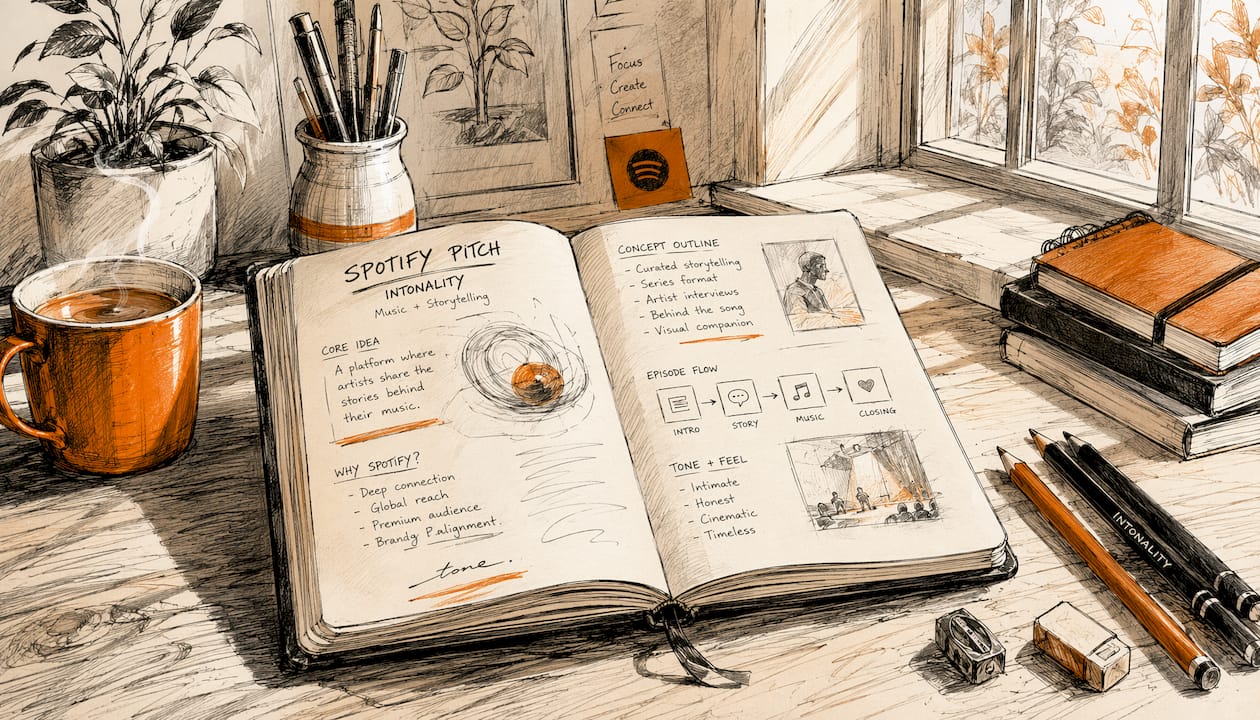
Use the Spotify for Artists “Submit a Song” tool to pitch one unreleased track per release at least 7 days before release. Fill every metadata field, write a focused pitch (maximum 500 characters), and submit before the window closes. That’s the entire process. Here’s what you need ready before you click submit:
- Verified Spotify for Artists account with Admin or Editor access
- Track uploaded through a distributor with a confirmed release date
- One song selected per release (you cannot pitch the full EP or album)
- All metadata completed: genre, mood, instrumentation, cultural tags, credits
- A pitch of up to 500 characters written and ready to paste
- Submission sent at least 7 days before release
Table of Contents
- What the Spotify editorial pitch rules actually require
- How to submit a song in Spotify for Artists, step by step
- Exactly what to write in your pitch and metadata
- When to submit and what to expect after you do
- How to spot scams and protect your account
- What to do if editorial doesn’t happen
- Key Takeaways
- What editors are actually looking for (and what most artists miss)
- Intonality pitches your music to curators who actually listen
- Useful sources and official references
What the Spotify editorial pitch rules actually require
Pitching is free and only available through Spotify for Artists. Anyone claiming you can pay for direct access to editorial editors is running a scam. That’s not a gray area.
The hard rules:
- One song per release. You pick one track. Editors may choose a different song from the release, but you only get one pitch slot.
- The track must be unreleased at submission. Once it’s live, editorial eligibility disappears.
- Submit at least 7 days before release to qualify for followers’ Release Radar. Spotify recommends earlier when possible, and more than a week gives editors a real review window.
- Pitch fields can be edited up to release day, but there’s no guarantee editors will see your changes after initial review.
- Label-only pitches exist. Certain fields are viewable or editable only by label teams or users with specific access levels. Know your account permissions before you start.
Spotify’s editorial pitching tool is designed to give every artist — major label or independent — a direct line to playlist editors. The catch is that the tool only works if you use it correctly and on time.
Pro Tip: Set your distributor release date at least 21 days out. This gives you buffer for distributor processing delays, which can eat into your pitch window before you even notice.
How to submit a song in Spotify for Artists, step by step
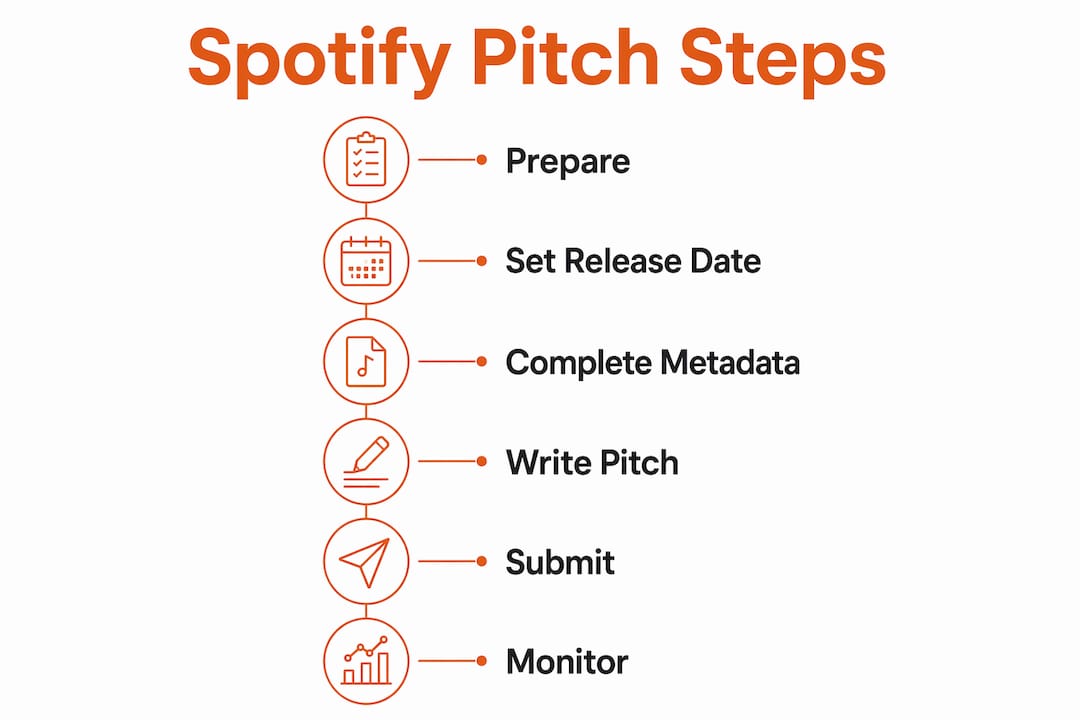
Before you touch the pitch form, your distributor must have the track uploaded and the release date confirmed. The “Submit for Consideration” button only appears when Spotify for Artists recognizes the release as upcoming. If you miss the window, that button disappears permanently for that release.
Distributor checklist before you open Spotify for Artists:
- ISRC and UPC assigned and confirmed
- Release date set at least 7 days out
- Artwork meets Spotify specs (3000×3000 px, JPG or PNG)
- Credits, featured artists, and collaborators listed accurately
- Genre and language metadata filled in at the distributor level
Submission steps:
- Log into Spotify for Artists and confirm you have Admin or Editor access.
- Go to Music → Upcoming and locate your release.
- Select the track you want to pitch.
- Click “Pitch for Playlists” (or “Submit for Consideration” depending on your dashboard version).
- Fill in every pitch field: genre, subgenre, mood, instrumentation, cultural context, whether it’s a cover, collaborators, tour dates, press, sync placements.
- Write your pitch in the text field (max 500 characters).
- Review and submit. You’ll receive a confirmation.
For music videos, the flow is separate. Look for the video section under your upcoming release rather than the audio track.
Pro Tip: Don’t wait until day seven. Distributor processing can take 2–5 business days, and if your UPC hasn’t populated in Spotify for Artists yet, you can’t access the pitch form at all.
Exactly what to write in your pitch and metadata
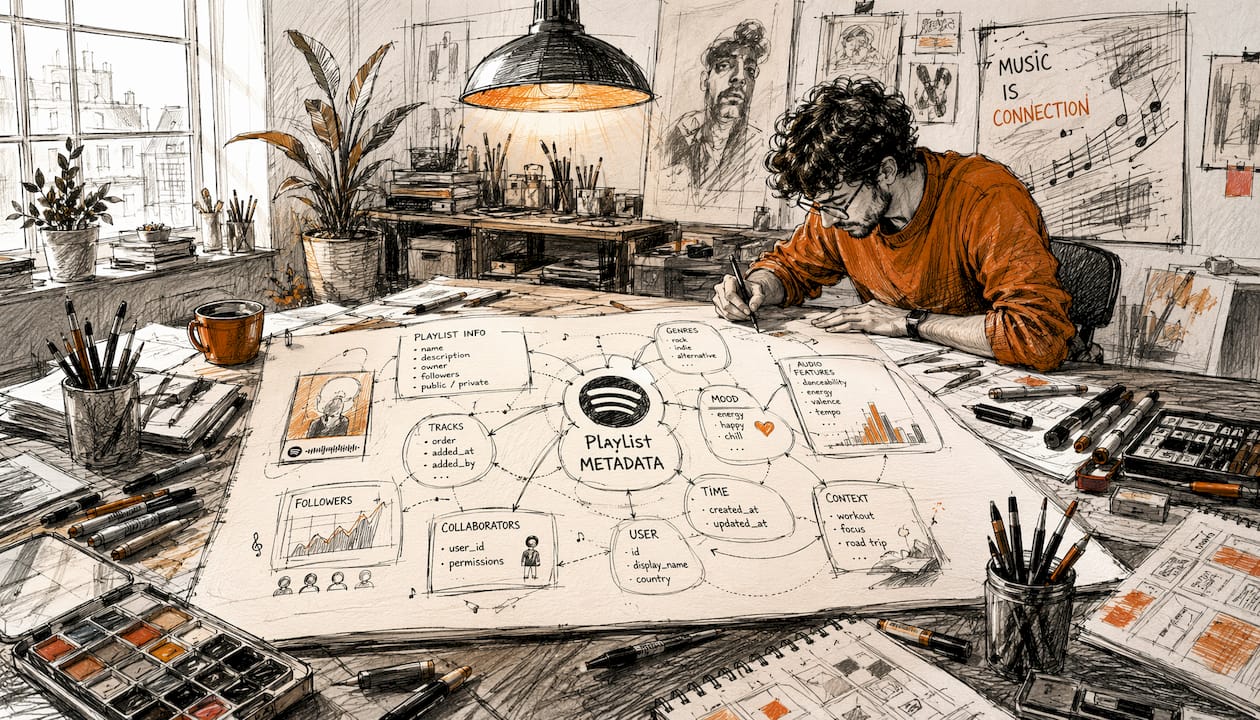
Spotify employs over 100 editors worldwide, and they use your submitted metadata to match your track to the right playlist teams. The metadata also feeds recommendation systems like Release Radar and Discover Weekly. A weak pitch doesn’t just miss editorial — it leaves algorithmic discovery on the table too.
Field-by-field priorities:
- Genre and subgenre: Be specific. “Indie folk” beats “alternative.” Editors route pitches to genre-specific teams.
- Mood: Pick 2–3 that genuinely fit. “Melancholic, introspective, late-night” tells a playlist editor exactly where it fits.
- Instrumentation: List the actual instruments. Acoustic guitar, upright bass, and brushed drums paint a picture that “organic” never does.
- Cultural tags: Relevant for regional or diaspora playlists. Don’t skip this if it applies.
- Collaborators and credits: Named features matter. A co-writer with playlist history can help routing.
- Tour dates, press, sync: These are credibility signals. A sync placement in a TV show or a feature in Consequence gives editors something to sell internally.
The 500-character pitch: how to use it
Lead with where the song fits (the playlist hook), add one credibility signal, close with a line that gives editors context. Think of it as internal PR, not a press release.
Strong pitch example (folk single):
Weak pitch (and why it fails):
No placement hook. No genre signal. No credibility. Editors can’t route it anywhere.
Copy-and-adapt template:
Keep it under 500 characters. Count before you paste.
When to submit and what to expect after you do
The minimum is 7 days before release. The safer window is 14–21 days — this is when editors are most likely to actually review your pitch rather than catch it at the last minute. Submit on day one of your distributor window opening.
What happens after you submit:
- Editors browse metadata and match tracks to playlist themes. They may pick your song, a different track from the release, or pass entirely.
- Your pitch metadata feeds Spotify’s recommendation systems regardless of editorial outcome. Even without a placement, a well-structured pitch can trigger Release Radar for your followers and improve Discover Weekly routing.
- Followers who have saved your music will see the release in their Release Radar if you submitted at least 7 days out.
Metrics to watch in Spotify for Artists after release:
| Metric | Where to find it | What it tells you |
|---|---|---|
| Playlist additions | Music → Song stats | Editorial and algorithmic placements |
| Saves | Audience tab | Listener intent and long-term retention |
| Stream completion rate | Song stats | Whether listeners finish the track |
| Follower growth | Audience tab | Release impact on your profile |
No placement doesn’t mean the pitch failed. Algorithmic uplift from a strong metadata submission can drive meaningful discovery on its own.
How to spot scams and protect your account
Pitching to editorial playlists is free. Any service charging you for editorial placement is fraudulent. Full stop.
Red flags to walk away from immediately:
- Guarantees of editorial playlist placement (no one outside Spotify can promise this)
- Offers to pay Spotify editors directly or claims of “direct access” to editorial staff
- Services that require mass streaming to inflate play counts
- Promises of placement on playlists with suspiciously high follower counts and low engagement
- No verifiable curator names, playlist URLs, or written feedback
Fake streams don’t just waste money. Spotify’s fraud detection can flag your account, suppress your music in recommendations, and damage your chances of future editorial consideration. The harm compounds.
Vetting a third-party playlist service:
- Ask for real playlist URLs you can verify on Spotify
- Check that playlists have genuine listener engagement (saves, followers, stream-to-follower ratio)
- Confirm the service provides written curator feedback, not just a placement report
- Verify the service does not promise editorial placement — only independent curator outreach
Pro Tip: Search the playlist name on Spotify directly. If the follower count is high but the playlist hasn’t been updated in months, it’s likely inactive or bot-inflated.
What to do if editorial doesn’t happen
Most pitches don’t land on editorial playlists. That’s the reality. Here’s what actually moves the needle in the first 21 days after release:
- Reach independent curators directly. Genre-matched independent playlists with real listeners often outperform editorial placements in terms of saves-per-stream. Use a vetted pitching service that provides written curator feedback and verifiable playlist URLs.
- Activate your email list before release. Pre-save campaigns drive Release Radar delivery to followers who might otherwise miss the release.
- Target press and blogs in your genre. A No Depression feature for a folk artist or a Pigeons & Planes mention for an indie act gives editors a credibility signal for your next pitch.
- Use social content to drive profile visits. Streams from social referrals signal genuine listener interest to Spotify’s algorithm.
- Document every campaign outcome. Track which playlists added you, what your save rate was, and what the pitch said. Your next pitch improves when you know what worked.
For the first 7 days: focus on pre-saves and email activation. Days 7–14: push social content and curator outreach. Days 14–21: review metrics and identify which playlists drove the highest save rates.
Key Takeaways
A compliant Spotify editorial pitch requires one unreleased track, full metadata, a concise pitch of up to 500 characters, and submission at least 7 days before release — ideally 14–21 days out.
| Point | Details |
|---|---|
| One track, unreleased only | You can only pitch one song per release, and it must not be live yet at submission. |
| Submit 14–21 days early | The 7-day minimum qualifies for Release Radar, but earlier gives editors a real review window. |
| Metadata drives discovery | Genre, mood, and instrumentation feed algorithmic playlists even when editorial passes. |
| Paid editorial claims are fraud | Editorial pitching is free through Spotify for Artists; any paid shortcut is a scam. |
| Intonality for curator outreach | When editorial doesn’t land, Intonality pitches your track to vetted, genre-matched curators with written feedback on every decision. |
What editors are actually looking for (and what most artists miss)
Most artists treat the pitch form like a bio submission. Editors don’t need your backstory — they need to know where your track fits and why it belongs there now.
Think like an editor for a moment. They’re managing dozens of playlists across specific moods and genres, fielding hundreds of pitches a week, and making decisions fast. A pitch that says “melancholic fingerpicked folk, fits ‘Late Night Folk’ and ‘Sad Indie,’ touring the Northeast in April” takes ten seconds to route. A pitch that says “this song is really personal to me” takes ten seconds to skip.
The artists who get placed consistently aren’t necessarily making better music. They’re giving editors a clear, confident answer to one question: where does this go? Fit plus context plus one credibility signal — that’s the formula. Track your outcomes after every release, compare what you wrote to what got placed, and iterate. The pitch is a skill, not a lottery ticket.
Intonality pitches your music to curators who actually listen
Getting past the Spotify editorial form is one piece of the puzzle. The other is reaching the independent curators who run genre-specific playlists with real, engaged listeners — and that’s where most artists stall without the right infrastructure.
Intonality sends personalized pitches to vetted, genre-matched curators on your behalf, with real-time campaign updates and written feedback from every curator decision. You see exactly who reviewed your track, what they said, and whether it was added. Campaigns average 4–11 playlist placements depending on the tier you choose. Whether you make indie folk, dark pop, or anything in between, Intonality matches your track to curators who already care about that sound. Submit your track and get your music in front of listeners who are genuinely looking for it.
Useful sources and official references
- Pitching music and videos to Spotify playlist editors — Spotify Support: official rules on eligibility, the one-song limit, and the unreleased requirement
- Share New Music for Playlist Consideration — Spotify for Artists blog: confirms pitching is free and paid editorial access is fraudulent
- Pitching music and videos to Spotify playlist editors (timing) — Spotify Support: the 7-day minimum and Release Radar eligibility
- Playlisting on Spotify — Spotify for Artists: how editors and recommendation systems use metadata
- How to Pitch to Playlists — Spotify for Artists video walkthrough
- How to Get Playlisted — Spotify for Artists: broader playlist strategy context
- How to Pitch to Spotify Editorial: The 2026 Indie Artist Guide — Artist Results: practical walkthrough including the disappearing submit button
- Spotify Editorial Playlist Pitch Guide 2026 — Interspace Music: 500-character pitch strategy and metadata best practices