One well-timed follow-up, sent after a short waiting period following your initial submission, is usually all it takes to move your track from a curator’s buried inbox to an actual listen. Send one short reminder. If you have something genuinely new to add, send one more. That’s the whole rule. Curators running active Spotify playlists deal with high inbox volume every week, and a polite nudge isn’t annoying — it’s a professionalism signal. Services like Intonality handle this layer for you through managed campaigns with real-time updates and written curator feedback, but whether you’re doing DIY outreach or running a campaign, the underlying etiquette is the same.
Table of Contents
- When should you follow up with curators?
- What should a follow-up message actually contain?
- What do curators actually want to see in a follow-up?
- How to track submissions so follow-ups are never accidental
- Ready-to-use follow-up scripts and subject lines
- Etiquette rules: what not to do when following up
- What to do when a curator actually replies
- Key Takeaways
- Why follow-up is a small habit with outsized returns
- Intonality handles curator outreach so you don’t have to
When should you follow up with curators?
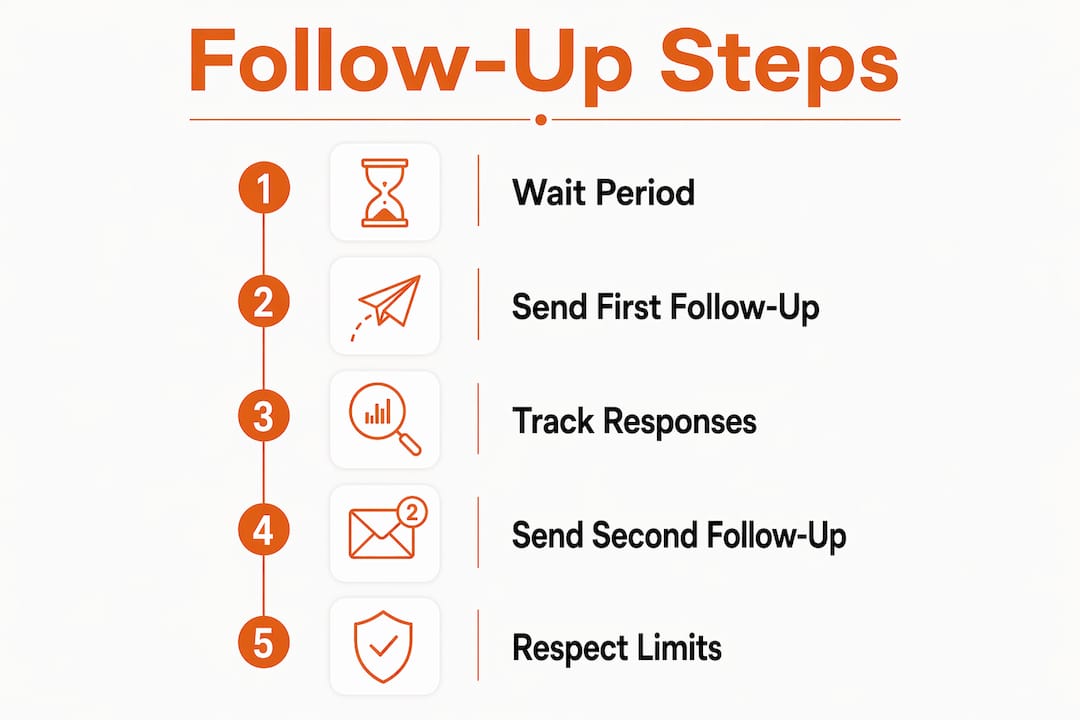
Wait about a week to two weeks after your first message before sending anything. Sooner reads as impatient. Much later, and the context is gone. That window is your sweet spot.
Cadence rules:
- First follow-up: 7–14 days after initial contact, one short message
- Second follow-up: another 7–14 days later, only if you have new information or a time-sensitive deadline
- After two unanswered attempts: close the thread gracefully and log it for future re-engagement
- Release deadline: mention it once, politely, in your first follow-up if the window is tight
Two follow-ups total is the ceiling. Beyond that, you’re not increasing your chances — you’re damaging your reputation with that curator for every future release.
If you’re running outreach across multiple curators simultaneously, calendar reminders are your best friend. Set a follow-up date the moment you send the first message so nothing slips and you never accidentally double-message the same person.
Pro Tip: If your track has a hard release date, put it in the subject line of your first follow-up — “Following up: [Track] releases [Date]” — so the curator can immediately assess urgency without opening the full message.
What should a follow-up message actually contain?

Keep it short. A curator who’s reviewing dozens of submissions a week doesn’t need a second pitch — they need a quick, clear reminder that your submission exists.
| Element | What to write |
|---|---|
| Subject line | Short, specific, references original: “Following up: [Track Title] — [Your Name]” |
| Opening line | One sentence: who you are, the track, when you first reached out |
| Core ask | Single call to action: confirm receipt, note if it’s a fit, or review the submission |
| Value-add (optional) | One sentence only: new press, a notable stream milestone, or a relevant placement |
| Closing | Brief thank-you + easy opt-out (“No worries if it’s not the right fit”) |
Length target: 5–8 sentences total. If you’re going longer, cut.
One thing to get right immediately: avoid apologetic openers like “Sorry to bother you.” That framing shrinks you. A calm, confident opener — “I wanted to follow up on my submission from [date]” — reads as professional, not pushy.
Pro Tip: Test two subject-line formats across your outreach batch: one that leads with the track title and one that leads with a genre hook or timely detail. Over time, you’ll see which format gets more replies from the curators you’re targeting.
What do curators actually want to see in a follow-up?
Follow-ups land better when they carry something new, not when they repeat the original pitch. A second message that says the same thing as the first is just noise.
Practical value-adds worth including:
- A streaming milestone that shows real traction (not vanity numbers — something proportional to your stage)
- A press blurb from a publication the curator would recognize or respect
- A recent playlist placement that signals genre fit
- A one-line production note that explains a creative hook in the track
- A performance tie-in that’s timely and relevant to the curator’s audience
When to send a value-add vs. a plain reminder:
- Send a plain reminder if nothing meaningful has changed since your first message.
- Send a value-add follow-up if you have genuinely new, relevant information — something that would make a curator think “this track is moving.”
- Skip the follow-up entirely if the only update you have is “I still really want this placement.”
Before you write, ask yourself three questions: Is this update relevant to the curator’s playlist focus? Is it recent enough to matter? Can I say it in one sentence? If the answer to any of those is no, wait until you have something better.
How to track submissions so follow-ups are never accidental
A simple tracker eliminates duplicate messages and keeps your outreach intentional. Google Sheets or Airtable both work fine — the tool matters less than the habit.
| Column | What to log |
|---|---|
| Curator name | Full name and platform handle |
| Contact method | Email, DM, submission form |
| Playlist focus | Genre, mood, or theme |
| Date first contacted | Exact date |
| Follow-up dates | Date of each follow-up sent |
| Response status | Positive / Neutral / Negative / No reply |
| Notes | Any feedback, requests, or context |
| Next follow-up date | Auto-calculated or manually set |
| Campaign/tier | If using a managed service like Intonality |
How to use response tags:
- Positive: move to an active placement log; send any requested assets within 24 hours
- Neutral: note what they asked for and set a two-week follow-up window
- Negative: log the feedback, thank them, and flag for future re-engagement after a new release
- No reply after two attempts: close the thread; shift to long-term engagement (follow their public work, comment on a playlist they’ve shared)
If you’re running a campaign through Intonality, the real-time updates and written curator feedback feed directly into this workflow. You’ll know which curators passed and why, so you can prioritize re-engagement on the ones who showed interest rather than blasting the whole list again.
Ready-to-use follow-up scripts and subject lines
Template 1 — Simple reminder:
Subject: Following up: “[Track Title]” — [Your Name]
Hi [Curator Name], I wanted to follow up on my submission from [date] — “[Track Title],” a [genre] track I thought might fit [Playlist Name]. Happy to share any additional info if helpful. Thanks for your time.
Template 2 — Value-add follow-up:
Subject: Quick update on “[Track Title]” — [Your Name]
Hi [Curator Name], just a quick note: “[Track Title]” was recently featured in [publication/playlist], and I thought that context might be useful as you review submissions. Still think it could be a strong fit for [Playlist Name] — no pressure either way.
Template 3 — Reply after curator feedback:
Subject: Re: “[Track Title]” — thank you + follow-up
Thanks so much for the feedback on “[Track Title].” I’ve noted [specific point they made] and will keep it in mind for future submissions. Would it be okay to reach out again when my next release is ready?
Template 4 — Final polite close:
Subject: Closing the loop on “[Track Title]”
Hi [Curator Name], I won’t keep following up — just wanted to close the loop on my submission of “[Track Title].” If the timing ever works for a future release, I’d love to reconnect. Thanks for what you do.
Subject-line library by intent:
- Reminder: “Following up: [Track Title] — [Your Name]”
- Deadline: “Following up: [Track Title] releases [Date]”
- Update: “Quick update on [Track Title]”
- Press: “[Track Title] just featured in [Publication]”
- Genre fit: “[Track Title] — [Genre] submission follow-up”
- Friendly close: “Closing the loop on [Track Title]”
Customize every template before sending. Swap in the curator’s actual playlist name, not a generic label. A single-link press kit or artist page makes it easy for curators to find your materials without digging.
Etiquette rules: what not to do when following up
The dos are simple. Be brief, be personal, include an easy opt-out, and log every attempt.
What to avoid:
- Sending the same message twice with no changes
- Following up more than twice on the same submission
- Using guilt-tripping language (“I’ve been waiting weeks…”)
- Tagging a curator publicly on social media after they haven’t replied
- Sending unsolicited DMs across multiple platforms simultaneously
- Mass-emailing curators with identical copy
Stop and close the thread when:
- You’ve sent two polite follow-ups with no response
- A curator explicitly says no or passes
- A curator has publicly stated they don’t accept unsolicited submissions
An ignored message usually means inbox volume or bad timing, not a verdict on your music. Treat it that way. After two attempts, shift to long-term relationship building: engaging with a curator’s public work — commenting on a playlist they’ve shared, attending a live event they’ve promoted — builds the kind of warm context that makes your next submission land differently.
What to do when a curator actually replies
A reply is the moment that matters most. How you handle it determines whether this becomes a placement or a dead end.
If the response is positive:
- Reply within 24 hours.
- Send any requested assets (stems, high-res artwork, release date confirmation) in that same message.
- Confirm the playlist name and expected timing.
- Log the placement details in your tracker immediately.
If the response is neutral or requests more information:
- Supply exactly what they asked for — nothing more.
- Keep your reply to 3–4 sentences.
- Offer a clear follow-up window: “I’ll check back in two weeks if it’s still under review.”
If the response is a pass:
- Thank them genuinely and briefly.
- If appropriate, ask one specific question: “Is there anything about the submission I could improve for future tracks?”
- Log the feedback verbatim in your tracker — it’s data.
- Don’t argue, don’t re-pitch, and don’t ask them to reconsider.
Written curator feedback, whether it comes directly or through a managed campaign, is the most useful signal you have for refining future outreach. A curator who says “the production feels too dense for our playlist vibe” has just told you exactly how to pitch your next track to similar playlists.
Key Takeaways
Timing, brevity, and a genuine value-add are what separate a follow-up that gets read from one that gets deleted.
| Point | Details |
|---|---|
| Timing and limit | Wait 7–14 days after first contact; send no more than two follow-ups total. |
| Message structure | Five to eight sentences: reminder, single ask, optional one-sentence update, easy opt-out. |
| Value-add criteria | Only follow up with new info if it’s relevant, recent, and expressible in one sentence. |
| Track everything | Log curator name, contact dates, response status, and feedback in a spreadsheet or CRM. |
| Intonality option | Intonality’s managed campaigns provide written curator feedback and real-time updates, removing the guesswork from follow-up prioritization. |
Why follow-up is a small habit with outsized returns
Most artists either never follow up at all or follow up too aggressively. Both are mistakes, and they come from the same place: treating curator outreach as a transaction rather than a professional relationship.
A single, well-timed follow-up isn’t pestering. It’s a signal that you take your work seriously enough to stay in the conversation without demanding a response. That distinction matters to curators who are deciding, consciously or not, whether they want to work with you again.
What I’d push back on is the instinct to over-optimize the follow-up itself. The message is a small part of the equation. The bigger variable is whether your track, your pitch, and your documentation are worth a curator’s time before you ever hit send. Get the music encounter-ready first — clean metadata, a clear genre fit, a pitch that’s specific to the playlist — and the follow-up becomes a formality rather than a lifeline.
For artists who’d rather skip the DIY logistics entirely, Intonality’s approach — personalized pitches to vetted curators, written feedback on every decision, real-time campaign tracking — handles the outreach layer so you can focus on the music.
Intonality handles curator outreach so you don’t have to
Doing your own outreach is worth learning. But at some point, the time you spend tracking submissions, writing follow-ups, and decoding silence is time you’re not spending on your next release.
Intonality pitches your track to vetted, genre-matched Spotify playlist curators — real people, not bots — and delivers written feedback on every curator decision alongside real-time campaign updates. Depending on the campaign tier, artists typically see 4–11 playlist placements per campaign. You can browse example playlists across genres like indie, dark pop, and folk to see the kind of curation your track would be pitched into. When you’re ready, submit your track and let the curators come to you.