
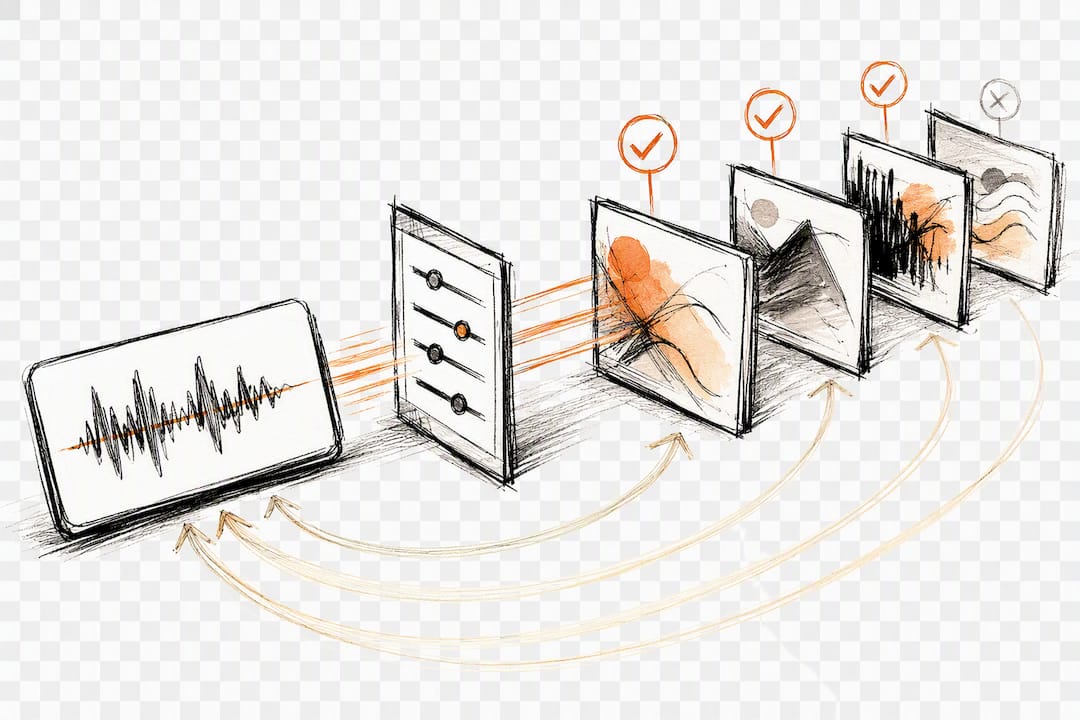
Paid playlist promotion is ethical when it runs on real curator relationships, transparent reporting, and honest expectations. It’s unethical the moment a service guarantees stream counts or relies on bot-driven playlists. Done right, an ethical campaign gets your music in front of genre-matched curators who make their own decisions. Expect a handful of legitimate placements and written feedback, not viral overnight fame.
TL;DR:
- Ethical Spotify promotion involves personalized pitches to vetted, genre-matched curators without promising guaranteed streams or using bots.
- Always verify a promotion service’s transparency by asking for campaign reports, recent placements, and references from past clients.
- Red flags include guaranteed streams, anonymous curators, generic mass pitches, and false promises of rapid viral growth.
- Combining Spotify for Artists pitches, editorial placements, off-platform demand generation, and Spotify-native tools produces the best long-term results.
- A realistic campaign plan spans several weeks before and after release, focusing on genuine engagement, listener feedback, and data analysis to refine future efforts.
Table of Contents
- What Does “Ethical Spotify Promotion” Actually Mean?
- How to Vet a Playlist Promotion Service (and Spot Red Flags)
- What Ethical Promotion Tactics Actually Look Like
- Your Ethical Campaign Checklist: A Week-by-Week Timeline
- Playlist Placements Are a Tool, Not the Goal
- How Intonality Handles Ethical Spotify Promotion
- Where to Verify This Yourself
- Sources
What Does “Ethical Spotify Promotion” Actually Mean?
The music industry throws around “playlist promotion” so loosely that most artists can’t tell a legitimate service from a scam wearing a nice website. Here’s the working definition worth memorizing: ethical Spotify promotion means personalized pitches sent to vetted, genre-matched curators, resulting in real placements and honest feedback, win or lose.
That’s different from what a lot of “growth services” actually sell, which is stream volume manufactured through bots, click farms, or playlists nobody real listens to. The two look similar in a sales email. They are not similar at all once you check what happens to your music after you pay.
Before hiring anyone, run their pitch against this checklist:
- Do they name or verify real curators, not just claim a “network” of thousands?
- Will they show you sample reports from past campaigns, including rejections?
- Do they refuse to guarantee stream counts or placement numbers?
- Is the timeline realistic, usually several weeks, not “results in 48 hours”?
- Do they mention Spotify for Artists pitching as part of the strategy, not a replacement for it?
Spotify’s own pitching tool matters here too. Submitting a track through Spotify for Artists at least seven days before release increases the odds of editorial consideration and can land the song on a listener’s Release Radar automatically. Any promotion service worth paying should treat that pitch as step one, not an afterthought.
Pro Tip: Ask a prospective service for one curator handle they’ve placed music with in your genre in the last month. A legitimate operation answers in a sentence. A shaky one gets vague fast.
How to Vet a Playlist Promotion Service (and Spot Red Flags)
Most artists lose money to promotion scams not because they’re careless, but because the pitch sounds professional and the price feels reasonable. Vetting takes fifteen minutes and saves you both.
Ask any provider these questions before you pay:
- Can you show me a sample campaign report from a similar genre?
- Which curators or playlists have you placed tracks on recently, and can I look them up?
- What’s your reporting format, and how often will I get updates?
- What happens if my track gets zero placements?
- Can I contact a past client for a reference?
A provider that answers all five without hedging is worth a closer look. One that dodges even two of them isn’t.
Once a campaign is running, or after it wraps, verify the results yourself inside Spotify for Artists. Check listener locations against where your existing fan base actually lives. Look at streams per listener; a healthy ratio suggests real people replaying a track, while an oddly flat or inflated number suggests something automated. Review your top playlists list directly rather than trusting a screenshot from the promoter.
Watch for these red flags, in order of severity:
- Guaranteed streams or placements. No legitimate curator promises outcomes; guaranteeing streams is one of the clearest signs of bot-driven playlist activity.
- Anonymous or unverifiable curators. If a service won’t name who they’re pitching to, assume there’s nobody real on the other end.
- Mass-emailed, generic pitches. Genre-matching is the entire point; a service blasting every pitch to every playlist isn’t doing it.
- Unrealistic promises. “Guaranteed viral growth” and “10,000 streams in a week” belong in the same trash folder.
What Ethical Promotion Tactics Actually Look Like
Ethical promotion isn’t one tactic. It’s a small set of legitimate moves that reinforce each other, and understanding why each one works keeps you from wasting money on shortcuts.
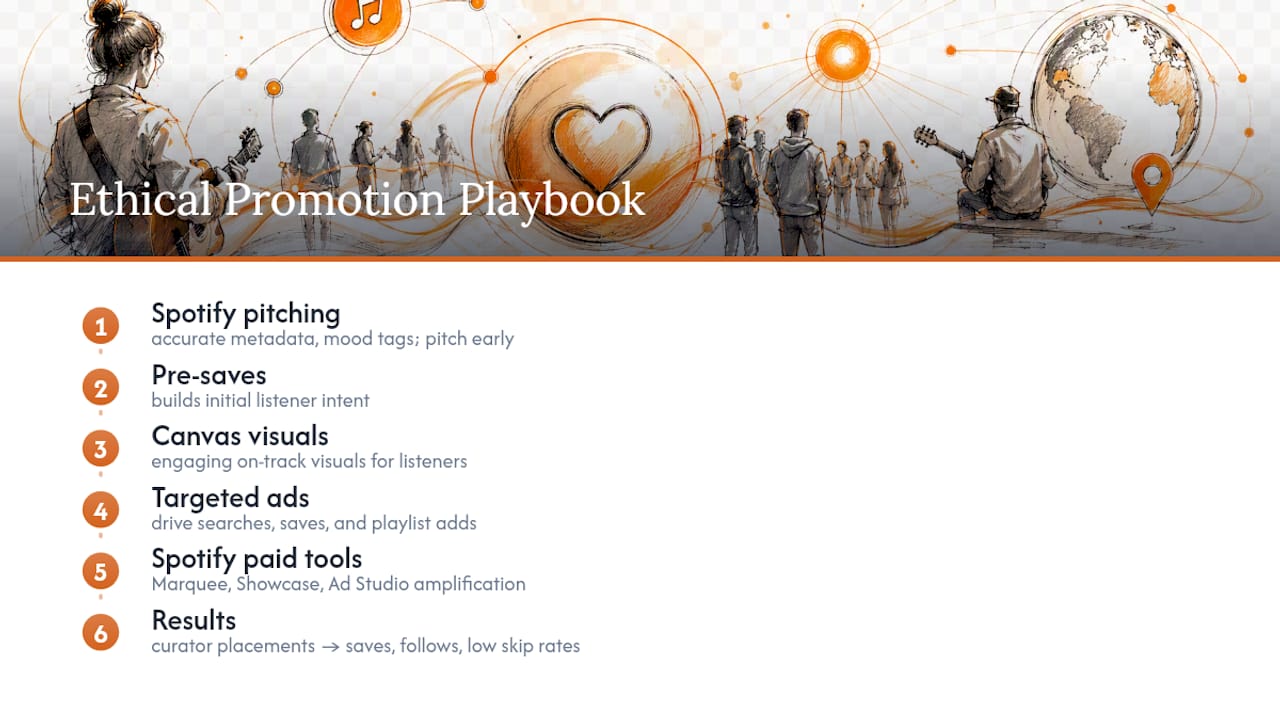
Spotify for Artists pitching is the foundation. Submitting your track through the platform’s own pitch tool, with accurate metadata, mood tags, and a clear description, puts it in front of human editors. Timing matters: pitch early, and you’re eligible for Release Radar placement the moment the track drops.
Editorial playlists themselves generate a surprisingly small share of total streams directly, often estimated around 1 to 2 percent. But editorial placement acts as a discovery catalyst. It signals credibility, which triggers algorithmic recommendations and user-generated playlist adds that compound well beyond the initial editorial slot. That’s the real value, not the raw stream count from the playlist itself.
Off-platform demand generation fills the gap editorial can’t. Social ads, smart links, and content that drives fans to actively search for and save your track create the high-intent listener behavior Spotify’s algorithm rewards: saves, follows, low skip rates. A curator placement without that off-platform push is a missed opportunity.
Spotify-native paid tools like Marquee, Showcase, and Ad Studio offer a safe amplification layer when targeting is tight. They carry none of the fraud risk that comes with opaque third-party playlist networks, because you’re buying attention directly from Spotify, not from a middleman claiming curator access.
A combined playbook of pitching, pre-saves, Canvas visuals, and targeted ads consistently outperforms any single tactic used alone. Curator submissions differ from botted playlists in one measurable way: real curator placements tend to produce low skip rates and organic saves, because the listeners actually chose to be there.
Your Ethical Campaign Checklist: A Week-by-Week Timeline
Here’s what a realistic, ethical campaign actually looks like on a calendar, not in a sales pitch.
- 7 to 4 weeks before release. Finalize metadata, artwork, and a Spotify for Artists pitch. Submit early. Line up your genre tags and pitch copy so editors understand the track in five seconds.
- 2 weeks before release. Launch pre-save campaigns and start light social promotion to build pre-release demand. This creates the early save signals that help on release day.
- Release week. Monitor save rate and streams-per-listener daily inside Spotify for Artists. Log any curator placements as they come in, along with the curator’s feedback if provided.
- 1 to 2 weeks post-release. Review curator responses, even the rejections; they often explain genre fit or timing issues worth adjusting next time.
- 2 to 4 weeks post-release. Check listener locations and streams-per-listener for anything that looks inconsistent with your fan base. Flag anything suspicious immediately.
- Ongoing. Turn placements into retargeting. Anyone who saved the track from a playlist is a warmer lead for your next release than a cold ad click.
Pro Tip: Save every curator note you get, even the short “not right for us this time” ones. Over a few campaigns, that feedback becomes a pattern you can use to fix pitch copy, tighten genre tags, or rethink release timing.
Playlist Placements Are a Tool, Not the Goal
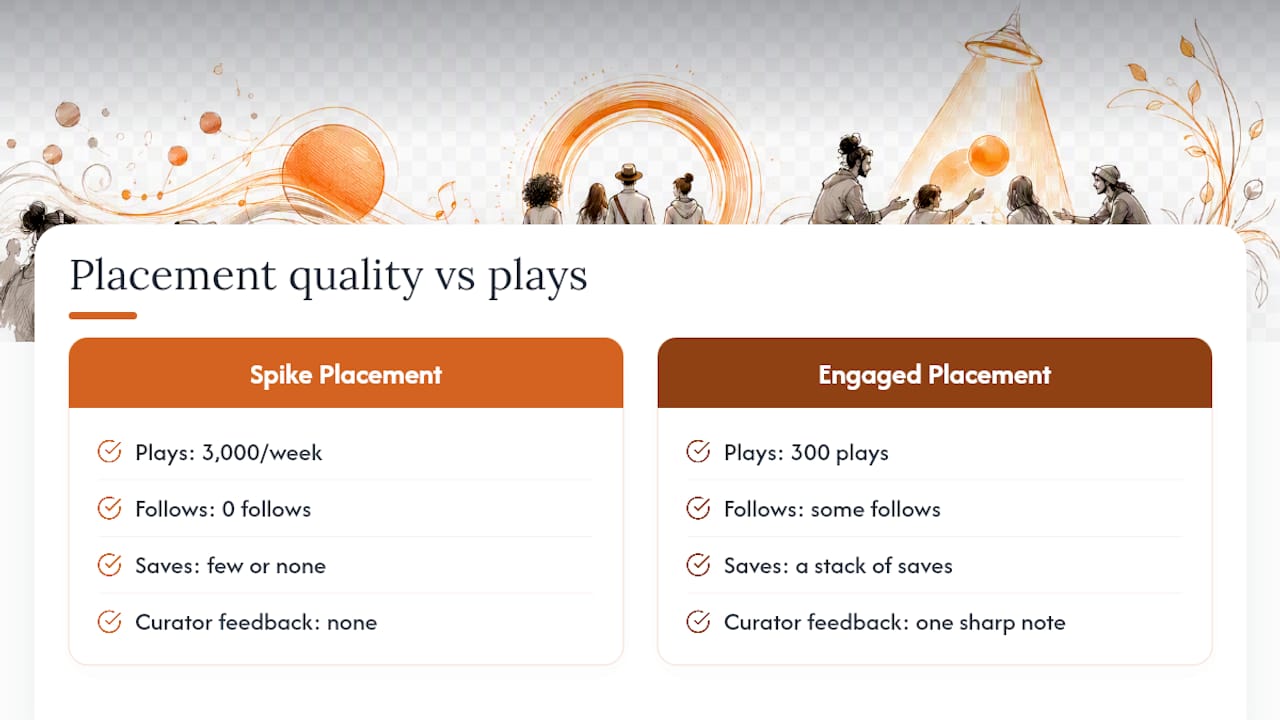
The biggest mistake I see artists make isn’t paying for promotion. It’s mistaking a stream spike for a fan base. A placement that gets you 3,000 plays in a week and zero follows taught you nothing and built nothing. A placement that gets you 300 plays, a stack of saves, and one sharp piece of curator feedback about your mix or your tagging is worth more, even though the number looks smaller.
Curator feedback is the part artists throw away fastest, and it shouldn’t be. A curator passing on your track because the vocal sits too low in the mix is free information a producer would charge you for. Treat every placement, accepted or not, as a chance to retarget the listeners who engaged and to sharpen the next pitch.
— Einars
How Intonality Handles Ethical Spotify Promotion
If you’ve read this far, you already know what to look for: real curators, honest reporting, no guaranteed numbers. That’s the exact model Intonality builds every campaign around. Instead of blasting your track to an anonymous “network,” Intonality sends personalized pitches to vetted, genre-matched curators who actually listen before deciding.
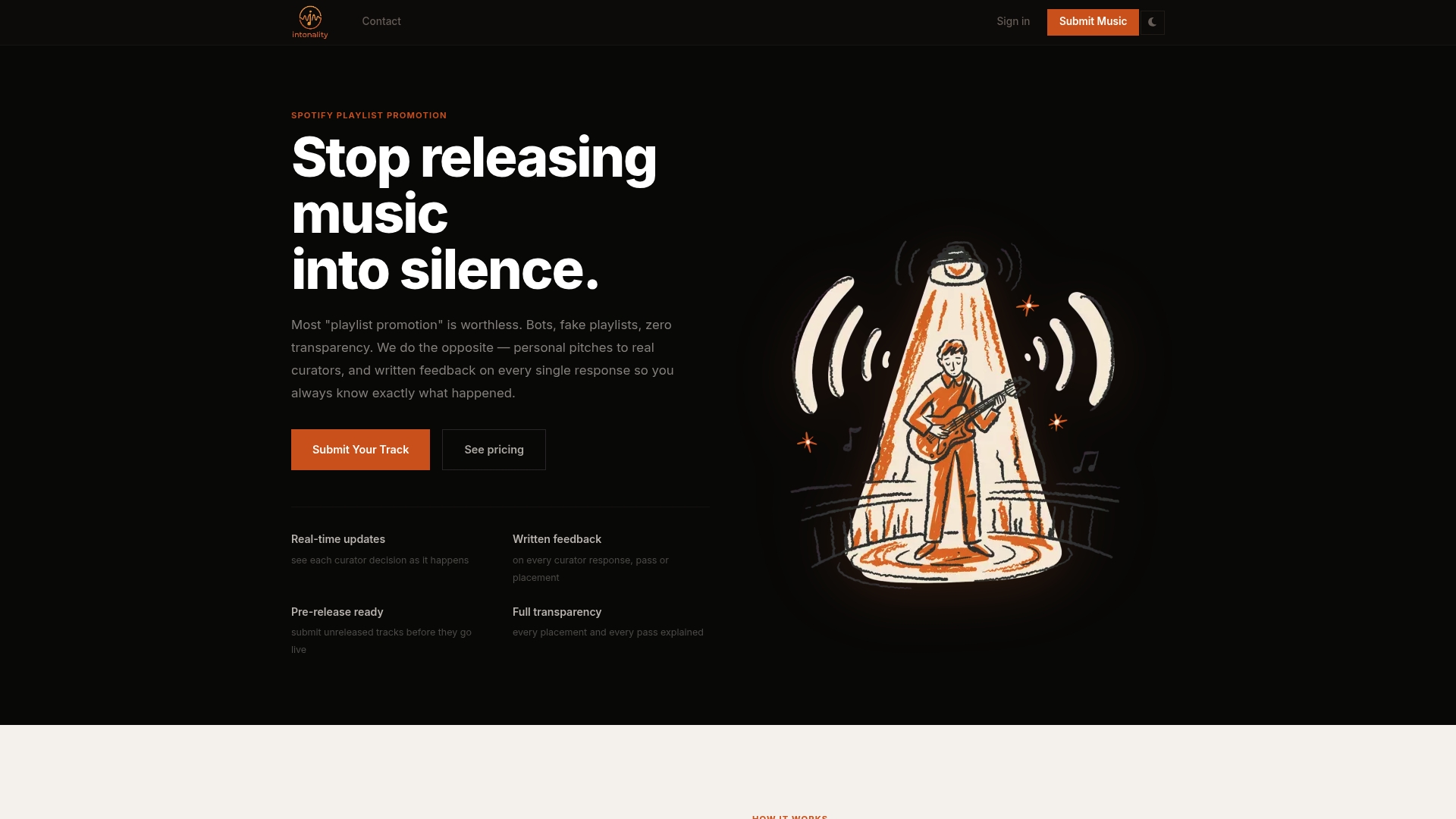
Every decision comes back to you in writing, whether it’s a placement or a pass, along with real-time updates as the campaign runs, so you’re never left guessing what happened to your submission. The company presents multiple playlist placements per campaign as a realistic range rather than a promise. When you reach out, ask for a sample report and a couple of curator handles from a genre close to yours; a service confident in its process will hand both over without hesitation. You can review the current promotion packages and see which tier fits your release timeline before your next pitch window opens.
Where to Verify This Yourself
For the pitching rules straight from the source, read Spotify’s own pitching documentation. For spotting fake playlist activity, DIY Musician’s guide is a solid, artist-facing resource worth bookmarking.
Sources
- Pitching music and videos to playlist editors - Spotify
- 5 tips to avoid fake Spotify playlists and artificial streaming | DIY Musician (CD Baby)


