

Yes, you can grow faster and safer without bots: human targeting, platform-native tools, and participation-driven calls to action outperform fake traffic over time. Spotify’s artificial streaming policy and YouTube’s invalid traffic rules both penalize bought engagement, while services like Intonality show what a human-driven alternative looks like. Skip anyone promising a fixed stream count, and start using the tools the platforms give you for free.
TL;DR:
- Fake engagement, such as bot streams or incentivized likes, teaches algorithms the wrong audience and can lead to penalties or track removal.
- Platform detection methods flag suspicious patterns like sudden regional spikes, short session times, or repetitive IP addresses, making fake promotion increasingly risky.
- Native tools and genuine outreach, such as curators, targeted ads, and audience engagement tactics, produce more lasting growth and valuable feedback.
- Monitoring early plays-to-saves ratios and referral sources after promotion helps identify artificial boosts before they distort analytics.
- Platforms like Spotify and YouTube actively combat inauthentic activity, including reversing streams and restricting monetization for accounts caught using fake engagement.
Table of Contents
- What counts as artificial promotion and why it backfires
- How to spot bot-driven promotion in your own numbers
- Platform rules and penalties you cannot ignore
- Tactics that actually bring real listeners and viewers
- What a curator-led, no-bot campaign looks like in practice
- Monitor, verify, and respond after any promotional push
- Participation beats vanity metrics every time
- If you want curator pitches without the bot risk
- FAQ
- Sources
What counts as artificial promotion and why it backfires
Artificial streaming or engagement means plays, follows, views, or likes generated by bots, click farms, or incentivized tapping rather than people who actually want to hear or watch your work. Spotify’s own guidance describes services that sell guaranteed streams or playlist spots as frequently fraudulent, built on bot networks that violate the platform’s terms outright.
The damage goes beyond the risk of getting caught. Recommendation systems learn from engagement patterns, and bot traffic teaches them the wrong lesson about who your music or video is for.
- Fake plays dilute the taste signals that algorithms use to decide who sees your next release.
- Bought engagement muddies your own analytics, making it harder to know which real fans to double down on.
- Platforms are actively investing in detection, and Spotify’s 2025 announcement describes a new music spam filter built specifically to catch this kind of abuse.
Spotify has rolled out a dedicated spam filter to catch AI-driven manipulation, a sign that artificial engagement is getting harder to hide, not easier.
How to spot bot-driven promotion in your own numbers
Most fake engagement leaves fingerprints once you know where to look. Before you trust a spike in plays or views, run it through a short checklist.
- Compare plays to saves and follows: a healthy track usually earns saves and profile visits alongside streams, while bot traffic produces plays with almost no follow-through.
- Check session length and completion rate: bots often trigger short, identical-length plays that cut off at the same timestamp.
- Look at referral sources and geography: a sudden surge from one unfamiliar region or a single referrer is a red flag.
- Scan for repeated patterns: identical IPs, identical device types, or uniform engagement across tracks that otherwise have nothing in common.
Spotify for Artists, YouTube Studio, and your distributor’s dashboard all surface this data, and cross-checking two sources at once catches more fakes than trusting one dashboard alone.
Pro Tip: Pull your plays-to-saves ratio for the first 72 hours after any promotional push; a ratio that looks nothing like your normal releases is worth investigating before you spend another dollar.
Platform rules and penalties you cannot ignore
Spotify and YouTube both treat purchased engagement as a policy violation, not a gray area. Spotify’s artist guidance explicitly warns against artificial streaming, describing paid-for plays and fake playlist placements as scams that can trigger stream corrections, playlist removal, or account penalties. The platform also encourages artists to report suspicious activity through Spotify for Artists or their distributor.
YouTube’s policy on invalid traffic is just as direct: purchased views and third-party engagement-boosting services count as non-genuine activity, and accounts caught using them risk losing AdSense access or having monetization limited.
- Spotify can reverse stream counts and remove tracks from playlists tied to artificial activity.
- YouTube can suspend or restrict monetization for channels linked to invalid traffic.
- Both platforms treat detection as an ongoing investment, not a one-time sweep, which means the risk compounds over time rather than fading.
Both platforms publish standing policies against purchased engagement, and the consequences, from stream corrections to AdSense suspension, apply whether or not a creator understood what they were buying.
Tactics that actually bring real listeners and viewers
Replacing bots with real outreach takes more effort up front, but it builds an audience that sticks around. A few tactics do most of the work.
- Pitch tracks directly to genre-matched curators with a short, specific note about why the song fits their playlist rather than a mass blast.
- Use native paid tools, like YouTube’s Promotions tab or official ad buys, since YouTube’s own guidance confirms these do not carry the same invalid-traffic risk as third-party services.
- Run pre-save campaigns and mailing-list incentives that turn casual interest into a concrete action before release day.
- Ask for feedback directly, through a poll, a comment prompt, or a simple question in your bio, since mix engineer client communication tips that actually work show how active feedback and meaningful audience participation build stronger artist relationships, producing better signals than passive impressions.
- Cross-promote with collaborators and lean on niche communities, like subreddits or Discord servers built around your genre, where listeners are already primed to care.
Avoiding fake playlists matters just as much as avoiding fake streams, and a guide to spotting fabricated playlists walks through the signs before you submit a track anywhere.
Pro Tip: Treat every pitch like a cold email: one sentence on who you are, one on why this specific curator or channel fits, and a link. Curators and programmers skip anything longer.

What a curator-led, no-bot campaign looks like in practice
Intonality builds its campaigns around personalized pitches to real, genre-matched Spotify curators instead of automated submissions or purchased placements. Every curator decision comes back with written feedback and real-time updates, so an artist sees not just whether a track got placed but why.
- Campaigns can yield several playlist placements depending on the service tier.
- Genre-matching is central to the pitch process, aimed at putting tracks in front of curators who already program similar artists.
- Written feedback from declines is as useful as the placements themselves, since it points to pacing, mixing, or genre-fit issues an artist can fix before the next release.
That feedback loop is the real value: an artist who gets the same note from three curators in a row has a clearer signal than any stream count could give.
Monitor, verify, and respond after any promotional push
Real growth tends to show up gradually, with saves and follows climbing alongside plays over the first one to two weeks. A spike that appears overnight with no matching saves or profile visits deserves a closer look.
- Pull your plays-to-saves ratio and referral data within the first week and compare it to past releases.
- If something looks off, screenshot the raw analytics before they can be corrected or scrubbed, then contact your distributor or Spotify for Artists support directly.
- Stop payment or request a refund from any service that cannot explain where its engagement came from, and report the service if it claimed guaranteed streams.
A detailed walkthrough of fake stream red flags covers what evidence platforms tend to ask for when you file a report.
Participation beats vanity metrics every time

The real argument against bots isn’t just risk of penalty, it’s that fake numbers teach you nothing. A follow that comes from a genuine listener tells you something about who your music is for. A bought play tells you nothing except that you spent money.
Chase two-way signals: feedback, saves, replies, pre-saves. Raw counts without a person behind them are just noise with a number attached.
— Einars
If you want curator pitches without the bot risk
Intonality runs ethical, curator-led campaigns built around personalized pitches, real-time updates, and written feedback from every curator decision, so you know exactly where a submission landed and why. Genre-matching means your track reaches curators already programming music like yours, not a random list.
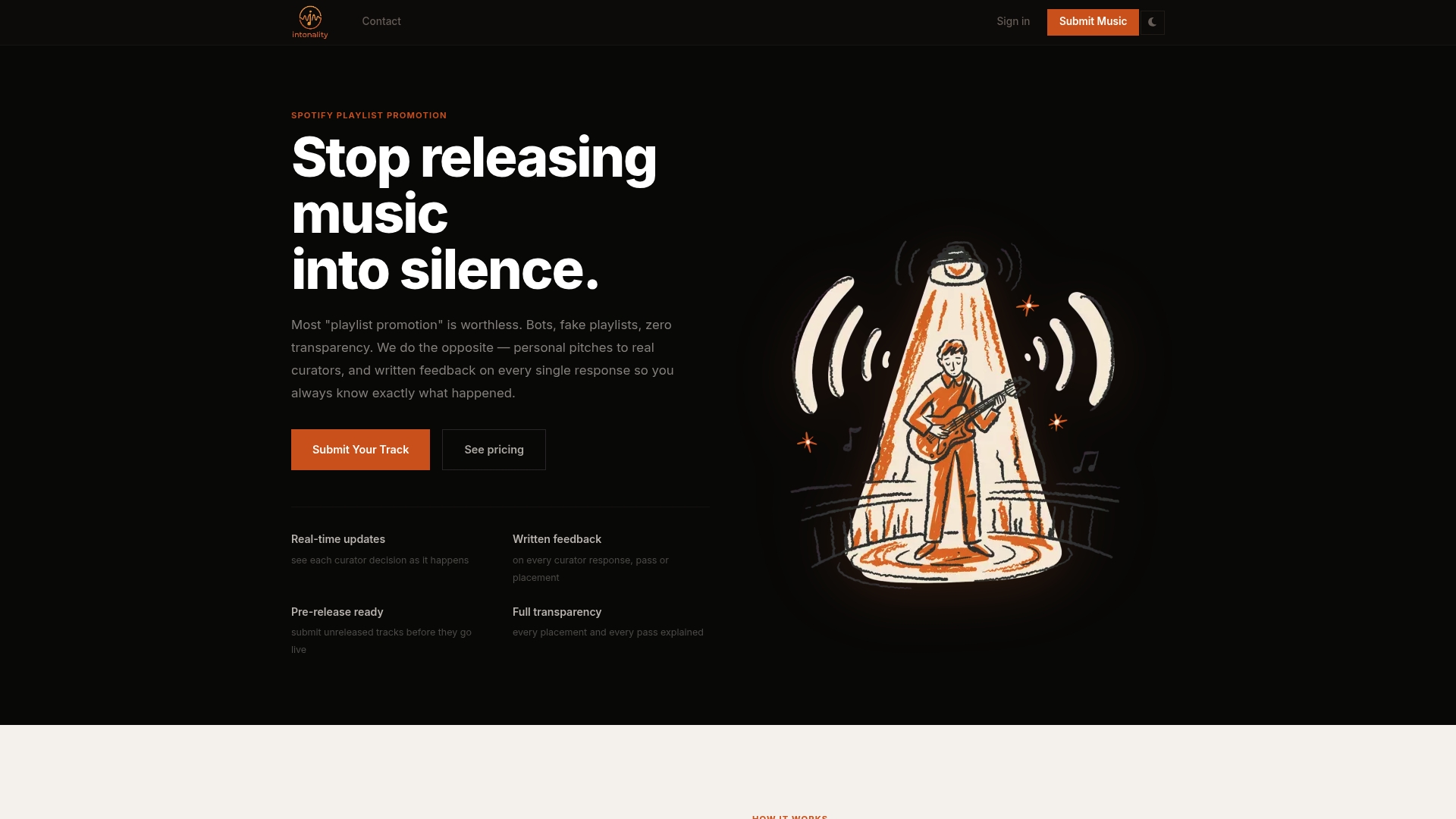
When evaluating any promotion partner, look for transparency about who reviews your track, whether feedback is included, and whether placements are published rather than promised. Intonality’s campaign pages show real curator feedback from past submissions, and the Starter, Standard, Pro, and Max tiers outline how the service scales for different release budgets.
- Written feedback on every decision, placement or decline.
- Genre-matched curator pitches instead of mass submissions.
- Public campaign examples you can review before you commit.
FAQ
Is TikTok promoting bots?
TikTok, like Spotify and YouTube, prohibits inauthentic engagement in its policies, though no platform intentionally promotes bot activity. The safer assumption for any platform is that bought engagement carries detection risk and offers no lasting benefit to reach.
How do I turn off the bot?
If you suspect a promotional service used bots on your behalf, stop the campaign immediately, request a refund, and report the activity to the platform or your distributor. Spotify for Artists and YouTube Studio both have reporting paths for suspicious engagement described in their artificial streaming guidance.
What is a not bot?
A “not bot” simply refers to a genuine listener or viewer whose engagement reflects real interest rather than automated activity. Platforms distinguish the two using signals like session length, device patterns, and follow-through actions such as saves or subscriptions.
How can I get a bot?
Purchasing or using bots to inflate streams, views, or followers violates the terms of service on platforms like Spotify and YouTube and can lead to penalties including stream corrections or lost monetization. The safer path is platform-compliant promotion: direct curator outreach, native ad tools, and participation-driven campaigns that build a real audience.
Sources
- Artificial streaming — Spotify for Artists
- Invalid traffic on your videos — YouTube Help
- Spotify strengthens AI protections — Spotify Newsroom


