
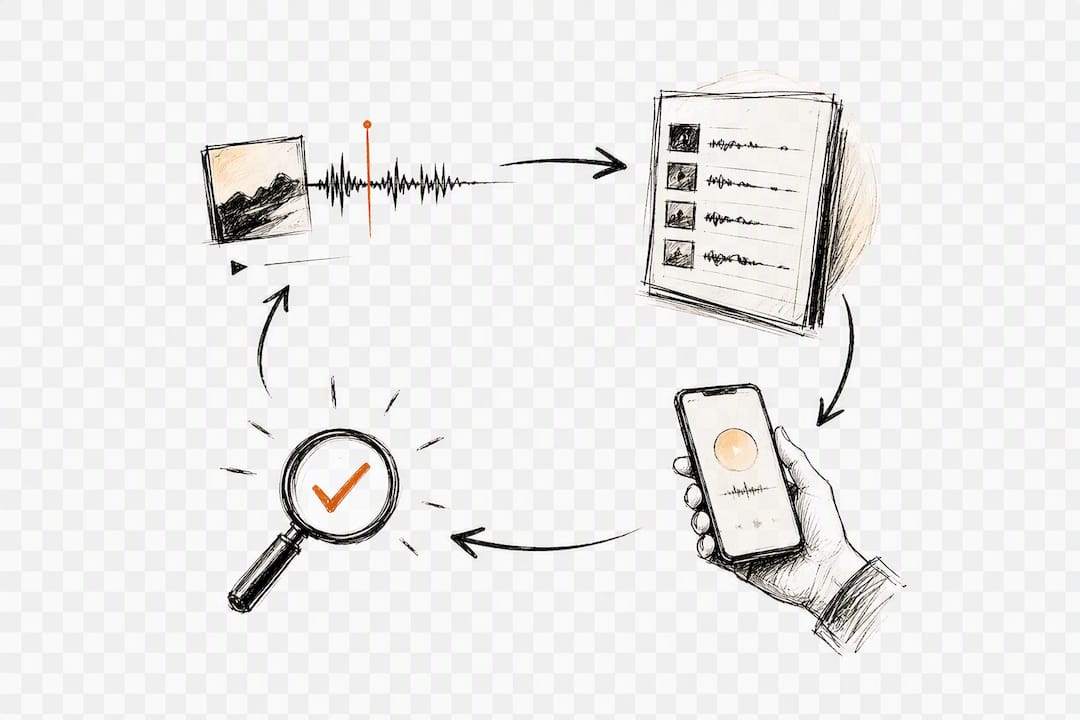
The etiquette that gets your track heard comes down to one move: send a short, personalized pitch that names a specific song on the curator’s playlist, includes one instant-play link plus a backup, and respects whatever submission channel that curator has already stated. Never offer payment for a guaranteed add. Everything else in curator outreach is a variation on that single rule.
TL;DR:
- Only send personalized pitches that include a specific song link, a backup option, and comply with the curator’s submission instructions.
- Vet curators by checking contact availability, recent updates, genre consistency, and engagement levels to prioritize quality placements.
- Keep pitch emails short, referencing an existing playlist track and providing one or two sentences of context with a single, scannable link.
- Follow up once after about seven days with new information, and track all outreach in a spreadsheet to optimize future efforts.
- Avoid any guarantees of placement or stream counts, as paying for such promises violates platform policies and risks track suppression.
Table of Contents
- What does curator outreach etiquette actually require?
- Where do you find real curators, and how do you vet them?
- What should your pitch email or DM actually say?
- How often should you follow up, and what should you track?
- What red flags should you refuse outright?
- What curator outreach looks like inside a real campaign
- What actually moves the needle in curator outreach
- Ready for pitches that already follow the etiquette?
- Sources
What does curator outreach etiquette actually require?
Etiquette in this context isn’t about being polite for politeness’s sake. It’s about respecting how curators actually work: they scan dozens or hundreds of pitches a week, and the ones that get a listen answer three questions fast. Does this track fit the playlist? Can I hear it in one click? Is this artist legitimate?
That’s the standard curator outreach etiquette is built on, and it maps directly to what curators themselves say works. A pitch that answers fit, listenability, and legitimacy in under 20 seconds beats a longer, more polished message every time. Curators aren’t grading your prose. They’re deciding, in the time it takes to read a text message, whether your song belongs in the next update.
Before you send a single message
Get the groundwork right and the pitch itself takes five minutes to write. Skip it, and you’ll send messages curators delete on sight.
- One primary Spotify listening link, plus a backup (SoundCloud or a private link) in case the first doesn’t load.
- Clean metadata: correct artist name, exact title, explicit flag set accurately.
- A single cover image and one press photo, no attachments crammed into the first email.
- A pitch between 80 and 150 words, built around a simple who, what, why, where story.
- Spotify for Artists submission completed at least seven days before release.
That last point isn’t a suggestion. Spotify recommends submitting through Spotify for Artists at least seven days ahead of release and filling in every genre, mood, and instrumentation field honestly, since editors use that detail to place songs. Treat it as basic metadata hygiene, not a magic trick.
Pro Tip: Write your one-line track story before you write anything else. If you can’t summarize why this song fits in one sentence, the curator won’t figure it out for you.
Where do you find real curators, and how do you vet them?
Most legitimate curators publish their contact method somewhere in plain sight: the playlist description, their profile bio, or a linked website or social account. If you can’t find any of those after a reasonable search, treat the playlist as closed to submissions. Curators frequently list submission instructions directly in the playlist description or profile, and chasing a curator who hasn’t published contact info usually just gets you flagged as spam.
Build your list with a short vetting pass on each candidate:
- Check whether the curator has a visible identity, real name, brand, or consistent handle, not an anonymous account.
- Look at update frequency. A playlist that hasn’t changed in three months isn’t actively curated.
- Read the last 15 to 20 tracks for editorial consistency. Does the genre and mood actually match what you’re pitching?
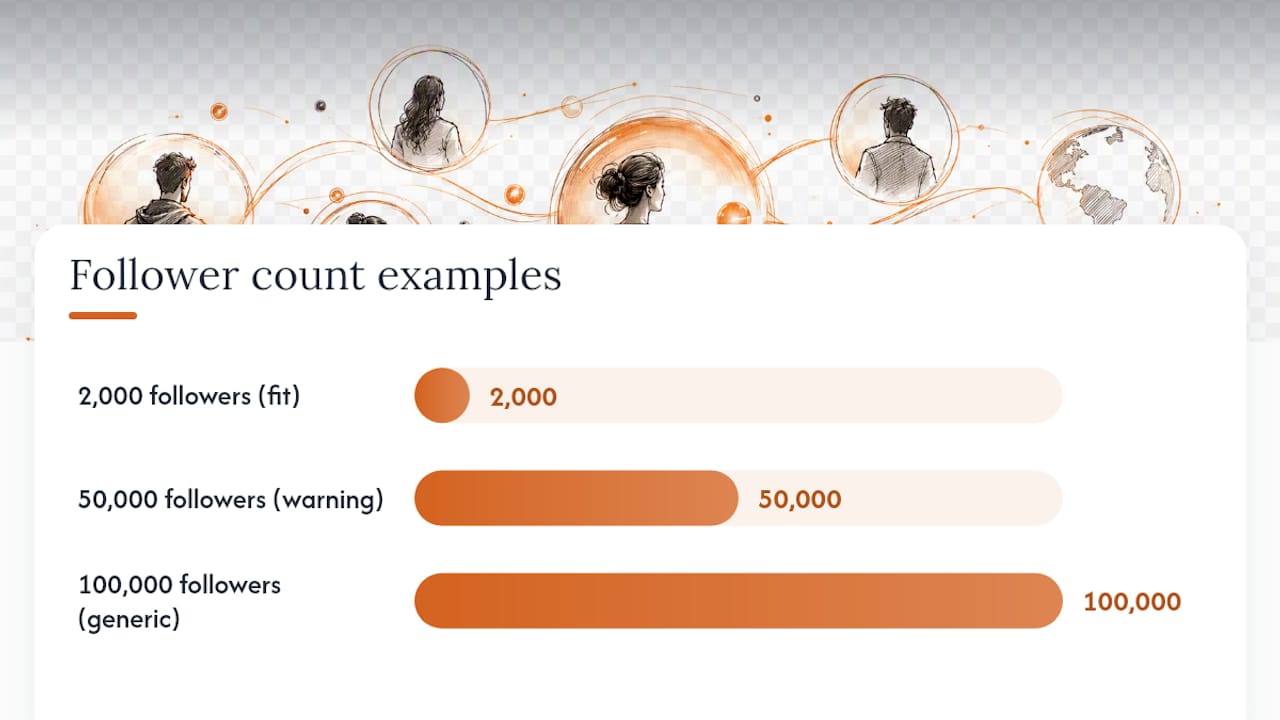
- Compare follower count against engagement. A playlist with 50,000 followers and visibly stagnant plays is a warning sign, not a prize.
- Prioritize fit over size. A curated 2,000 follower playlist in your exact subgenre will do more for you than a generic 100,000 follower list.
Aim for a working list of 20 to 30 curators per campaign. Fewer, and you don’t have enough shots on goal. More, and you’re not vetting carefully enough to send genuinely tailored pitches.
What should your pitch email or DM actually say?
Keep the subject line short, specific, and human. Skip anything that reads like a mass campaign.
- “Indie folk track for [Playlist Name]” beats “Please Listen to My New Single!!”
- “Fan of your [Playlist Name] mix, quick pitch” works for a DM.
- “Following up: track for [Playlist Name]” for a second touch.
The body should do four things in four short lines: reference a specific track already on the curator’s playlist, give one sentence of context on your song, drop the listening link, and close softly without pressure.
Hey [Name], loved seeing [Track] by [Artist] on [Playlist Name], it’s exactly the mood I write toward. My new single “[Title]” leans on the same slow-build production, sound like [RIYL Artist 1] meets [RIYL Artist 2]. Here’s the link: [Spotify URL]. No worries either way, appreciate you taking a look.
That structure works for cold email and DM alike. For catalog-fit pitches, where you’re pointing to a broader body of work rather than one single, swap the opening line to reference your discography’s overall lane: “Most of my catalog sits in the same lo-fi indie space as [Playlist Name].” Save the “recent traction” variant, mentioning playlist adds, chart placement, or a notable feature, for cases where you actually have a specific number or name to cite; don’t fabricate momentum you don’t have.
If you’re sharing more than the single track, link a single folder rather than five separate links. Every pitch should be scannable in 15 seconds flat: one glance at the subject, one glance at the opening line, one click on the link.
How often should you follow up, and what should you track?
One follow-up, sent around seven days after your first message, is the sweet spot. A single concise bump at roughly seven days is where follow-up value peaks; after that, returns drop fast. Send a second follow-up only if you have genuinely new information, a placement on another playlist, a press mention, something concrete. After two non-replies, stop. Chasing a curator further reads as pressure, not enthusiasm.
Log every pitch in a simple spreadsheet or CRM with five fields:
- Date sent
- Channel used (email, Instagram DM, submission form)
- Response (yes, no, no reply)
- Reason given, if any
- Next allowed contact date
That log becomes an asset over multiple releases. Turning outreach into a dataset shows you which subject lines get opened, which playlists respond, and which curators are worth prioritizing next time.
Pro Tip: Keep the relationship warm between pitches. Share the curator’s playlist once in a while, leave a genuine comment on their social post, and only send updates when you actually have new music, not just to stay visible.
What red flags should you refuse outright?
Any offer that guarantees placement or promises a specific stream count is a policy violation waiting to happen. Spotify explicitly warns against artificial streaming and confirms editorial placements can’t be bought; paying for a “guaranteed” add risks your track being flagged and suppressed. Spotify’s own support guidance treats manipulation attempts and suspicious third-party services as account-level risks, not minor rule bends.
Watch for these signs before you ever hand over a payment:
- Anyone promising a guaranteed placement or a specific stream count in exchange for money.
- Playlists with high follower counts but visibly flat, stagnant play numbers.
- Cold pitches to Spotify’s internal editorial team outside the official portal, which carries no real advantage over submitting properly.
Spotify for Artists remains the only official editorial submission route, and it costs nothing to use.
What curator outreach looks like inside a real campaign
Intonality builds every pitch around one principle: a genre-matched curator gets a message written for their specific playlist, not a template blasted to a spreadsheet of names. Intonality pairs artists with real curators instead of automated systems or paid-placement networks, and reports an average of 4 to 11 playlist placements per campaign depending on the service tier chosen.
What separates that from a DIY pitch run isn’t the etiquette, the etiquette above holds either way, it’s the volume of vetted relationships behind each submission and the feedback loop after. Every curator decision comes back to the artist as real-time, written feedback, so a pass on one playlist tells you something usable for the next pitch, not just a silent no.
What actually moves the needle in curator outreach
Most advice on this topic treats etiquette as a courtesy, something nice to have if you’ve got time to be thoughtful. That’s backwards. Etiquette here is a filtering mechanism. Curators aren’t turning down sloppy pitches because they’re rude, they’re turning them down because a vague message with a broken link or no context signals the artist didn’t do the five minutes of homework the genre-fit required.
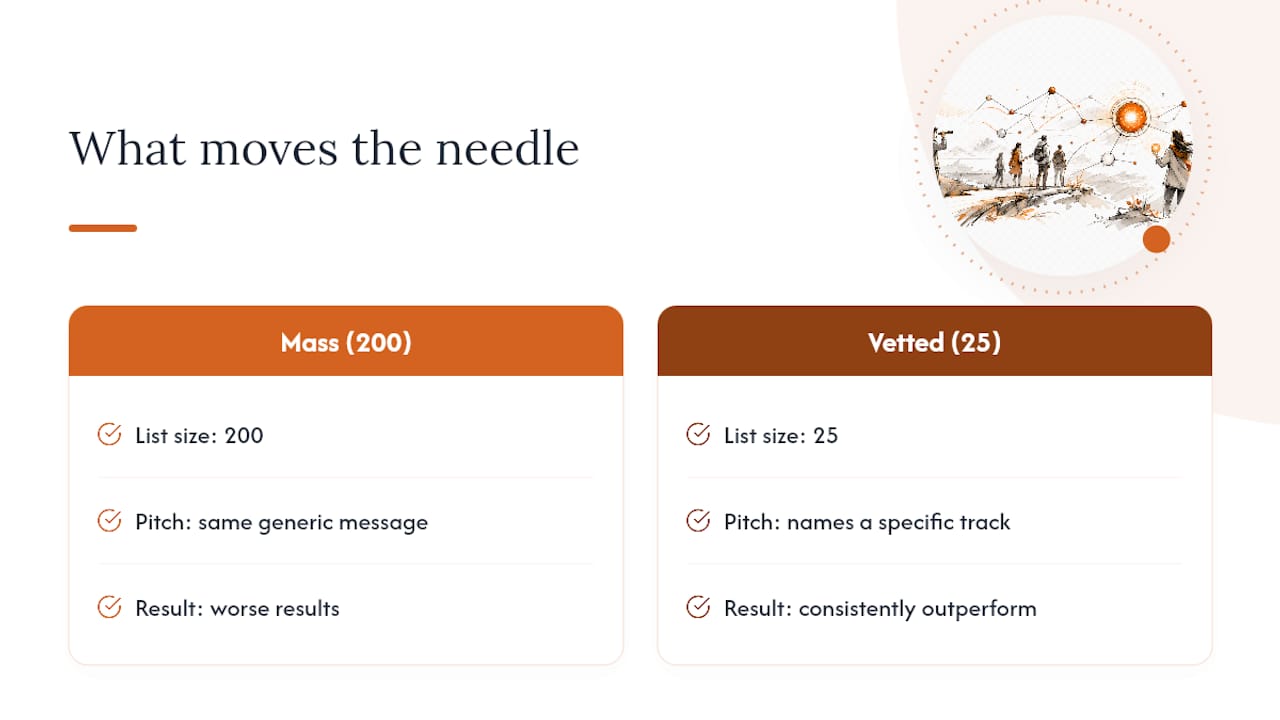
The conventional wisdom oversells volume. Blasting 200 curators with the same generic message feels productive, but it produces worse results than a tight, vetted list of 25 where every pitch names a specific track. Small batches with real personalization consistently outperform mass outreach, because curators can tell the difference in the first sentence.
If you take one thing from this guide, prioritize the vetting step over the pitch-writing step. A perfectly written email to a dead or payola-driven playlist is wasted effort. A slightly rough pitch to an active, well-matched curator still has a real shot. Get the list right first, then worry about the words.
— Einars
Ready for pitches that already follow the etiquette?
If building and vetting that curator list yourself sounds like more time than you have between releases, that’s exactly the gap Intonality fills. Every pitch is written by hand for a specific, genre-matched curator, not auto-generated or blasted to a purchased contact list, and every campaign comes with real-time updates and written feedback so you actually learn why a playlist said yes or no.
Reported outcomes include multiple playlist placements per campaign depending on the tier you choose. This is a range Intonality shares openly rather than promising a fixed number no service can guarantee. Artists who’ve tried automated submission tools or bulk playlist networks often notice the difference immediately: a real person read their track and responded to it. If you want outreach handled by someone who already has these vetted relationships, start with Intonality’s playlist promotion service and see which tier matches your release timeline.
Sources
- Behind the playlists: your questions answered by our playlist editors
- Playlist curator outreach email templates — Dynamoi
- How to Contact Playlist Curators (2026 Guide)


