
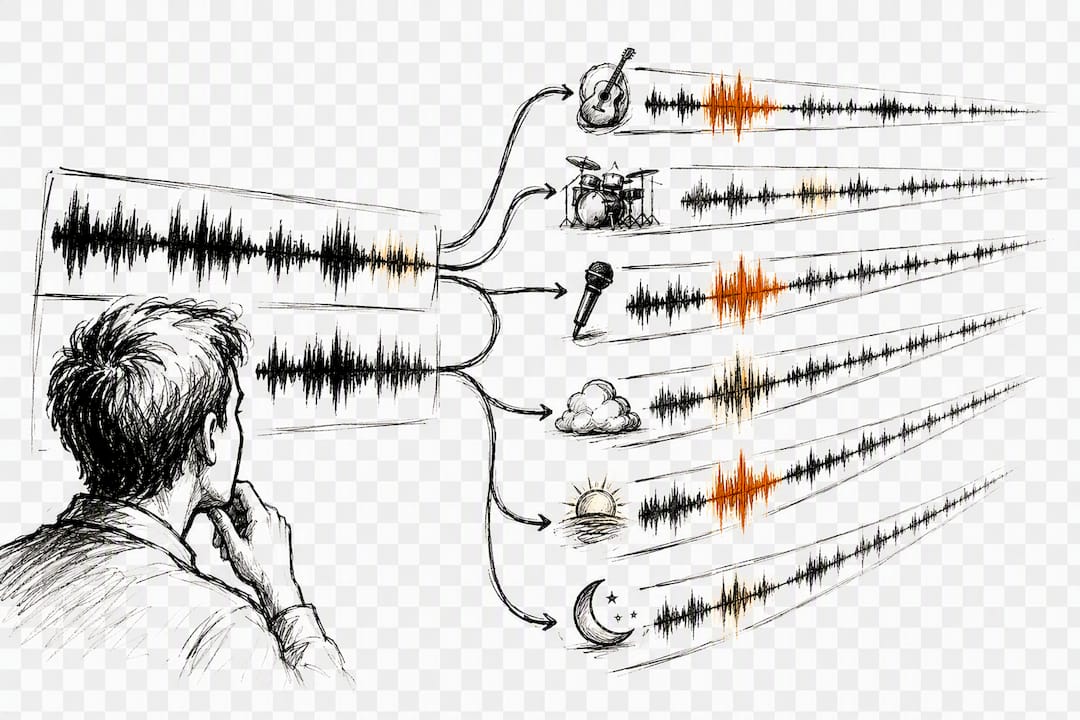
Editorial playlist categories are the genre, mood/activity, and flagship-versus-niche groupings Spotify’s in-house editors use to sort and place songs. Getting into the right one means reaching people who already want your sound, not a random slice of the platform. The main types break down into genre lists, mood or activity lists, flagship shows, niche discovery pools, and personalized editorial feeds — and picking the correct target first is what separates artists who get placed from artists who get ignored.
TL;DR:
- Target smaller niche playlists first, seeding 15 to 30 of them before aiming for larger flagship or genre lists.
- Use specific, category-appropriate pitch language and submit at least 7 days before release to improve chances of placement.
- Focus on increasing save rates and cross-playlist velocity, as these are the strongest signals for bigger editorial placements.
- Recognize that genre playlists prioritize sonic lineage, while mood lists demand descriptions of energy and use case rather than genre tags.
- Stay aware that evolving editorial categories reflect emerging trends and microgenres, making early pitching to new playlists advantageous for independent artists.
Table of Contents
- What Are Editorial Playlist Categories on Spotify?
- How Does Editorial Curation Actually Work?
- Flagship vs. Niche, Genre vs. Mood: Picking the Right Lane
- A Step-by-Step Sequence for Targeting Editorial Categories
- Pre-Release and Post-Release Checklist for Category Targeting
- How Editorial Playlist Categories Evolved
- Why Editorial Playlists Still Drive Discovery
- Editorial Playlists Compared to Algorithmic and User Playlists
- Who Curates Editorial Playlists, and What Do They Look For?
- How Categories Shift With New Music Trends
- Why Curator Feedback Changes How You Target Categories
- A Faster Way to Reach the Right Curators
- Sources
What Are Editorial Playlist Categories on Spotify?
Spotify runs three distinct playlist families, and confusing them is the fastest way to waste a pitch. Editorial playlists are built by human curators who work inside genre and mood teams. Algorithmic playlists, like Discover Weekly, run on listening data with no human picking the tracklist. User playlists are exactly what they sound like: fans and other artists building their own mixes with zero editorial oversight.
Editorial playlists themselves split further into standard editorial (the same tracklist for every listener) and personalized editorial, which pulls from a curated pool but reorders or filters songs per listener. Here’s where independent artists actually show up:
- New Music Friday — the flagship weekly showcase for new releases, split by market and genre, with enormous reach and an equally enormous submission pool.
- RapCaviar and comparable genre flagships — large, brand-name lists with strict sonic and cultural fit requirements.
- Fresh Finds — an editorial discovery pool built specifically for independent artists who haven’t broken through yet.
- Release Radar — not editorial, but algorithmic; it pulls from artists a listener already follows and rewards a properly timed pitch.
- Discover Weekly — also algorithmic, built from a listener’s broader taste profile rather than any curator’s picks.
Spotify maintains thousands of editorial playlists globally, with regional variants for individual countries and languages layered on top of the genre and mood structure. That scale is exactly why “get on a playlist” is meaningless as a goal. The category you target determines who hears you.
How Does Editorial Curation Actually Work?
Real people staff Spotify’s editorial teams, organized around genre specialties (hip hop, indie, country) and mood or activity pools (workout, focus, chill). Each editor manages a defined editorial pool and decides weekly which tracks stay, which get added, and which get cut.
Four signals dominate that decision. Sonic fit comes first: does the track match the playlist’s established BPM range and energy level? Save rate matters almost as much, since a listener saving a song is a stronger vote than a stream. Skip rate works against you, and a high early skip rate can get a track pulled before its first week ends. Cross-playlist velocity, meaning a track showing up on several independent playlists in quick succession, tells an editor other curators already validated it.
Spotify runs a hybrid model in practice. Editors curate the underlying pool, but personalized editorial playlists reorder or filter that same pool differently for each listener, blending human taste with algorithmic personalization to keep reach high without losing curatorial judgment. Update cadence shapes all of this. Weekly-refresh playlists like New Music Friday favor brand-new releases with strong first-week numbers, while slower-updating mood and activity lists favor proven tracks with a longer track record of saves. Knowing which cadence you’re pitching into changes what evidence you should be showing.
Flagship vs. Niche, Genre vs. Mood: Picking the Right Lane
Not every editorial category plays by the same rules, and treating them as interchangeable is where most pitches fail. Flagship lists carry huge audiences and an equally high evidence bar. Niche lists carry smaller audiences, but the listeners who follow them tend to be more engaged, which is exactly why smaller, genre-specific playlists often produce better save rates than a generic large list.
Genre and mood categories also demand different pitch language:
- Genre lists care about lineage. Reference comparable artists, subgenre, and instrumentation.
- Mood/activity lists (workout, sleep, focus) care about function over label. Describe energy, tempo, and use case, not genre tags.
- Personalized editorial playlists run the same curated pool but reorder it per listener, so getting into the pool still matters more than gaming any one listener’s version.
- Regional playlists (country or language-specific editorial lists) are often less competitive than global flagships and worth targeting directly if your sound fits a specific market.
A Step-by-Step Sequence for Targeting Editorial Categories
Most artists pitch a flagship list cold and wonder why nothing happens. The sequence that actually works runs bottom-up: build evidence on smaller lists first, then use that evidence to earn attention on bigger ones.
- Seed 15 to 30 niche playlists before your release. Independent guidance consistently points to this range as the sweet spot for generating early engagement data without spreading a release too thin.
- Pitch through Spotify for Artists at least 7 days before release. This isn’t a suggestion. Spotify’s own support documentation states that pitches submitted less than 7 days out miss the window for Release Radar consideration entirely.
- Match your pitch metadata to the category you want. If you’re chasing a mood or activity list, describe energy and function. If you’re chasing a genre flagship, cite comparable artists and subgenre precisely.
- Track save rate and cross-playlist velocity, then use them as proof. A track that’s already landed on eight independent niche playlists with a strong save rate gives an editor a reason to say yes to something bigger.
Pro Tip: Don’t submit the same generic pitch to a workout playlist and a genre flagship. Editors read dozens of these a day, and a pitch that clearly speaks their category’s language stands out immediately.
Spotify for Artists is also where the pitching mechanics themselves live, and getting comfortable with that interface before your next release saves real time.
Pre-Release and Post-Release Checklist for Category Targeting
Treat pitching as a timeline, not a single form. Two weeks before release, lock your pitch copy and start reaching out to niche playlist curators outside Spotify’s own system. At exactly 7 or more days before release, submit through Spotify for Artists using category-specific pitch language. In week one after release, watch your numbers daily, not weekly.
Fields to nail in the pitch: genre tags, mood descriptors, comparable artists, and a one-line description of the song’s energy and use case. Vague language (“great song for fans of good music”) gets skipped in seconds.
- Save rate above a healthy threshold in week one signals editors should keep watching the track.
- A rising skip rate in the first 48 hours is a red flag most editors weigh heavily.
- Cross-playlist velocity (multiple independent adds within days) is one of the strongest signals editors use to justify a bigger placement.
Save rate and cross-playlist velocity together form the single strongest case an independent artist can build for a bigger placement. No editor wants to be the only one who took a chance on a track.
How Editorial Playlist Categories Evolved
Spotify’s editorial system didn’t start as the genre-and-mood matrix it is today. Early playlists were broad and few, built around simple new-release showcases with little differentiation by mood or activity. As streaming overtook radio and album sales as the primary discovery method, Spotify’s editorial team expanded rapidly, splitting flagship lists by genre, then by region and language, then by function.
Mood and activity playlists emerged as a distinct category once listening data showed people weren’t just searching by genre. They were searching by context: workout, commute, studying, sleep. That shift created an entirely new set of editorial categories that had nothing to do with genre at all and everything to do with what a listener needed a song to do for them in the moment.
Personalized editorial playlists came later still, a response to the tension between editorial taste and algorithmic scale. Editors kept curating the underlying pool, but Spotify layered personalization on top so two listeners following the same playlist could hear different orderings, or even different subsets, of the same curated pool. That hybrid approach is now the default for many of Spotify’s biggest editorial brands, and it’s part of why categories keep multiplying rather than consolidating. Every new listening context becomes a candidate for its own editorial pool.
Why Editorial Playlists Still Drive Discovery
A single flagship placement remains one of the most reliable ways to jump an independent track from a few thousand streams to a much larger audience overnight, because human curators bring cultural context that no algorithm replicates. Algorithmic systems are good at expanding on listener behavior that already exists. Editorial placement creates that behavior in the first place, especially for an artist with no existing streaming history to feed an algorithm.
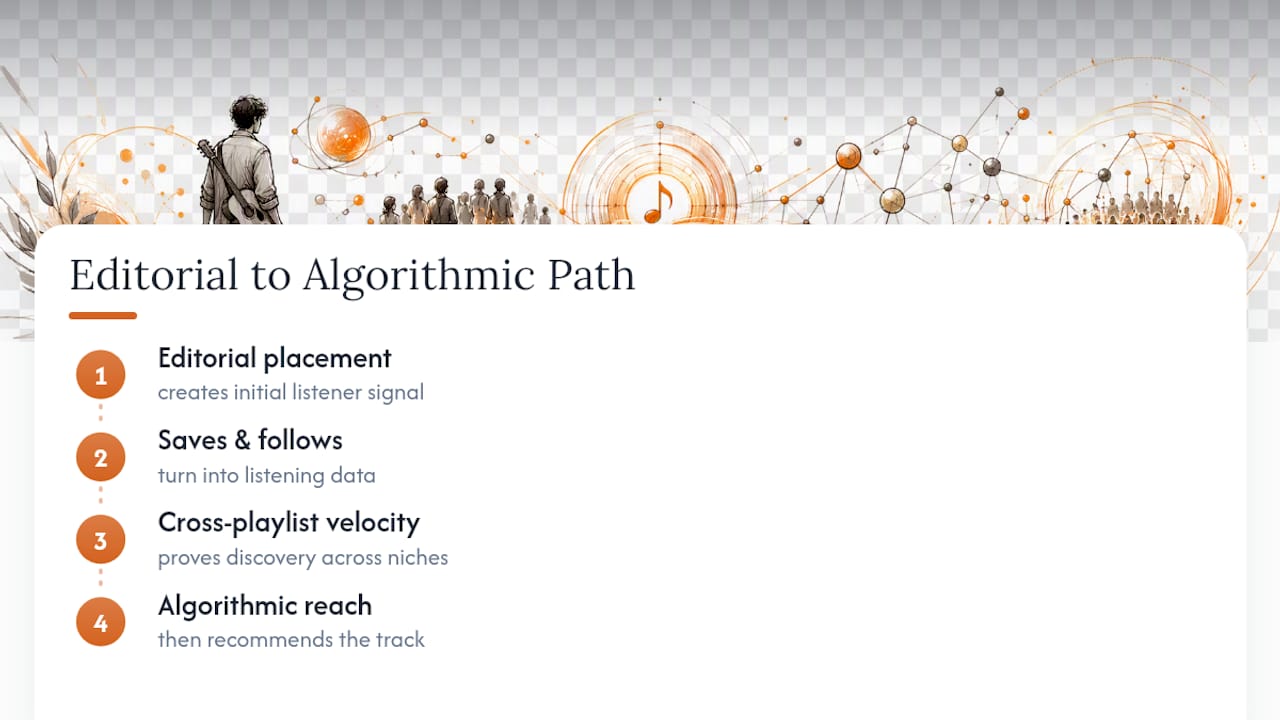
That’s the real function editorial categories serve: they’re the entry point. A new listener has no signal to give Discover Weekly or Release Radar until they’ve heard the artist somewhere, and editorial playlists are usually that somewhere. Once a track picks up saves and follows from an editorial placement, it starts generating the listening data that algorithmic systems need to recommend it independently.
This is also why cross-playlist velocity matters so much to curators. A track that’s landing on niche editorial lists in multiple genres or regions simultaneously is already proving it works as a discovery vehicle before any single big editor takes a risk on it. Editorial placement and algorithmic reach aren’t competing paths. They’re sequential. One typically has to happen before the other does, which is exactly why the bottom-up targeting sequence works better than chasing a flagship cold.
Editorial Playlists Compared to Algorithmic and User Playlists
Editorial playlists carry the most concentrated influence per placement, but algorithmic playlists carry the most total reach across the platform simply because every listener gets a personalized version of Discover Weekly and Release Radar every week. User playlists sit at the opposite end: massive in aggregate number, but wildly inconsistent in reach, since most have a handful of followers and a few have millions.
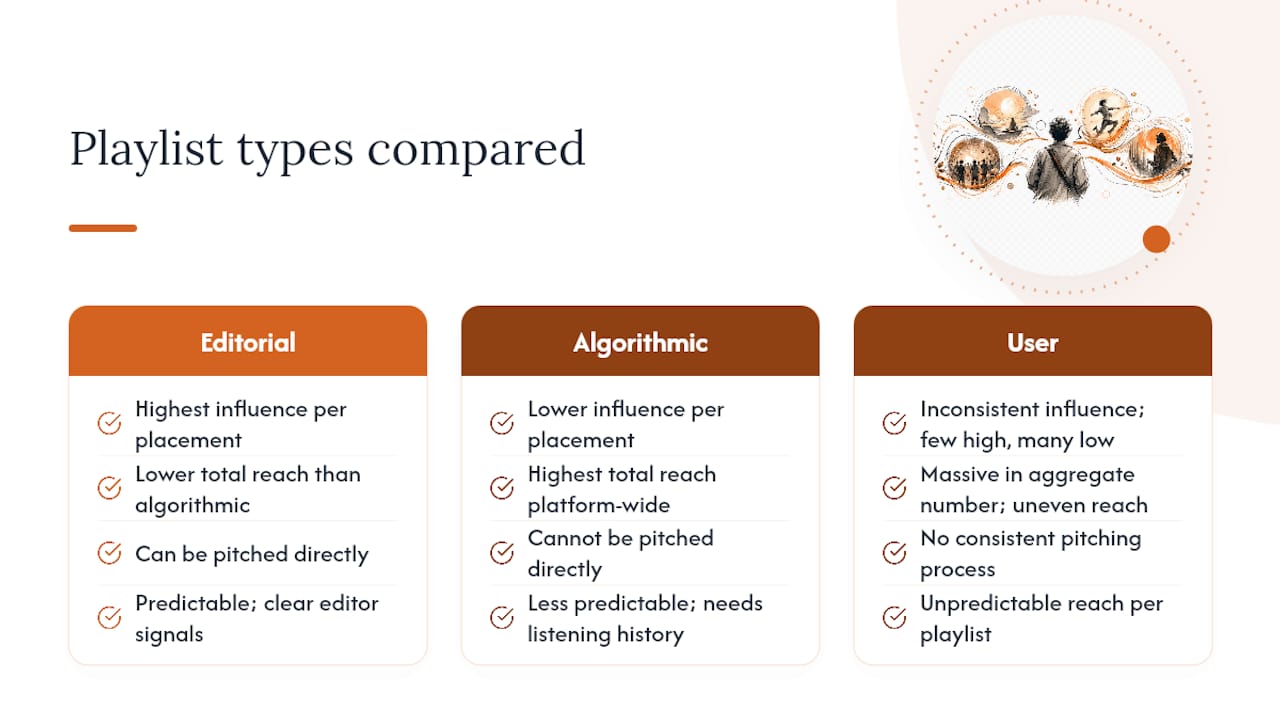
The practical difference for an independent artist comes down to control and predictability. You can pitch for editorial consideration and know exactly what evidence editors weigh. You cannot pitch an algorithm directly; you can only feed it better data through streams, saves, and follows so it eventually surfaces your track on its own. User playlists sit somewhere in between: some large, influential user-curated lists function almost like unofficial editorial playlists, but there’s no consistent process for reaching them and no guaranteed evidence bar.
Ranked purely by influence per placement, editorial beats both. Ranked by total streams generated across the platform, algorithmic often wins simply on volume. For an artist without an existing algorithmic footprint, editorial remains the more actionable target because it responds to a clear pitch and a clear set of signals, not months of accumulated listening history.
Who Curates Editorial Playlists, and What Do They Look For?
Spotify’s editorial staff work in specialized teams, typically organized around genre (hip hop, country, indie rock) or context (workout, focus, sleep, commute). Most come from backgrounds in music journalism, radio programming, or A&R, and much manage several playlists at once within their specialty.
Their job isn’t just picking songs they personally like. Editors are accountable for playlist performance, meaning save rate, listener retention, and skip rate all feed back into how they’re evaluated internally. That’s why sonic fit and measurable engagement carry equal weight in their decisions. A song that fits an editor’s taste but skips poorly in testing won’t survive; a song that tests well but clashes with the playlist’s established sound and energy corridor won’t get added in the first place.
This is also where curation best practice gets specific. Editors and independent curators alike tend to keep a playlist’s BPM range within a tight window, often 20 to 30 BPM wide, and allow only a small share of adjacent-genre tracks, commonly cited around 10 to 15 percent, to keep a playlist feeling cohesive while still surprising listeners. Knowing that a playlist runs this tight should shape which songs you pitch to it and how you describe them.
How Categories Shift With New Music Trends
Editorial categories aren’t fixed. Spotify’s editorial teams regularly spin up new playlists around emerging microgenres, viral sounds, and shifting listener behavior, then fold them into the existing genre or mood structure once they prove durable. Hyperpop, bedroom pop, and various regional hip hop subgenres all followed this pattern: a niche editorial pool first, then graduation into broader flagship consideration once listener data justified it.
Mood and activity categories evolve too, often faster than genre ones, because they track cultural behavior rather than sound. A spike in interest around a specific activity, like a new fitness trend or a shift in how people study, can prompt a new playlist inside a matter of weeks. Genre categories tend to move slower, since editors need more listening history before committing an entire playlist identity to an unproven sound.
For independent artists, this matters practically. A track that doesn’t fit any established genre category might still fit a mood or activity category if it has the right energy and tempo. Watching which new editorial playlists Spotify launches, and pitching early to ones aligned with your sound, is often easier than competing for space on a decade-old flagship with an entrenched submission pool.
Why Curator Feedback Changes How You Target Categories
Most artists guess at why a pitch got rejected. A curator-focused campaign removes the guesswork by pairing pitches with real, genre-matched curators and returning written feedback on every decision. Written feedback from curators often explains whether a track missed on sonic fit, energy, or category mismatch, which can be more useful than the placement itself. Reading that feedback closely, and adjusting pitch language before the next release, is how artists learn which categories actually fit their sound instead of repeating the same rejected pitch on a bigger list.
— Einars
A Faster Way to Reach the Right Curators
Everything in this guide works, but doing it manually means researching hundreds of individual curators, tracking down contact methods, and writing category-specific pitches from scratch for every playlist. Some services handle that legwork by sending personalized pitches to real, vetted curators matched to your genre, then providing real-time updates and written feedback on every decision a curator makes.
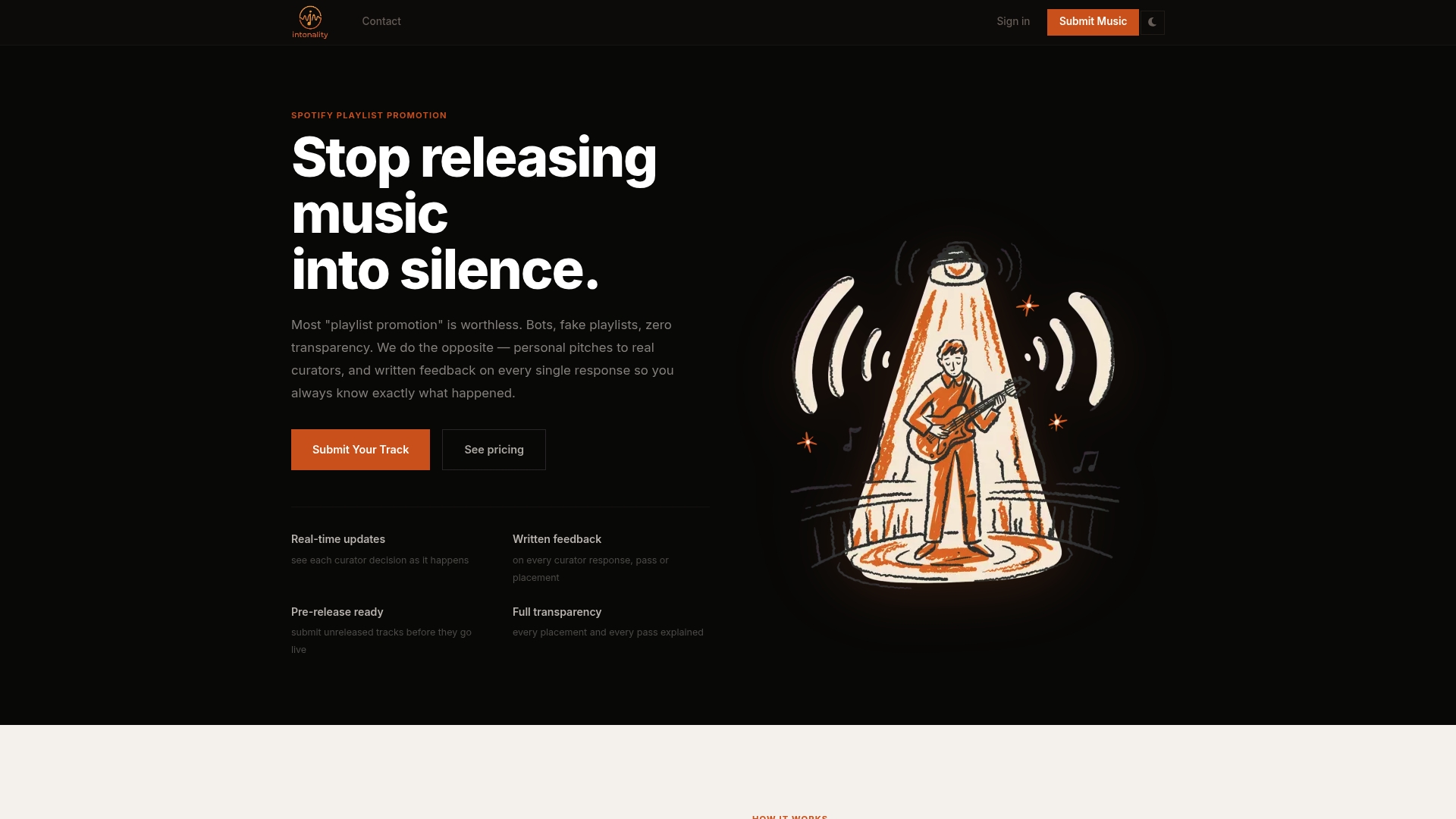
That written feedback is the part most promotion services skip entirely. Instead of a placement report with no explanation, you get to see exactly why a curator said yes or no, which makes your next pitch sharper whether you run it yourself or through another campaign. Artists who’ve already seeded niche playlists on their own often turn to a service like this once they need broader curator reach without spending weeks cold-emailing playlist owners one at a time.
If you’re ready to put category-matched pitching in front of real curators, start a Spotify playlist promotion campaign and see which editorial categories respond to your sound.
Sources
- Pitching music and videos to playlist editors — Spotify Support
- Playlisting — Spotify for Artists
- Playlist curation strategies 2026 — Music24
- What is an Editorial Playlist? How DSP Curators Actually Pick Songs — Interspace Music


