
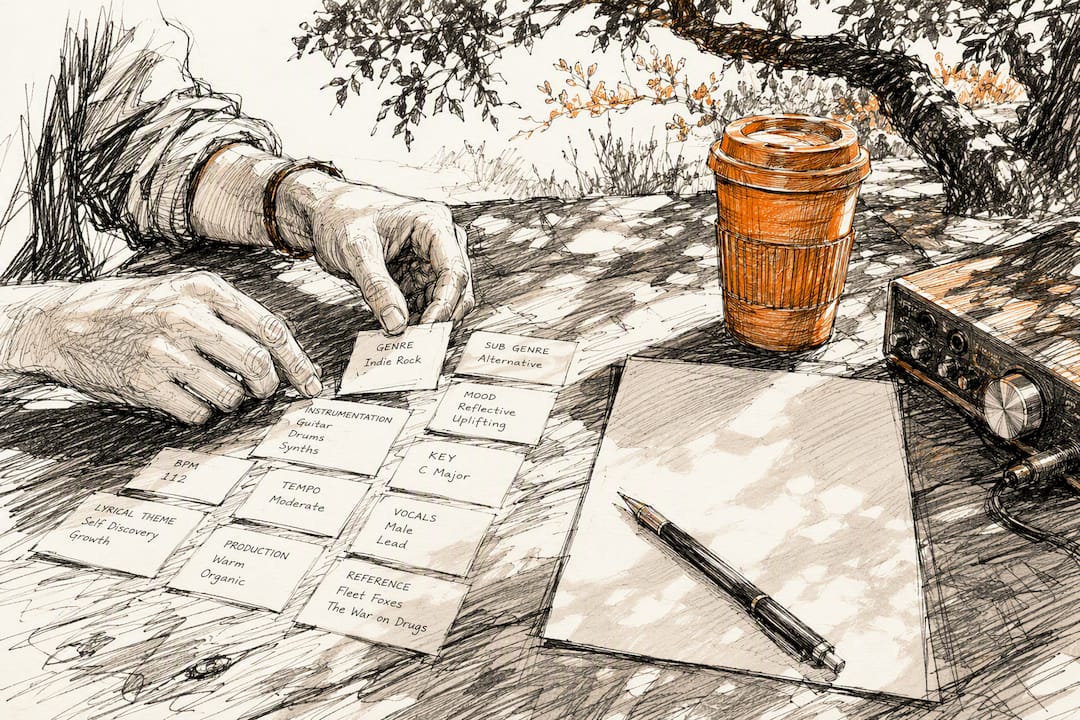
Playlist genre targeting means matching your track’s genre, mood, and instrumentation to playlists whose lane fits your sound, then pitching real curators who program that exact lane. Do this before you spend a dollar on promotion.
Three moves matter right now:
- Pick one focus track. Not the whole EP. One song.
- Tag it precisely: genre, mood, instruments, all specific, none guessed.
- Choose curators whose last ten adds sound like your song, not adjacent to it.
Spotify’s own guidance sets 7 days as the minimum submission window before release for editorial consideration. Miss that window and editorial doors close before you’ve even knocked.
Key Takeaways
Genre-targeted pitching works because accurate metadata routes your track to curators who actually program your sound, and that alignment drives stronger algorithmic and audience signals than raw playlist size ever will.
| Point | Details |
|---|---|
| Lead time matters | Submit 14 to 21 days before release, well ahead of Spotify’s 7 day editorial minimum. |
| Metadata drives routing | Fill genre, mood, instrument, and cultural tags honestly so editors sort your track correctly. |
| Alignment beats follower count | A smaller playlist with real saves and repeat listens outperforms a larger mismatched one. |
| Vet curators before paying | Check lane coherence, curator identity, and update patterns to avoid paid-submission dumps. |
| Intonality matches by genre | Reports 4 to 11 placements per campaign with vetted curators and written feedback on every decision. |
Table of Contents
- Why Does Genre Targeting Actually Improve Placement Odds?
- What Metadata Should You Prepare Before Pitching?
- When Should You Submit for Genre-Targeted Placement?
- How Do You Vet Genre-Matched Curators and Avoid Fakes?
- What Should You Expect From a Genre-Targeted Campaign?
- What’s the Step-by-Step Workflow Before You Submit?
- How Intonality Fits Into Your Genre-Targeting Strategy
- Frequently Asked Questions
- Sources
Why Does Genre Targeting Actually Improve Placement Odds?
Spotify’s editorial teams are organized by lane. Editors covering indie folk aren’t scanning trap submissions, and the reverse is just as true. Accurate genre, mood, and instrument tags route your song to the desk that actually programs your sound. Get the tags wrong and your pitch lands with an editor who has no reason to say yes, no matter how good the track is.
This is where a lot of artists misjudge value. A playlist with 200,000 followers sounds impressive, but if half those listeners skip past your genre, the algorithm reads that as rejection. A 15,000 follower playlist stacked with people who actually save and replay your kind of music sends a stronger signal to Spotify’s own recommendation engine than the bigger, mismatched list ever will.
Audience alignment, measured in saves and repeat listens, drives more algorithmic lift than raw follower counts. A smaller, correctly matched playlist can outperform a much larger one that doesn’t fit your sound.
That’s the whole case for targeting tightly instead of broadly.
What Metadata Should You Prepare Before Pitching?
Curators and Spotify’s own editorial sorting tools lean on metadata to decide where your track belongs. Spotify’s playlist editors have said directly that genre, mood, instruments, cultural tags, and location are essential sorting inputs, and that blank or dishonest tags send songs to the wrong desk entirely.
Fill these fields with intention:
- Primary genre: the single closest match, not the most flattering one.
- 1 to 2 secondary genres: the pitch form allows up to three total, so use them for real crossover appeal, not wishful thinking.
- Moods: melancholic, upbeat, nocturnal, whatever actually describes the listening experience.
- Instruments: pedal steel, 808s, upright bass, anything a curator would search for.
- Cultural tags and location: regional scenes (Nashville Americana, UK drill, Andalusian flamenco pop) that give a curator context.
- Release date and time zone: exact, not approximate.
- Explicit flag: set correctly, since a mislabeled track gets filtered out of clean playlists automatically.
Beyond tags, lock your final mix, confirm cover art meets Spotify’s specs, and double check your ISRC and UPC codes are attached correctly. Fill out your artist profile completely, since an empty bio and no photo tell curators this is a rushed submission. And pick one track. The pitch flow itself is built around a single song, not a whole release.
Pro Tip: Be brutally honest with your RIYL comps. Naming three artists that sound nothing like your track doesn’t widen your pitch, it just tells the curator you don’t know your own lane.
When Should You Submit for Genre-Targeted Placement?
Spotify’s official floor is 7 days before release. That’s the minimum, not the target. Industry practice, and most experienced pitchers, recommend 14 to 21 days so editors have real time to evaluate the track and so early playlist adds can build streaming momentum before release day algorithms start reading signals.
Your pitch needs exact release date and time zone information. Editors coordinate scheduling around it, and a vague date range reads as unprepared.
- Pre-release: editorial pitching only works before the track is live. This is your one shot at Spotify’s own curated lists.
- Post-release: paid curator campaigns and independent playlist outreach shift strategy entirely, since you now have real streaming data (saves, skip rate, completion) to show curators instead of a promise.
Submitting late is one of the most common mistakes that tanks otherwise solid pitches.
How Do You Vet Genre-Matched Curators and Avoid Fakes?
Not every playlist claiming your genre actually serves it. Run this check before you commit a campaign budget:
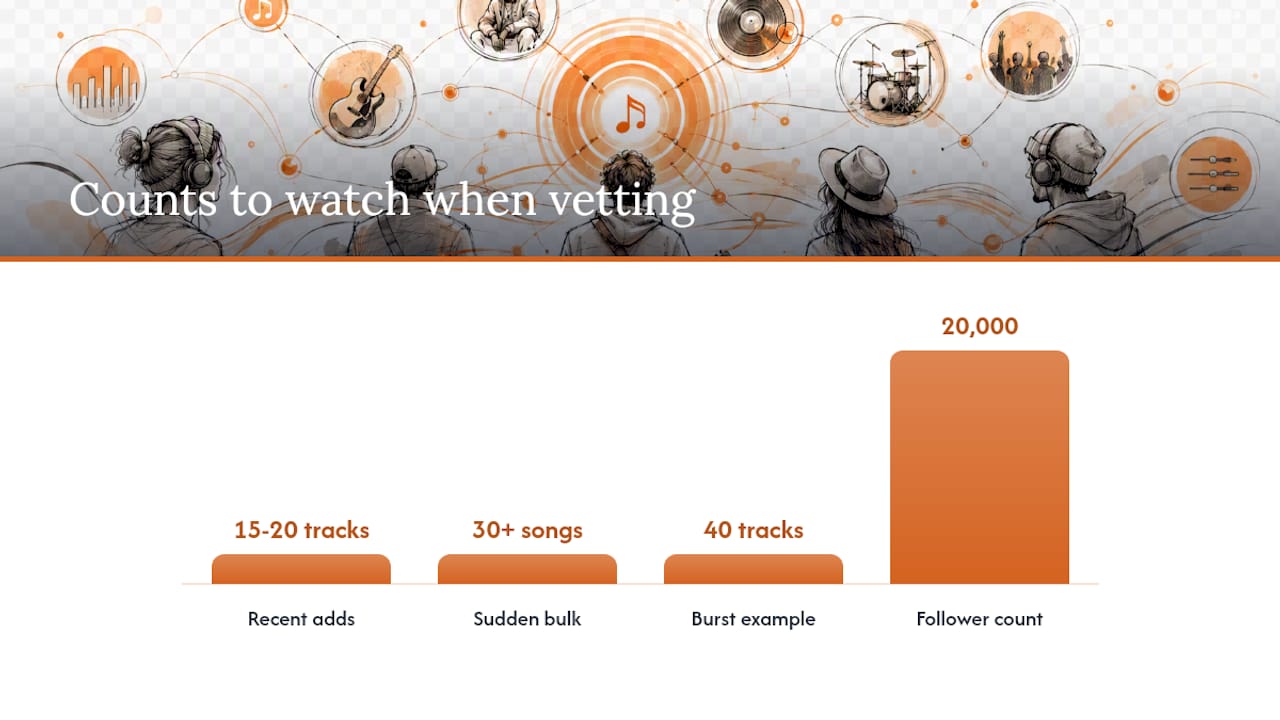
- Lane coherence: pull up the last 15 to 20 tracks added. Do they genuinely sound like your song, or just share a loose tag?
- Curator identity: is there a real name, a bio, a social presence, or is it an anonymous account with a stock photo?
- Update frequency: consistent weekly or biweekly adds signal an active, cared for list. Long gaps followed by a burst of 40 new tracks signal a bought or abandoned list.
- Audience signals: saves and follows relative to follower count matter more than the raw number. A 20,000 follower list with almost no saves is a dead list wearing a big number.
- Playlist description and submission instructions: a curator who bothers to write clear submission guidelines is running a real operation.
Watch for red flags:
- Anyone promising guaranteed placement. No legitimate curator can promise that, since placement depends on lane fit and roster mix, not payment.
- A playlist whose genre tag doesn’t match its actual tracklist.
- Sudden bulk updates that dump 30+ songs at once, a common paid-submission dump pattern.
- Follower counts that don’t match engagement at all.
Take a melancholic acoustic single as an example. It might fit a “Sad Indie Folk” lane, a “Rainy Day Acoustic” mood playlist, and a “Bedroom Singer-Songwriter” scene list, three different lanes, three different curator personalities, and none of them interchangeable.
Pro Tip: A curator who replies with specific feedback, even a rejection, is more valuable long term than one who says yes to everything. That specificity is the signal you’re dealing with a real ear, not a submission bot.
What Should You Expect From a Genre-Targeted Campaign?
Placement counts vary by campaign tier and curator quality, but a reasonably run genre-matched campaign for an independent artist typically lands somewhere in the mid single digits to low double digits of playlist placements. Stream volume per placement depends heavily on playlist size: smaller niche lists under 10,000 followers often deliver hundreds to low thousands of streams, while playlists in the 10,000 to 100,000 range can produce tens of thousands.
Don’t fixate on stream count alone. Track:
- Saves: the strongest single signal of genuine listener interest.
- Playlist follows and follower growth: shows the placement built lasting audience, not a one-time bump.
- Listener retention: completions and repeat plays tell you the track held attention past the first fifteen seconds.
- Geographic concentration: reveals whether a regional or cultural tag actually paid off.
Intonality reports an average of 4 to 11 playlist placements per campaign, depending on the service tier, with real-time updates and written curator feedback on every decision so artists can see exactly why a placement did or didn’t happen.
Read your campaign report against these signals, not just the top-line stream number, and you’ll know whether the placements actually moved your audience or just padded a number.
What’s the Step-by-Step Workflow Before You Submit?
Run the process in this order, every time:
- Select your focus track. One song, release-ready, no rough mixes.
- Finalize metadata. Genre, secondary genres, moods, instruments, cultural tags, location, explicit flag, all filled in honestly.
- Research and shortlist curators or playlists. Apply the vetting rubric above before adding anyone to your list.
- Schedule your submission. Aim for 14 to 21 days pre release, never later than the 7 day floor.
- Monitor early signals. Watch saves and skip rate in the first 72 hours after any placement goes live.
Before you hit submit, run this checklist:
- Cover art meets spec dimensions and file type.
- All metadata fields completed, no blanks.
- Artist profile filled out with bio, photo, and links.
- Focus track and backup track both identified.
- Time zone and release date confirmed and consistent everywhere.
- Pitch text written with honest RIYL comps and any relevant cultural or location context.
If your campaign includes direct curator outreach, keep the message short, specific, and honest about what the track is. Offer context, not incentives, and never promise a curator anything beyond the music itself. Curators who value transparency respond better to a straight pitch than a sales pitch.
A Note From the Curation Team
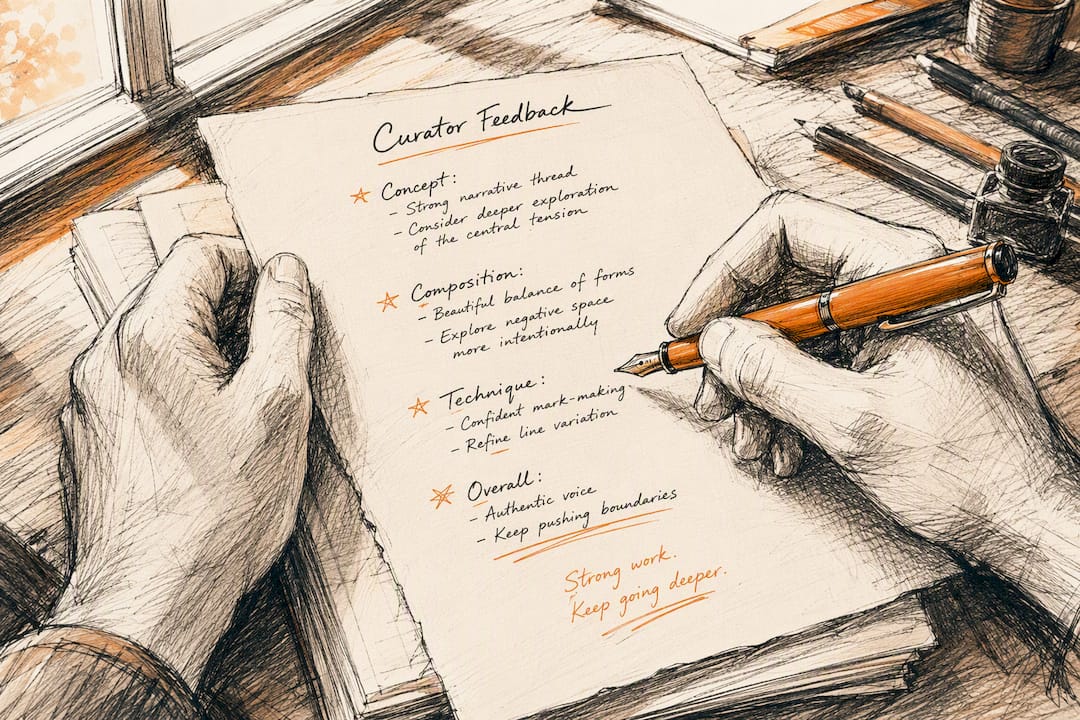
We push hard on genre fit because a mismatched placement wastes everyone’s time, the curator’s, the listener’s, and yours. Every decision comes back with written feedback so you know exactly why, not just a yes or no.
How Intonality Fits Into Your Genre-Targeting Strategy
Intonality is built around the exact workflow above: personalized pitches sent to real, vetted curators who actually program your genre, with real-time updates and written feedback on every decision instead of a black box.
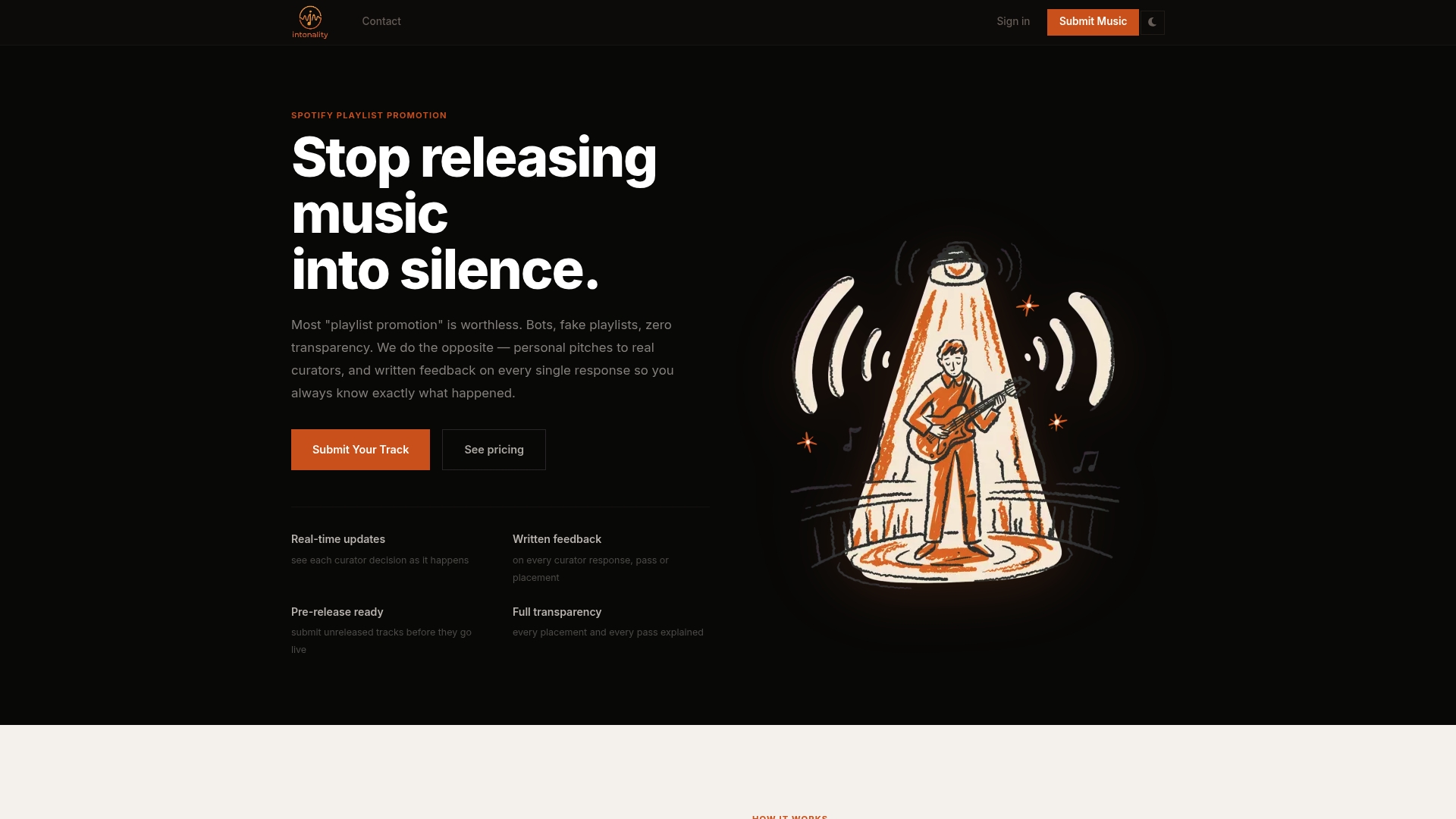
Campaign tiers scale to different budgets and placement goals, and every tier runs on the same principle, genre-matching first, volume second. If your sound sits closer to folk or indie, browse the genre-specific campaign options built around that lane. Intonality reports an average of 4 to 11 placements per campaign depending on tier, and every placement comes with the curator’s actual written reasoning attached, so you’re not guessing why a pitch landed or didn’t. Submit your focus track and see which curators are actively looking for a sound like yours right now through Intonality’s submission page.
Frequently Asked Questions
What is playlist genre targeting exactly? It’s the practice of matching your track’s genre, mood, and instrumentation metadata to playlists and curators who program that specific lane, then pitching accordingly instead of submitting broadly.
How many genre tags can I use when pitching? The Spotify for Artists pitch form allows a primary genre plus up to two additional tags, three total, so choose them for genuine fit rather than maximum reach.
Does a bigger playlist always mean better results? No. A playlist with strong saves and repeat listens from a genuinely aligned audience tends to produce better algorithmic outcomes than a much larger playlist with weak engagement.
How early should I submit before release? Spotify’s minimum is 7 days, but 14 to 21 days gives editors more evaluation time and helps build stronger day-one signals.
What’s a red flag when evaluating an independent curator? Any promise of guaranteed placement, a genre tag that doesn’t match the actual tracklist, or a sudden burst of dozens of new songs added at once.
Sources
- Pitching music and videos to playlist editors
- Behind the Playlists: Your Questions Answered by Our Playlist Editors
- Spotify Playlist Pitching Strategy: The Complete 2026 Guide | Tools 4 Music Blog


