Realistic playlist promotion cost for most U.S. independent musicians varies widely depending on whether you’re buying individual curator submissions or a full managed package. Before spending a dollar, submit your track through Spotify for Artists for free. That editorial pitch costs nothing, guarantees Release Radar distribution to your existing followers, and is the highest-return first move available to any indie artist. After that, reserve a moderate budget for a controlled test with a curator-pitching service before committing to a larger campaign.
One thing to set straight before you budget: playlist promotion is primarily an algorithmic signal play, not a direct revenue channel. With typical streaming royalties low enough, you’d need hundreds of thousands of streams to earn a thousand dollars in royalties. No realistic campaign budget pays for itself on royalties alone. What you’re actually buying is listener engagement data and algorithmic traction. Saves and completion rates from real listeners signal Spotify’s algorithm to push your track further. That’s the actual return on investment.
Quick budget checklist for a single U.S. release:
- Free: Spotify for Artists editorial pitch (always do this first)
- Low cost per submission: Credit-based curator feedback platforms
- Moderate to higher cost: Curated campaign packages (multi-curator pitching)
- Starting budget needed: Spotify Ad Studio (in-platform ads with direct tracking)
- Higher budget: Full-service agency or multi-channel campaign
Table of Contents
- How does playlist promotion pricing actually work?
- Which service category is right for your budget?
- What does a playlist promotion campaign actually deliver?
- How to choose a playlist promotion service
- How to measure campaign results honestly
- What should you actually budget? A step-by-step plan for U.S. indie artists
- Key Takeaways
- Why curator feedback beats mass placement every time
- Intonality: curator-first playlist promotion with full transparency
- Useful sources and further reading
How does playlist promotion pricing actually work?
The price range for playlist promotion is wide because the underlying business models are completely different. A $20 submission credit and a $2,500 managed campaign are not the same product at different price points. They solve different problems.

The main pricing models
Free official options are where every campaign should start. Spotify for Artists’ editorial pitch is free and the highest-return starter investment for most artists. You submit one unreleased track per release cycle, and Spotify’s editorial team reviews it for algorithmic and editorial playlists. No cost, no middleman.
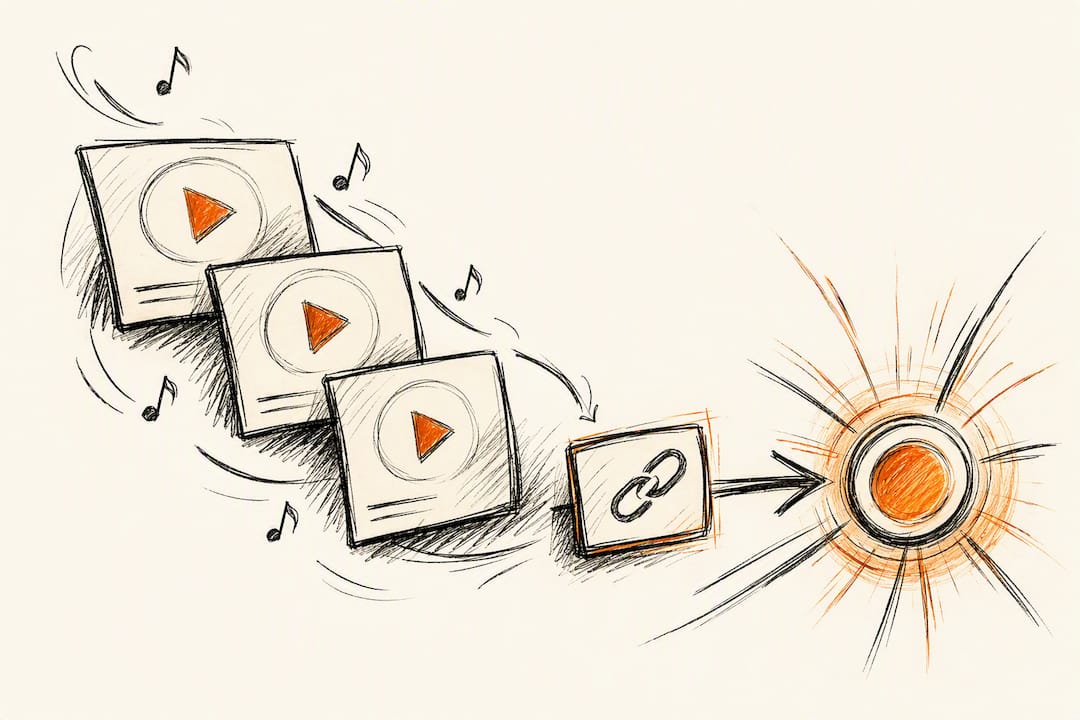
Per-submission (credit-based) services charge per curator pitch, typically a moderate cost per submission. You buy credits, browse a curator marketplace, and submit your track to individual curators who review it and respond with a pass or placement. The math: if you submit to 10 curators at $20 each, that’s $200 for 10 reviews. Placement is not guaranteed, which is exactly how it should work. Platforms like SubmitHub operate on this model.
Flat campaign packages bundle curator outreach into a managed service. You pay one price, the service pitches your track to a defined list of curators, and you receive a report of outcomes. Full campaigns run a wider range for curated campaign packages depending on volume, curator quality, and reporting depth. This is where most serious indie artists spend their first real budget.
In-platform advertising through Spotify Ad Studio works on an auction model with flexible daily and lifetime budgets. The practical starting point is $250. Unlike curator pitching, Spotify ads deliver your track directly to listeners as audio or video ads, with full in-platform tracking. It’s a different channel entirely, better used for retargeting listeners who’ve already engaged with your music.
Agency retainers cover full-service campaign management, often combining curator pitching, social ads, PR, and playlist strategy. Budgets typically start at $2,500 and scale upward. For most independent artists without a label advance, this tier only makes sense after you’ve validated a track with smaller tests.
What drives the price up or down
- Playlist follower count vs. curator engagement. A playlist with 50,000 engaged followers who actually listen is worth more than one with 500,000 ghost followers. Reputable services price for real engagement, not raw follower numbers.
- Curator vetting and genre fit. Services that manually vet curators and match your track to genre-specific playlists charge more because the work is real. Generic mass-submission services are cheaper and less effective.
- Reporting and dashboard access. Real-time campaign dashboards with written curator feedback cost more to build and maintain. That cost passes to you, and it’s worth paying.
- Campaign speed. Rush campaigns or guaranteed turnaround windows add cost.
- Geographic targeting. U.S.-specific curator targeting or listener demographic filtering adds a premium.
Pro Tip: Before comparing prices across services, calculate cost-per-submission, not cost-per-campaign. A $500 package that submits to 50 curators costs $10 per submission. A $200 package that submits to 5 costs $40 per submission. The cheaper package isn’t always the better deal.
| Pricing model | Typical cost range | What you’re paying for |
|---|---|---|
| Spotify for Artists pitch | Free | Editorial consideration + Release Radar |
| Per-submission credits | $20–$60 per submission | Curator review and written feedback |
| Flat campaign package | $300–$2,500 per full campaign | Managed multi-curator outreach + report |
| Spotify Ad Studio | $250 minimum starting budget | In-platform audio/video ads with tracking |
| Agency retainer | $2,500 and up per campaign | Full-service multi-channel management |
Which service category is right for your budget?
The table below maps the main service categories to the dimensions that actually affect cost and outcomes. Intonality sits in the curated campaign column and is the recommended pick for artists who want written curator feedback, real-time dashboard access, and genre-matched placements without opaque mass-submission tactics.
| Category | Starting price | Pricing model | Avg. placements | Transparency | Guarantee/refund | Targeting | Turnaround | U.S. available |
|---|---|---|---|---|---|---|---|---|
| Credit-based feedback (e.g., SubmitHub) | Moderate cost per submission | Per submission | Varies by curator response | Curator names visible; written feedback | No placement guarantee; credits may be refunded if curator doesn’t respond | Genre tags; some mood/region | 1–7 days per curator | Yes |
| Curated campaign packages (e.g., Intonality) | a wider range for curated campaign packages | Flat package | 4 placements (brand-reported) | Real-time dashboard; written curator feedback; curator vetting policy | No guaranteed placements; refund terms vary by provider | Genre-matched; mood; pre-release capable | 1–3 weeks | Yes |
| In-platform ads (Spotify Ad Studio) | a starting budget for Spotify Ad Studio | Auction/CPM | N/A (impressions, not placements) | Full in-platform analytics | No placement; spend-based | Listener demographics, genre, behavior | Immediate | Yes |
| Playlist-Promotion.com style per-placement | Varies by tier | Per placement or package | Varies by package | Limited; curator identities often not disclosed | Some packages offer partial refunds | Genre; follower count tiers | 1–2 weeks | Yes |
| Full-service agency | a higher tier budget for full-service agency campaigns | Monthly retainer | Varies widely | Depends on agency | Rarely guaranteed; contract-based | Multi-channel; custom | 4–8 weeks | Yes |
When to use each category:
- Credit-based platforms work best for artists who want direct curator feedback on a track before investing in a full campaign. Think of it as paid market research.
- Curated campaign packages are the right move when you’ve validated a track and want coordinated outreach to genre-matched curators with reporting you can actually use. Intonality’s model sits here: personalized pitches to vetted curators, real-time updates, and written feedback on every curator decision.
- Spotify Ad Studio is not a playlist promotion tool. Use it to retarget listeners who’ve already saved or streamed your music, not as a first-touch discovery channel.
- Full-service agencies make sense when you have a label deal, a significant release budget, or a catalog that justifies multi-channel investment.
Pro Tip: Evaluating promotion services side by side? Ask each one for a sample campaign dashboard before you pay. A service that can’t show you what reporting looks like after a campaign is a service that doesn’t want you to measure results.
What does a playlist promotion campaign actually deliver?
Knowing what you’ll receive before you pay is the only way to judge whether a service is worth the cost. The deliverables vary significantly by service type, but here’s what a legitimate curated campaign should produce.
Common deliverables from a curator-pitching campaign:
- A defined number of curator submissions (the service should tell you this upfront)
- Written feedback from each curator, whether they pass or place your track
- Placement count and playlist names (when placements occur)
- Real-time or post-campaign dashboard showing submission status
- Follower and listener demographic data (if the service integrates with Spotify for Artists)
- Campaign timeline with clear start and end dates
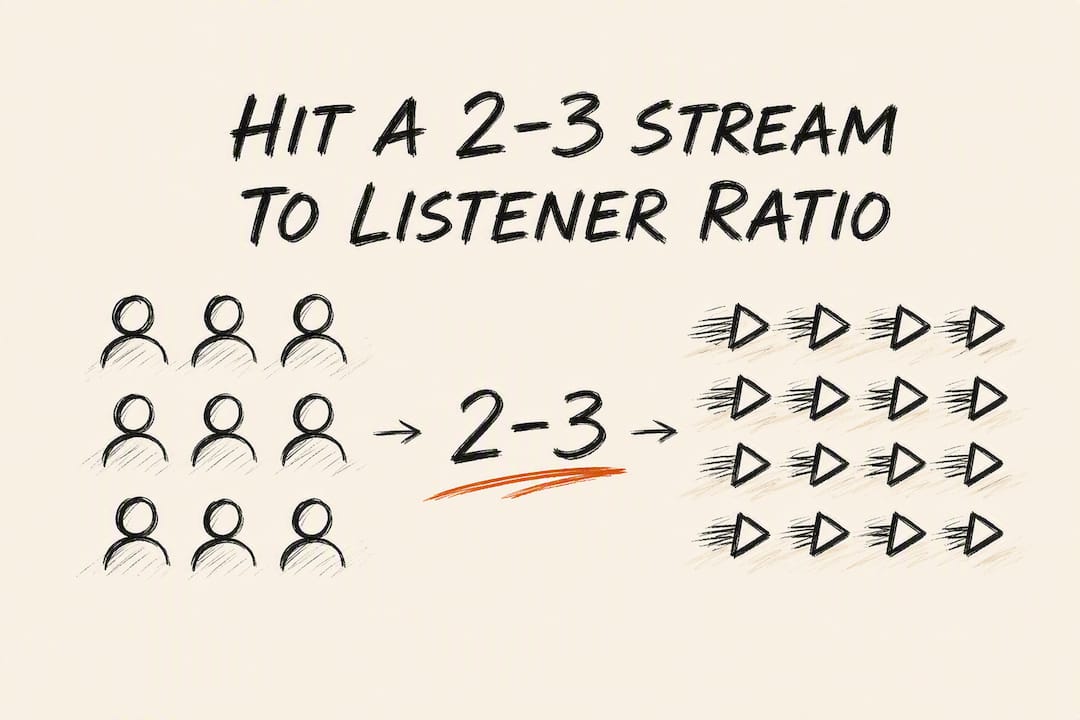
Raw stream counts in the first week are the most visible number, but they’re also the most misleading. A track that gets 5,000 plays from passive listeners who skip after 10 seconds is worth less algorithmically than one that gets 1,000 plays with a 70% completion rate and 200 saves.
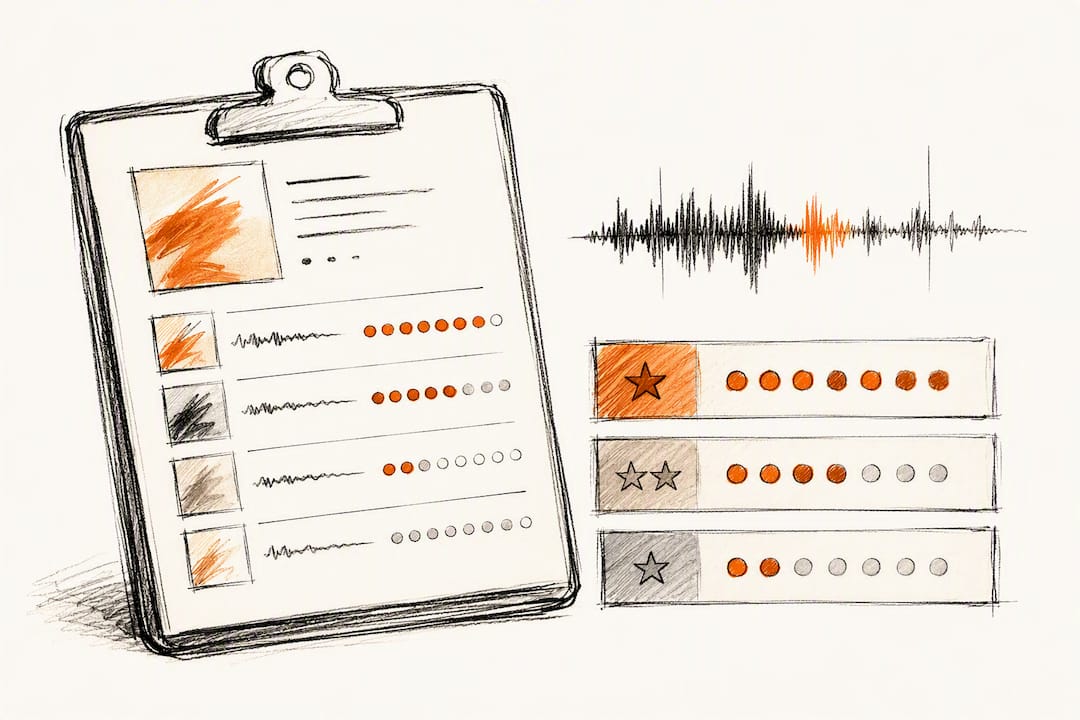
The metrics that actually matter:
- Save rate: The percentage of listeners who save your track after hearing it. This is the strongest signal Spotify’s algorithm uses to determine whether to push a track further.
- Completion rate: How much of the track listeners actually hear. A high completion rate tells the algorithm the track holds attention.
- Follower growth: New followers acquired during the campaign window, indicating listeners who want to hear more.
- Listener location diversity: Streams concentrated in one suspicious region can flag bot activity.
- Cost-per-stream: Total campaign spend divided by total streams. Useful for comparing campaigns, not for calculating ROI against royalties.
- Discovered On attribution: In Spotify for Artists analytics, this shows which playlists drove listeners to your track. It’s the clearest proof that a placement actually delivered listeners.
You can track most of these through Spotify for Artists analytics during and after any campaign.
Pro Tip: Watch save rate and completion rate at the 7-day mark, not total plays. If save rate is above 10% and completion rate is above 60%, the track has algorithmic legs. Scale the campaign. If both are low, the track needs work before more spend makes sense.
How to choose a playlist promotion service
The decision framework here is simple: define what you need, then eliminate services that can’t prove they deliver it.
Step-by-step checklist
- Pick a budget tier — Match your budget to the pricing model that fits: credit-based testing under $200, curated packages at a wider range for curated campaign packages, ads at $250+.
Questions to ask any service
- How do you vet the curators in your network?
- Can you show me a sample campaign dashboard?
- What is your average placement rate across campaigns in my genre?
- How do you measure and report placements?
- What is your refund or credit policy if curators don’t respond?
- Do you provide written feedback from every curator decision?
Red flags that should stop you cold
- Guaranteed placements with large follower counts. Reputable services charge for curator review and feedback, not guaranteed placements. A service promising 50 placements on playlists with 100,000+ followers for $99 is selling something that doesn’t exist legitimately.
- No curator identities disclosed. If you can’t verify that real curators are reviewing your track, you’re paying for a black box.
- No written feedback. A pass with no explanation is a waste of your submission fee.
- Bot-like stream patterns. After a campaign, check Spotify for Artists for listener location data. Streams concentrated in unusual regions with no demographic diversity are a strong signal of artificial activity.
- Policies that encourage buying editorial placements. Paying for placement on Spotify’s editorial playlists is explicitly prohibited by Spotify’s Terms of Service and can result in penalties for both the artist and the service.
For hip-hop artists specifically, genre-specific feedback platforms like QuickRapReview offer curator-style track reviews that can help you validate a track before committing to a full campaign budget.
How to measure campaign results honestly
The most common mistake indie artists make is judging a campaign by first-week stream totals. That number is easy to inflate and hard to interpret without context. A reproducible measurement method protects you from both bad vendors and your own wishful thinking.
How to structure a valid campaign test
- Set a control period. Measure your track’s organic performance for 7 days before the campaign starts. Record baseline streams, saves, and completion rate.
- Define KPIs in advance. Commit to specific targets: save rate above a threshold, completion rate above a threshold, and a minimum placement count.
- Use a single campaign at a time. Running multiple promotion channels simultaneously makes it impossible to attribute results to any one source.
- Set a 30-day attribution window. Algorithmic effects from playlist placements often take 2–4 weeks to show up in listener data. Judge the campaign at 7 days for early signals and at 30 days for full impact.
- Check Discovered On in Spotify for Artists. This is the only reliable way to confirm that a specific playlist actually drove listeners to your track.
Sample campaign outcome benchmarks
Specific campaign spend and placement ranges vary widely and depend on service and artist goals. Outcomes also vary considerably across campaigns.
The cost-per-stream column tells the same story at every tier: at roughly $0.004 per stream, playlist promotion does not pay for itself in royalties. A $500 campaign that generates 2,000 first-week streams earns roughly $8 in royalties. The value is in the algorithmic signal those streams carry, not the payout.
Interpreting the data correctly
The save rate and completion rate from playlist-placed streams are stronger predictors of algorithmic pickup than raw play counts. A track that earns 500 saves from 2,000 playlist streams has a 25% save rate. That’s a strong signal. A track with 10,000 streams and 100 saves has a 1% save rate. Spotify’s algorithm notices the difference.
What should you actually budget? A step-by-step plan for U.S. indie artists
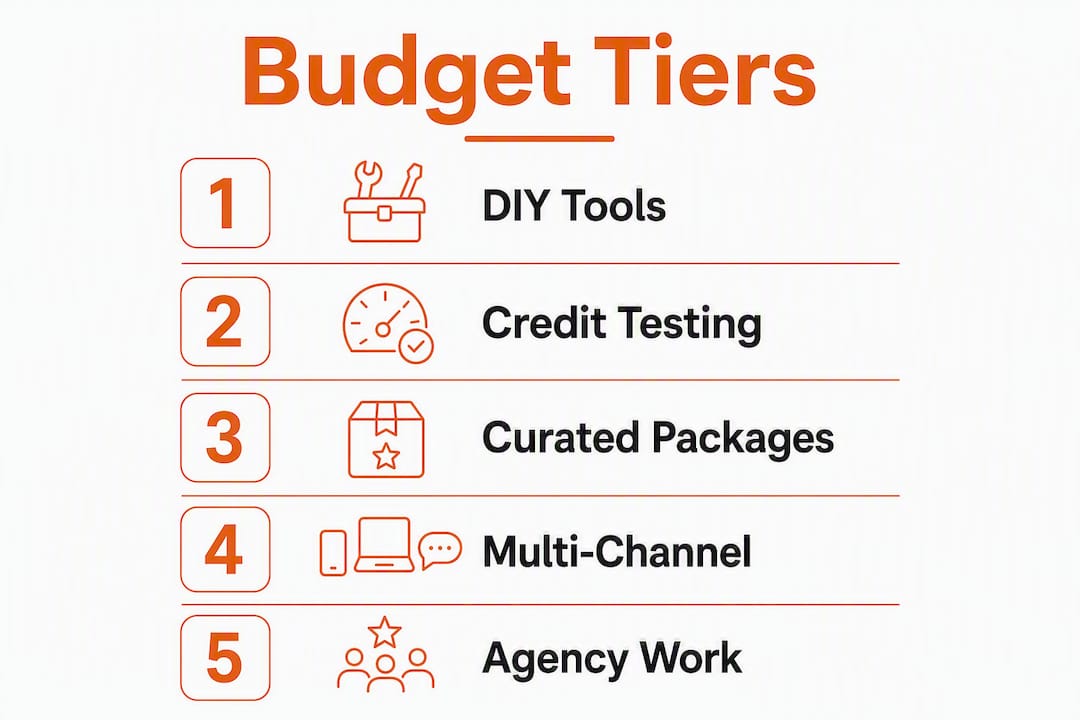
The budget tiers below are designed as a progression, not a menu. Start at the tier that fits your current resources, measure results, and move up only when the data supports it.
Tier 1: $0 — DIY with official tools
Every release starts here. Submit your track through Spotify for Artists at least seven days before release. This is the free editorial pitch, and it guarantees Release Radar distribution to your existing followers regardless of editorial selection. Learning how to nail this pitch is the highest-ROI skill any indie artist can develop.
Goal: Editorial consideration and baseline follower distribution. Measure: Release Radar impressions, first-week saves, completion rate.
Tier 2: $20–$500 — Credit-based testing and feedback
Use credit-based submission platforms to collect curator feedback on a track before investing in a full campaign. Submit to 5–15 curators in your genre. Read every piece of written feedback carefully. If multiple curators flag the same issue (mix quality, genre fit, song structure), address it before spending more.
Goal: Validate the track and collect actionable feedback. Measure: Curator response rate, written feedback themes, any placements.
Tier 3: $500–$1,500 — Curated campaign packages and modest ad testing
This is where a coordinated curator-pitching campaign makes sense. At $500–$1,500, you can access services that submit to 25–60 genre-matched curators with real-time reporting and written feedback. Run one campaign at a time. After 7 days, check save rate and completion rate. If both are strong, add a $250 Spotify Ad Studio test to retarget listeners who engaged with your track.

Goal: Playlist placements, algorithmic lift, and first retargeting data. Measure: Placement count, save rate at 7 and 30 days, Discovered On attribution, ad click-through rate.
A practical example: $800 for a curated campaign package plus $250 for a Spotify Ad Studio retargeting test totals $1,050. That’s a complete, measurable release campaign for an independent artist with no label support.
Tier 4: $1,500–$5,000+ — Multi-channel campaigns or agency work
At this tier, you’re combining curator pitching, paid social, Spotify ads, and possibly PR. This level of spend only makes sense if Tier 3 produced strong engagement signals on the same track or catalog. Treat this as scaling what’s already working, not as a first attempt.
Goal: Broad playlist coverage, social amplification, and sustained algorithmic momentum. Measure: All Tier 3 metrics plus social engagement rate, follower growth velocity, and playlist listener retention at 30 and 60 days.
Pro Tip: Treat each campaign as a data collection exercise. The written curator feedback you receive from a $300 campaign is worth as much as the placements, because it tells you exactly how to position the next track. Budget for that feedback, not just for the streams.
Independent artists should approach playlist promotion as a multi-stage funnel: start free, validate with curator feedback, then scale with paid tests only after positive retention signals appear.
Key Takeaways
Playlist promotion works best when treated as a data-collection and algorithmic-signal strategy, not a direct revenue play, with Intonality’s curator-first model offering the transparency needed to measure that signal accurately.
| Point | Details |
|---|---|
| Realistic cost ranges | Per-submission credits run $20–$60; full curated campaigns run $300–$2,500; Spotify Ad Studio starts at $250. |
| Start free, then test | Submit through Spotify for Artists at no cost before spending anything on third-party services. |
| Judge by save rate | Save rate and completion rate at 7 days predict algorithmic traction better than raw first-week stream counts. |
| Avoid guaranteed placements | Services promising guaranteed placements often use low-quality or bot-driven playlists that violate Spotify’s Terms of Service. |
| Intonality for curator-first campaigns | Intonality offers personalized pitches to vetted, genre-matched curators with real-time dashboard reporting and written feedback on every decision. |
Why curator feedback beats mass placement every time
Most artists approach playlist promotion backward. They want the biggest playlists, the highest follower counts, and the most streams in the first week. Those numbers feel good. They’re also the easiest to fake and the least predictive of long-term algorithmic success.
The artists who get the most out of playlist promotion are the ones who treat curator feedback as the primary deliverable. A written explanation of why a curator passed on your track tells you something no stream count can: whether your track is positioned correctly for its genre, whether the production quality matches listener expectations, and whether your pitch is communicating what the track actually sounds like.
Mass-placement tactics skip that feedback loop entirely. You get streams, sometimes a lot of them, and no information about why listeners did or didn’t engage. When the campaign ends, you’re left with a stream count that doesn’t cover its own cost in royalties and no data to improve the next release.
Transparency in reporting is not a nice feature. It’s the mechanism by which you learn whether a campaign worked and why. Real-time dashboards, written curator decisions, and genre-matched outreach are the infrastructure of a campaign you can actually learn from. Bot-driven placements and opaque mass-submission tactics produce numbers that look like results but carry no signal.
The ethical dimension matters too. Buying editorial placements is prohibited by Spotify’s Terms of Service. Services that promise them are either lying about what they’re delivering or putting your account at risk. Neither outcome is worth the cost.
Intonality: curator-first playlist promotion with full transparency
Most playlist promotion services make you choose between affordability and accountability. Intonality is built around the idea that you shouldn’t have to.
Every Intonality campaign sends personalized pitches to real, vetted curators matched to your track’s genre and mood. You get written feedback from every curator decision, whether they place your track or pass. A real-time dashboard shows you exactly where your submission stands throughout the campaign. Pre-release submission is supported, so you can build momentum before your track goes live. Depending on the service tier, Intonality reports multiple playlist placements per campaign.
For artists working through the budget tiers above, Intonality fits naturally at the curated campaign packages level: coordinated outreach, genre-matched targeting, and the reporting depth you need to judge whether a campaign is working. It’s the right move after you’ve validated a track with curator feedback and you’re ready to run a full campaign with measurable outcomes.
Ready to run a campaign that gives you real data, not just stream counts? See how Intonality compares to credit-based submission platforms and start your first curator-first campaign.
Useful sources and further reading
The sources below were used to verify figures and claims throughout this article. When evaluating any source on playlist promotion costs, check for methodology transparency, sample sizes, and the date the data was collected.
- Spotify Ads Pricing and Costs: Official Spotify Advertising page covering Ad Studio’s auction model, budget controls, and the a starting budget for Spotify Ad Studio campaign guidance. Primary source for in-platform ad cost figures.
- Spotify for Artists: Official platform guidance on the free editorial pitch, curator relationships, and platform policies on paid placements. The authoritative source for what is and isn’t permitted.
- Best Spotify Playlist Promotion for Independent Artists (Intonality): Overview of curator-first promotion models, transparency features, and how to evaluate services by reporting quality and curator vetting standards.
- Best Music Promotion Services in 2026 (Intonality): Comparative analysis of promotion service categories with evaluation criteria for independent artists.
- Spotify for Artists Analytics: Verify Playlist Promotion (Intonality): Practical guide to using Spotify for Artists analytics to track campaign outcomes, including save rate, completion rate, and Discovered On attribution.
How to evaluate any source on playlist promotion: Look for disclosed methodology (how campaigns were tracked), sample size (how many campaigns or artists), and data collection date. A source that reports campaign outcomes without disclosing how placements were measured or verified is not reliable for budgeting decisions.