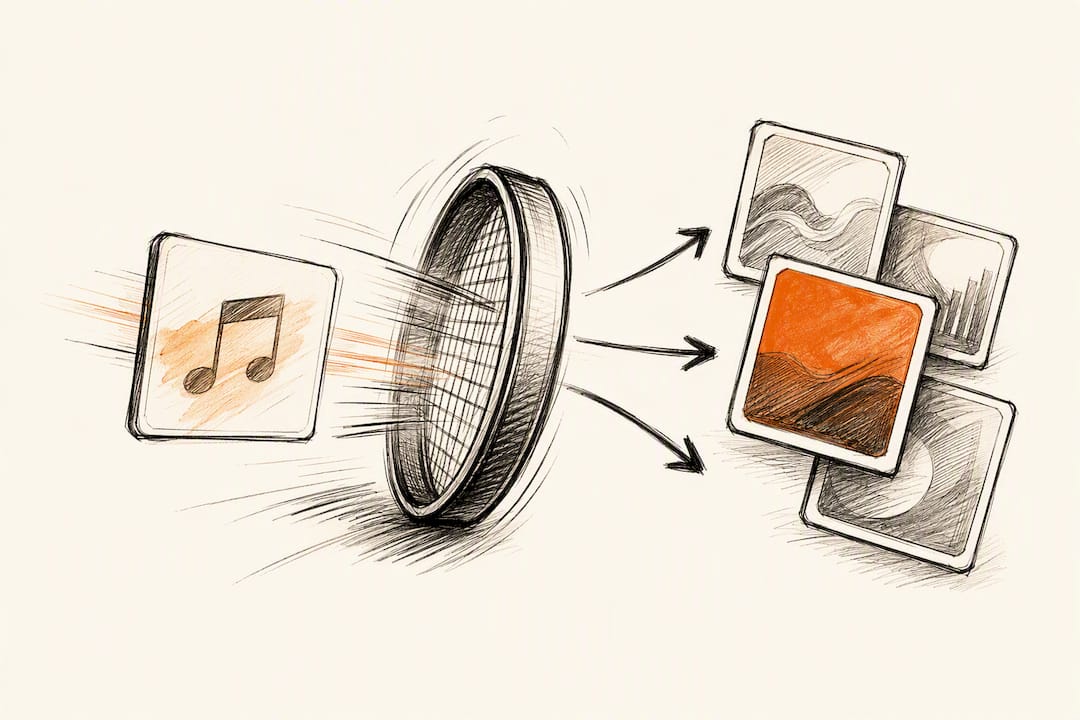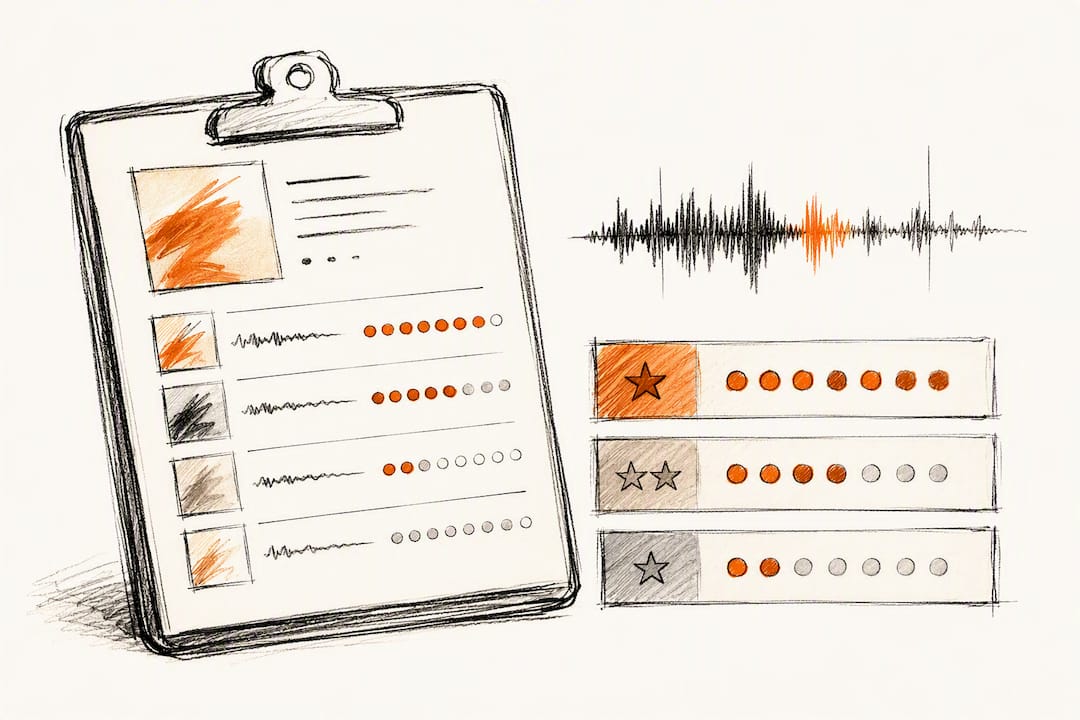
A playlist fits your track when the audio profile matches what’s already on it and the audience actually listens, not just follows. Check three things before you pitch anything: how closely your song’s energy, danceability, and mood match the playlist’s existing tracks, whether recent adds show real listener activity, and whether the follower count is backed by consistent streams rather than a one-time spike. If those line up, pitch. If they don’t, keep looking.
TL;DR:
- Playlists with a high followers-to-listeners ratio indicate inactive audiences, so focus on playlists with active streaming engagement rather than raw follower counts.
- Comparing your track’s audio features with playlist averages, especially energy, danceability, and valence, offers a more reliable indication of fit than popularity scores alone.
- Engagement signals such as save rate, completion rate, and repeat listens are stronger predictors of playlist placement success than follower numbers or recent spikes.
- Timing your pitch about a month before release increases acceptance chances for editorial playlists, while post-release pitches are better if your track already shows early engagement.
- Using a scoring system based on audio similarity (40%), engagement (30%), tier match (20%), and recency (10%) helps identify the most promising playlists to target.
Table of Contents
- What Metrics Actually Tell You About Playlist Fit
- How to Use a Playlist Analyzer Tool, Step by Step
- Red Flags and Quality Signals Worth Checking
- When Is the Right Time to Pitch a Playlist?
- Score Every Playlist Before You Pitch
- What Curator-Tested Data Shows About Fit and Timing
- How I Actually Score Playlists Before a Release
- Get Your Track in Front of Curators Who Already Match Your Sound
- Sources
- FAQ
What Metrics Actually Tell You About Playlist Fit
Most artists check follower count first and stop there. That’s the least useful number on the page.
Follower count tells you reach, not relevance. A playlist with 80,000 followers built two years ago from a viral moment can be quieter today than a 4,000-follower playlist that gets refreshed every week. What separates the two is the listeners-to-followers ratio: pull up the playlist and look at how many people are actually streaming from it in a given period versus how many clicked “follow” once and never came back. A healthy ratio suggests an active audience. A huge follower count with barely any current listeners suggests a playlist that peaked and stalled.
Follower growth trend matters just as much as the raw number. A playlist gaining 200 followers a week is being actively promoted or shared somewhere, which usually means the curator is still engaged. A playlist that hasn’t added a follower in months, even if the base is large, is probably dormant.
Average track popularity is where a lot of artists get the comparison backward. Spotify’s popularity score runs from 0 to 100 and reflects recent stream velocity, not lifetime totals. If the tracks on a playlist average a popularity score in the 60s and your unreleased single has no streaming history yet, you’re not necessarily a bad fit. You’re an unknown quantity next to established names. The useful comparison is genre and tier: are the other artists on this playlist emerging or established, and does your current catalog sit in a similar tier?
Audio features are where fit gets measurable instead of guessed at. Spotify assigns tracks values for energy, danceability, valence, tempo, and acousticness, among others. A fit-scoring approach built on ranking thousands of playlists treats audio similarity as the single dominant factor in whether a track belongs on a playlist, more predictive than popularity or recency combined. If your track sits at 0.75 energy and 0.3 valence, and a playlist averages 0.4 energy and 0.8 valence, that isn’t a stylistic near miss. It’s the wrong room.
The metric that gets skipped most often: engagement signals, not follower size, predict whether a placement actually helps your track. Saves, completion rate, repeat listens, and playlist adds tell you whether people who hear your song want more of it, and those signals feed directly into what Spotify’s own algorithmic playlists used to decide whether to push your track into Discover Weekly or Release Radar.
Here’s the shortlist to check before anything else:
- Followers vs. active listeners — a ratio gap over 10:1 is a warning sign, not a guarantee of dead reach.
- Average track popularity — compare tier to tier, not number to number.
- Audio feature averages — energy, danceability, and valence should sit within a reasonable range of your track’s own profile.
- Save rate and completion rate — these predict algorithmic pickup better than raw stream count.
- Recent follower growth — a flat line for months usually means an inactive curator.
How to Use a Playlist Analyzer Tool, Step by Step
Analyzer tools do the same basic job whether you’re using a browser extension, a standalone site, or manually pulling numbers from Spotify for Artists. The workflow below works regardless of which one you pick.
- Paste the playlist URL and confirm curator identity first. Before you look at a single metric, check who owns the playlist. Is there a name attached, a bio, links to social accounts or a website? Anonymous playlists with no owner information carry more risk, because there’s no way to verify who’s actually behind the curation.
- Read the health signals. Followers, listener count over the last 28 days, and average popularity give you the baseline picture. Look for consistency across weeks rather than a single strong data point.
- Compare audio features side by side. Pull your track’s energy, danceability, valence, and tempo from Spotify for Artists or a tool like Every Noise at Once and set them next to the playlist’s averages. A gap of more than 20 to 25 points on any major feature is worth noting.
- Check recent activity and retention. When was the last track added? Are older tracks on the playlist still accumulating saves, or did engagement drop off after the first week? A playlist that only gets attention right after each update is a short-lived boost, not sustained exposure.
- Assign a quick verdict. Based on what you’ve seen, sort the playlist into one of three buckets: pitch now, monitor for a few weeks, or discard. Don’t let a strong follower count override a weak signal in the other three steps.
Pro Tip: Run the same five-step check on two or three playlists you already know are strong fits for other artists in your genre. That gives you a working baseline for what “good” looks like on an analyzer before you start judging playlists you’re unsure about.
Most artists skip step one and go straight to the numbers, which is how a lot of pitches end up in front of playlists with no real curator behind them. Confirming identity takes thirty seconds and saves you from wasting a pitch on something that isn’t actively maintained.
Red Flags and Quality Signals Worth Checking
A playlist can look impressive on the surface and still be a dead end. The signals that separate a genuine curator from a hollow shell are usually visible within a few minutes of looking closely.
Watch for these red flags:
- Sudden follower or stream spikes with no clear cause — a jump that doesn’t match any promotion, feature, or social mention is a sign of artificial streaming activity, which platforms actively detect and penalize.
- Recycled or generic cover art — stock images, mismatched fonts, or art that looks copy-pasted from another playlist suggests low investment in the page.
- Inconsistent genre mix — a playlist claiming to be “indie folk” that’s actually half trap and half lo-fi hip hop either has no real curatorial focus or was built to look legitimate while pulling in unrelated genres for volume.
- Uniform popularity scores across every track — if every song sits within a tight, unusually high popularity band with no natural variation, that’s often a sign of coordinated or artificial stream inflation rather than organic listening.
- No engagement history — tracks that have been on the playlist for months with zero saves or measurable completion data suggest an audience that isn’t actually listening.
On the other side, genuine curators tend to leave a consistent trail: a filled-out bio, active social links, a genre focus that holds steady across the tracklist, and additions that happen on a regular cadence rather than in erratic bursts. Playlist directories that emphasize coherence point to the same thing: honest descriptions, matching cover art, and consistent energy levels across tracks correlate with playlists that get actual curatorial attention rather than automated management.
If you spot one red flag but the rest of the picture looks solid, a low-risk test can settle it: pitch the playlist but track results closely, and skip escalating any further outreach if the placement doesn’t produce measurable streams or saves within two weeks. If you spot two or more red flags together, especially artificial-looking spikes paired with genre inconsistency, skip it. The risk of association with artificial streaming extends to your own catalog if your track gets swept up in a playlist that later gets flagged.
When Is the Right Time to Pitch a Playlist?
Timing changes the math on acceptance more than most artists expect. Editorial curators and independent playlist owners work on different schedules, and pitching too early or too late to either one wastes the effort you put into vetting.
For editorial-style submissions through Spotify for Artists, an analysis of over 800 successful pitches found that submissions made about a month before release saw the highest acceptance rates. That window gives Spotify’s team enough lead time to consider the track for larger placements without the pitch going stale before release day. Independent curators, by contrast, often move faster and can add a track within days of a pitch, so the same rigid window doesn’t apply. Many independent playlists welcome pitches right up to release week, and some prefer post-release submissions once they can see how a track is actually performing.
Before you submit anywhere, run through this readiness checklist:
- Pre-save numbers, if you’re pitching pre-release — even a modest pre-save count signals momentum a curator can point to.
- Cover art finalized — no placeholders, correct dimensions, and a design that reads clearly at thumbnail size.
- Spotify Canvas uploaded — a short looping visual attached to the track, which the same Wiseband placement data associates with materially higher acceptance odds.
- A pitch written to 150 to 200 words — long enough to make your case, short enough that a curator reading dozens of submissions a day will actually finish it.
- Proof points ready — playlist history, press mentions, or notable streaming numbers from previous releases, if you have them.
Post-release pitching earns its place when a track has genuine early traction. If your single is already accumulating saves and repeat listens in its first week, that data becomes your strongest pitch asset, often stronger than anything you could have claimed pre-release. Waiting a week to gather that proof, rather than pitching blind before release, can be the better call for tracks without an existing following. Intonality’s guide to submitting to Spotify playlists walks through how to time submissions around your own release calendar in more detail.
Score Every Playlist Before You Pitch
Vetting playlists one at a time by feel doesn’t scale past a handful of submissions. A simple weighted score turns the metrics you’ve already gathered into a number you can compare across a whole list of candidates.
Weight the components like this, based on how strongly each one predicts actual fit:
- Audio similarity (40% of the score). How closely energy, danceability, and valence match the playlist average. This is the highest-weighted factor because audio similarity outperforms popularity and recency as a fit predictor across large playlist datasets.
- Engagement signals (30%). Save rate, completion rate, and repeat listens on the playlist’s existing tracks.
- Popularity tier match (20%). Whether your track’s current traction sits in a comparable range to the other artists featured.
- Recency (10%). How recently the playlist was updated and whether follower growth is active.
Score each component from 0 to 10, multiply by its weight, and add the four results together for a total out of 10.
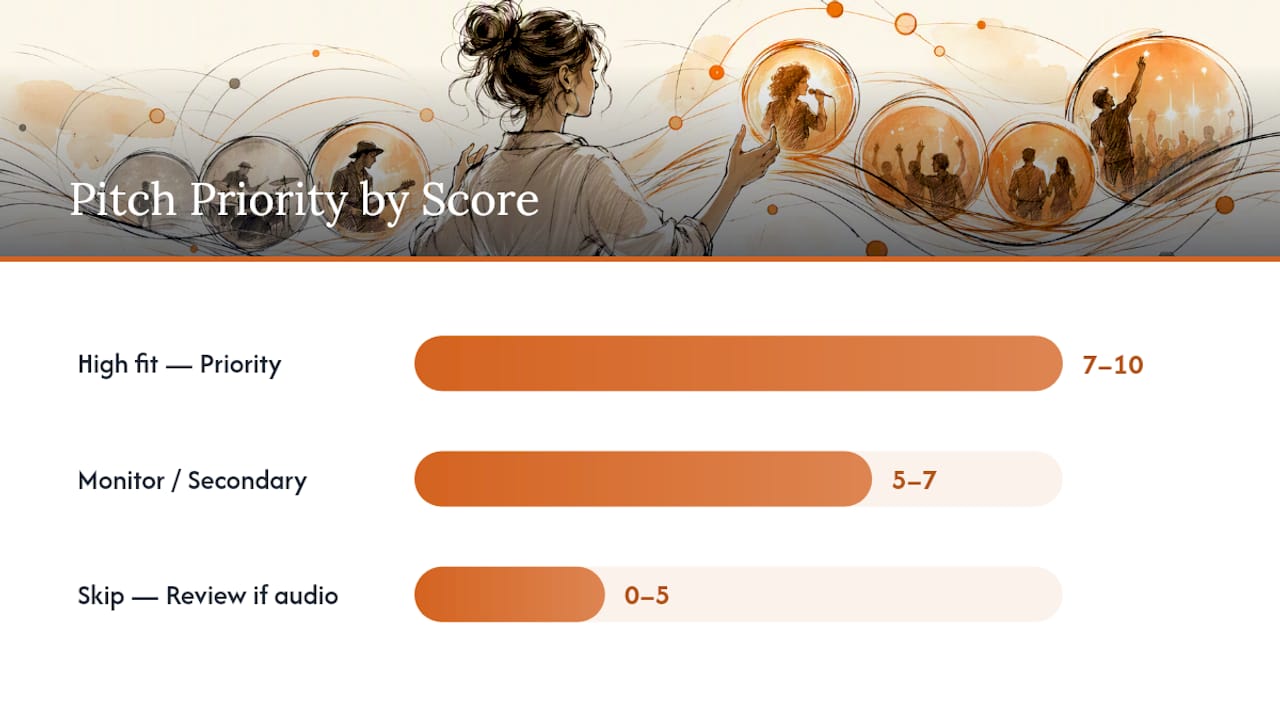
Anything above 7 counts as a high fit worth prioritizing in your pitch queue. Scores between 5 and 7 are worth monitoring or pitching as a secondary target. Below 5, skip it unless one dimension, usually audio similarity, is strong enough to justify a closer look despite weak numbers elsewhere. In the example above, Playlist B has a respectable popularity tier match but drags on both audio similarity and recency, which is exactly the kind of playlist that looks fine at a glance and disappoints after placement.
What Curator-Tested Data Shows About Fit and Timing
Intonality’s own campaign data lines up with the vetting logic above: pitches genre-matched to real, active curators land an average of 4 to 11 placements per campaign, depending on the tier. That range reflects a simple pattern. Tracks with tighter audio and audience fit convert more of the pitches sent out, while broad, unfocused submissions burn through curator goodwill for fewer results.
A few operational details worth building into your own prep:
- Curators consistently respond better to tracks in the 2:45 to 3:30 length range, long enough to develop but short enough to hold attention in a playlist queue.
- Cover art should be clean and legible at thumbnail size, since most curators are screening submissions on mobile.
- Keep pitch copy tight. Intonality’s data on curator-tested pitch lengths points to roughly 350 to 500 characters as the sweet spot for editorial-style outreach.
Pro Tip: When a curator declines a pitch and leaves written feedback, treat that note as free vetting data. A pattern of “not quite the right energy for this list” across multiple declines is a stronger signal than any analyzer output that your audio profile needs adjusting for that niche.
How I Actually Score Playlists Before a Release
Running the fit framework on a real campaign usually means throwing out half the candidate list after the audio-similarity check alone. I weight that number hardest for a reason: a playlist with modest followers but a tight sonic match consistently outperforms a bigger list with mismatched energy. The mistake I see most is chasing follower count and ignoring whether anyone on that playlist is still actually listening.
— Einars
Get Your Track in Front of Curators Who Already Match Your Sound
Running the fit score yourself tells you which playlists are worth chasing. Getting a real curator to say yes is the harder part, and it’s the part Intonality was built around. Instead of blasting pitches through automated forms or hoping a bot-run playlist adds your track, Intonality sends personalized pitches to genre-matched, vetted curators and gives you written feedback on every decision, whether it’s a placement or a pass.
Campaigns run across multiple tiers, each scaled to how many curator pitches you want sent and how much real-time visibility you get into the process. Every plan includes genre matching so your track only reaches curators whose playlists actually fit your sound, plus full transparency on which placements landed and which didn’t. Compared to self-serve submission platforms where your pitch disappears into a queue with no feedback loop, Intonality’s managed curator approach shows you exactly why a curator said yes or no, so every declined pitch still teaches you something about your own fit score. Check current tier pricing and start a campaign at Intonality.
Sources
Cross-check Spotify’s own documentation for current metric definitions, review the Wiseband analysis of 800+ editorial pitches for timing data, and read UpNComer’s pitching best practices for additional outreach templates.
- Spotify
- Spotify Playlist Pitching Strategy: The Complete 2026 Guide | Tools 4 Music
- The Fit Score: Ranking 3,500 Playlists So You Don’t Have To – Matt McGuire
- What is Artificial Streaming (DistroKid support)
FAQ
Is there a free way to check playlist fit?
Spotify for Artists gives you free access to your own track’s audio features and popularity data, and several free browser-based analyzer tools let you check a playlist’s public metrics without a paid subscription.
What is the 30-second rule on Spotify?
Spotify counts a stream toward royalties and popularity metrics once a listener plays at least 30 seconds of a track, which is why completion rate past that mark matters more to algorithmic placement than raw play count.
Can ChatGPT analyze a Spotify playlist?
ChatGPT can’t pull live streaming data or audio features directly from Spotify, since it has no access to the platform’s real-time metrics; you still need Spotify for Artists or a dedicated analyzer tool for actual numbers.
How do I know if my playlist pitch is going to a good playlist?
Check the listeners-to-followers ratio, compare audio features to your own track, and look for consistent recent activity. A service like Intonality that pitches only to vetted, genre-matched curators removes most of this guesswork by screening playlists before your track ever reaches them.
Should I prioritize follower count or engagement when picking playlists?
Engagement, specifically save rate and completion rate, predicts algorithmic pickup and listener retention better than follower count alone, since a large but inactive following adds reach without adding real listeners.