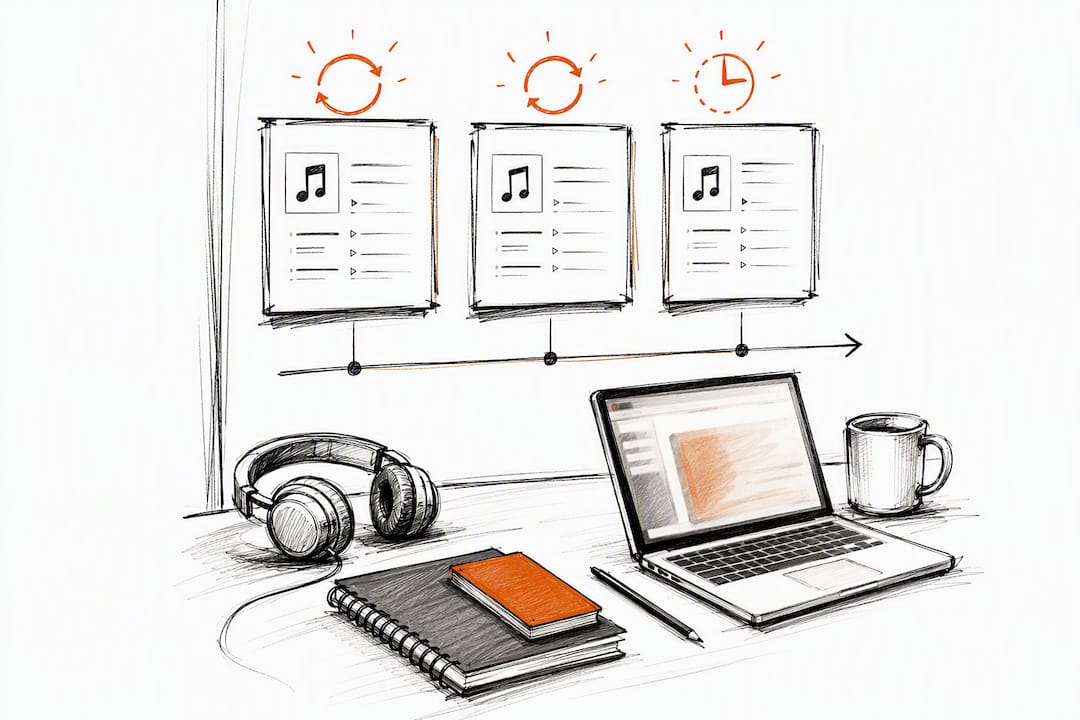
A playlist promotion dashboard centralizes submissions, curator pitching, and placement tracking so independent artists can run repeatable Spotify campaigns from one workspace. It replaces spreadsheets and scattered emails with real-time status updates and written curator feedback. Artists releasing music more than once or twice a year, or managing multiple projects, benefit most from adopting one.
TL;DR:
- Most playlist promotion dashboards provide real-time status updates, written curator feedback, and analytics organized around dedicated release workspaces to save time.
- Effective dashboards show follower counts alongside placement numbers, emphasizing follower size and engagement rates like save and skip percentages rather than raw placement totals alone.
- Vetting curators properly involves genre matching, transparent feedback, and verified integrations, while beware of platforms with vague guarantees or accepting nearly all submissions.
- Reliable dashboards protect unreleased music and personal data with encryption and strict access controls, reducing leak and breach risks.
- Platforms like Intonality focus on genuine, genre-matched curator outreach with transparent reporting, avoiding fake playlist networks and maximizing long-term growth potential.
Table of Contents
- What Core Features Should a Playlist Promotion Dashboard Include?
- Which Metrics and KPIs Actually Prove a Campaign Worked?
- How Do You Run a Campaign Inside a Dashboard, Step by Step?
- How Do You Vet a Playlist Promotion Dashboard Before Paying for One?
- How Intonality’s Dashboard Applies These Standards
- What Reporting and Export Options Should You Expect?
- Can Multiple People Manage One Playlist Campaign Together?
- How Do Automation Tools Help With Repeat Campaigns?
- How Should You Interpret Dashboard Data to Improve Results?
- What Security and Privacy Protections Should a Dashboard Have?
- When Does a Dashboard Beat Manual Outreach?
- Get Real Curator Pitches Instead of Guessing at Playlist Fit
- Sources
- FAQ
What Core Features Should a Playlist Promotion Dashboard Include?
A dashboard earns its name by doing more than showing you a list of playlists. It needs to function as a control center for every moving part of a campaign, from the moment you upload a track to the moment a curator says yes or no.
The strongest platforms organize work around a per-release workspace. Instead of tracking five singles in one messy folder, you get a dedicated space per release with its own pitch history, curator responses, and analytics. That structure alone saves hours when you’re running overlapping campaigns for an EP rollout.
Curator discovery is the second pillar. A useful dashboard lets you filter potential curators by genre, recent activity, and follower count, so you’re not pitching a lo-fi playlist with a dead upload history. Some platforms add pitch composer tools with templates and light personalization support, including optional AI drafting, though generic pitches tend to get ignored regardless of how they’re written.
Beyond discovery, expect these modules in a serious dashboard:
- Credit or submission management with queueing and prioritization for multiple releases
- Real-time status tracking that shows exactly where each pitch sits, not just “pending”
- Written curator feedback attached to every accepted or rejected submission
- Direct integrations with Spotify links, smart links, and pre-save campaigns
That last point matters more than artists realize. Apple Music for Artists offers its own promotion tools and Linkfire access, letting one link serve multiple streaming services at once, which is the kind of cross-platform support a modern dashboard should plug into rather than ignore.
Which Metrics and KPIs Actually Prove a Campaign Worked?
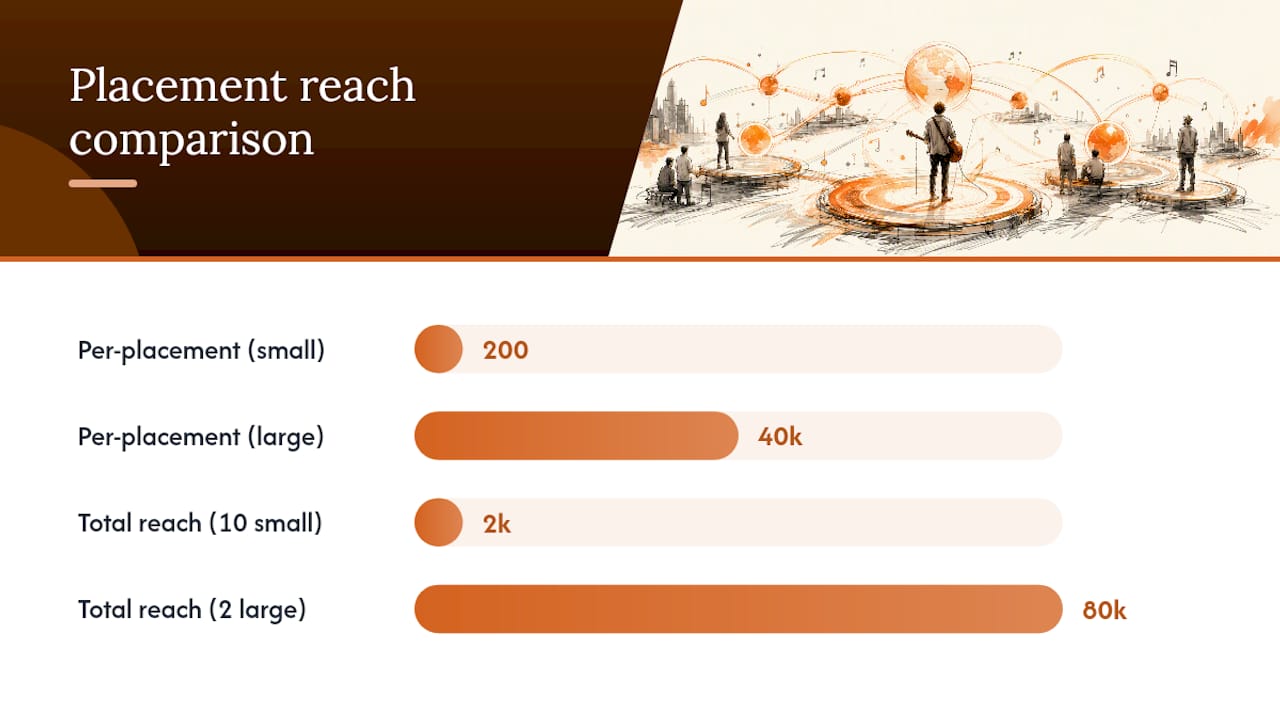
Placement counts are the headline number, but they mean little without context. Ten placements on playlists with 200 followers each will not move your streams the way two placements on playlists with 40,000 followers each will. A dashboard worth using shows follower counts alongside placement counts, not as separate reports you have to cross-reference.
Pro Tip: Don’t judge a campaign by placements alone. A single well-matched playlist with strong retention can outperform five mismatched ones combined.
Beyond placements, look for these KPI categories:
- Follower and playlist follower lift, tracked before and after the campaign window
- Save rate and completion or skip rate, which signal whether listeners actually liked the track
- Streams and estimated listener hours generated directly from placements
- Traffic source mix and platform breakdown, usually surfaced through smart link data
- Time to decision and curator response rate, which tell you how efficiently a service operates
Save rate and completion rate deserve more attention than raw stream totals. Repeat listeners and high completion rates are stronger predictors of long-term growth than a stream spike that fades once a playlist rotates the track out, a distinction platforms like Artlink highlight in their own campaign reporting. You can dig deeper into how these numbers show up in Spotify’s own reporting in our breakdown of Spotify for Artists analytics.
How Do You Run a Campaign Inside a Dashboard, Step by Step?
Running a campaign well isn’t complicated, but skipping steps is exactly how artists waste submission credits on pitches that never land.
- Prepare your release assets first. Have final audio, artwork, and metadata (genre tags, mood, release date) ready before you touch the dashboard. Curators skip incomplete submissions almost automatically.
- Build the release workspace. Set up a dedicated space for the track or EP, then select target playlist types and genres that actually match the record, not just the genres you wish it fit.
- Personalize every pitch. Reference the playlist’s actual vibe, mention why the track fits, and keep it short. Curators reading dozens of pitches a week notice copy-paste jobs immediately.
- Queue submissions and manage credits. Prioritize your strongest-fit playlists first if your plan limits how many pitches you can send at once.
- Launch and monitor. Watch curator decisions come in through real-time status updates, and read every piece of written feedback, even on rejections.
- Refine using the data. Compare which pitch language, genre tags, or timing produced the most placements, then apply that pattern to your next release.
The step people rush past is step three. According to Spotify’s own artist support documentation, pitching through official channels and tools reduces the risk of running afoul of platform policy, and the same logic applies to curator pitches: specificity signals you actually listened to their playlist rather than blasting it to a list of a thousand.
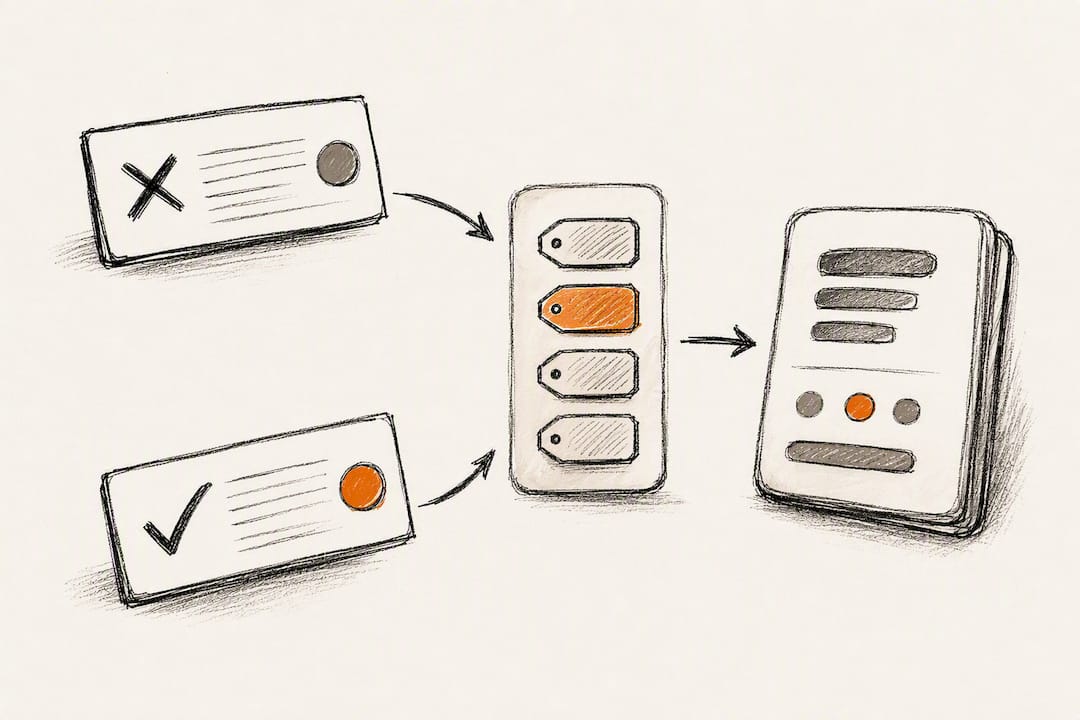
Feedback capture is where most artists leave value on the table. The exact wording a curator gives you on a rejection, paired with the pitch variant that landed a “yes” elsewhere, becomes a repeatable formula if you tag and save it inside the workspace rather than letting it disappear in an inbox.
How Do You Vet a Playlist Promotion Dashboard Before Paying for One?
Not every dashboard on the market delivers what it promises, and the promotion space has a real problem with inflated placement claims and recycled playlist networks.
Run through this checklist before committing:
- Ask how curators are vetted, and whether the process involves genre matching or blind blasting
- Check whether every decision, accepted or rejected, comes with written feedback
- Confirm reporting shows follower context next to placement counts, not placement counts alone
- Verify integrations with Spotify and other DSPs actually work, not just “compatible” in marketing copy
- Look for clear, upfront pricing with no hidden credit systems that quietly expire
- Ask directly how submitted track data and personal information are stored and protected
Red flags include vague placement guarantees with no curator names attached, zero feedback on rejected pitches, and playlists that seem to accept nearly every submission, which usually means fake followers or bot streams padding the numbers.
DIY tools give you control but eat your time. Marketplaces connect you to a wider curator pool but vary wildly in vetting quality. Managed services cost more but shift the pitching workload off your plate entirely. Our playlist promotion cost guide breaks down how those trade-offs affect pricing.
How Intonality’s Dashboard Applies These Standards
Intonality builds its process around the exact checklist above rather than treating it as a marketing afterthought. Every pitch goes to a real, genre-matched curator, not an automated blast list or a network of recycled playlists.
Here’s how the pieces map to what this guide covers:
- Curator vetting and genre matching replace the guesswork of blind submissions
- Real-time campaign updates show status changes as they happen, not in a delayed weekly digest
- Written feedback on every decision gives you the same iterative signal the workflow section above describes as the highest-value data point in the whole process
- Claimed placements averaging several per campaign, depending on service tier, according to Intonality’s own campaign data
That range matters because it’s tied to tier, not a flat promise. A campaign built for wider reach will naturally produce more placements than an entry-level tier, and Intonality frames the number that way rather than as a blanket guarantee. You can see how updates surface in practice in our piece on playlist campaign updates.
What Reporting and Export Options Should You Expect?
Raw numbers on a screen aren’t useful if you can’t pull them into a format you actually use, whether that’s a label deck, a manager update, or your own spreadsheet for year-over-year comparison.
A solid dashboard lets you customize what a report shows before you export it. That means filtering by date range, by specific release, or by playlist genre category, instead of dumping every metric from every campaign into one unreadable table. Export formats matter too. PDF summaries work for quick sharing with a manager or label partner, while CSV or spreadsheet exports let you build your own tracking system across multiple campaigns over time.
The best reporting setups also let you compare campaigns side by side. If you ran a promotion push in January and another in June, you want a report that puts placement counts, follower lift, and save rates from both next to each other, not two separate PDFs you have to manually align. That comparison is where you actually learn whether your genre tagging improved, whether your pitch copy got better, or whether a particular tier delivered more value than the last one.
Scheduled reporting is a smaller feature but a genuinely useful one. Getting a weekly or monthly summary automatically, rather than logging in and pulling data manually, keeps you from missing a curator response window or a sudden spike in saves worth capitalizing on with a follow-up push. If you’re running campaigns for a label roster rather than a single artist, exportable reports also become the easiest way to show clients or partners exactly what a campaign produced, without giving them login access to the whole dashboard.
Can Multiple People Manage One Playlist Campaign Together?
Most solo artists never think about user roles until they bring on a manager, a co producer, or a small label team, and suddenly three people are trying to log into the same account.
Role-based access solves that cleanly. An owner role typically controls billing and campaign creation, while a collaborator role can view analytics, respond to curator feedback, or help draft pitches without touching payment details. That separation matters more than it sounds. Handing your login credentials to a manager or a hired promotions person is a security risk, and it also means you lose any record of who actually made which decision inside the campaign.
For small labels running multiple artists through one system, team collaboration features become close to essential rather than a nice extra. Being able to assign a specific staffer to a specific artist’s workspace, while still seeing aggregate performance across the whole roster from an admin view, is the difference between a dashboard that scales with a growing catalog and one that only works for a single act.
Comment threads or notes attached to individual submissions are a smaller feature worth checking for. If a manager wants to flag a curator’s feedback for the artist to read before the next release, or a label wants to note why a particular playlist type underperformed, having that conversation live inside the workspace beats a side conversation over text or email that never gets attached to the campaign record.
How Do Automation Tools Help With Repeat Campaigns?
Running one campaign manually is manageable. Running six a year, across multiple singles and an eventual album cycle, is where automation earns its place.
The most useful automation isn’t flashy. It’s things like auto-populating a new release workspace with your artist bio, genre tags, and prior campaign notes so you’re not retyping the same information every single time you drop a track. Recurring campaign templates do something similar: if your last single’s pitch strategy worked, save that structure and apply it to the next release with only the track-specific details swapped in.
Scheduled submissions matter for artists who release on a consistent cadence. Instead of manually queueing pitches the week of release, some dashboards let you set submissions to launch automatically once a release date hits, timed to match when curators are actively reviewing new music rather than sitting in a backlog.
Automated alerts are the other half of the equation. A notification the moment a curator responds, rather than a login-and-check habit, means you catch feedback while it’s still useful, and you can act on a placement immediately with promotion on other channels while the playlist add is fresh. None of this replaces the personalization a pitch needs to succeed. Automation should handle the repetitive setup work, not the part of the process where a curator decides whether your track actually fits their playlist.
How Should You Interpret Dashboard Data to Improve Results?
Numbers on a screen only help if you know what to do with them, and a lot of artists misread their own dashboard data by focusing on the wrong metric.
Placement count feels like the obvious success indicator, but pair it against follower lift and save rate before drawing conclusions. Five placements on small playlists that produce a strong save rate often predict better long-term growth than fifteen placements on inactive ones. Look at the trend across multiple campaigns rather than judging any single release in isolation. One campaign with weak numbers might mean the track wasn’t a strong fit for the genres targeted, not that the whole promotion strategy failed.
Traffic source mix deserves more attention than most artists give it. If most of your growth is coming from one platform breakdown category over another, that tells you where your listener base actually lives, which should influence where you spend future promotion effort and budget.
Time to decision and curator response rate are operational signals, not vanity metrics. A campaign with slow response times might mean your submissions are going to less active curators, which is worth flagging with whatever service or tool you’re using. Track written feedback patterns across campaigns too. If three different curators mention the same thing (mix quality, tempo mismatch, weak intro), that’s a pattern worth fixing before your next release rather than a coincidence to ignore.
What Security and Privacy Protections Should a Dashboard Have?
You’re handing over unreleased music, personal contact details, and sometimes payment information to whatever platform runs your campaigns, so privacy protections aren’t optional extras.
Unreleased track uploads need protection against leaks before an official release date. Ask whether files are stored with restricted access, and whether pre-release submission capability comes with any additional safeguards against premature sharing, since a leaked single before its release date can undercut an entire promotion strategy.
Data handling around personal information matters just as much. Your email, payment details, and campaign history shouldn’t be shared with third parties without clear disclosure, and any platform worth using should spell out its data retention and deletion policies in plain language, not buried in dense legal text nobody reads.
Account security basics still apply here the same way they do anywhere else online: two-factor authentication, encrypted connections, and clear breach notification policies are baseline expectations, not premium features. If a platform doesn’t mention any of this anywhere in its documentation, that silence is itself worth noting before you upload anything.
When Does a Dashboard Beat Manual Outreach?
Dashboards make the most sense for artists with a repeat release schedule, small labels managing multiple acts, or curators juggling several playlists who need one place to track decisions instead of five inboxes.
That said, manual relationship building still has a place. A well-timed personal message to a curator you’ve worked with before, outside any formal pitch process, can land a placement a cold submission never would. Dashboards handle volume and tracking well; they don’t replace the value of a genuine relationship built over multiple releases.
The smartest approach treats a dashboard as the backbone, not the whole strategy. Pair placement tracking with external promotion, like scheduling short-form video content around a placement announcement, or driving traffic through a smart link the moment a big playlist adds your track. The dashboard tells you what worked. What you do with that information outside the platform is still on you.
— Einars
Get Real Curator Pitches Instead of Guessing at Playlist Fit
Intonality skips the automated blast lists and fake playlist networks entirely and pitches your track directly to vetted, genre-matched curators who actually review what they receive. That’s the core difference from tools that just hand you a submission form and hope for the best.
Every campaign comes with real-time updates as curator decisions come in, plus written feedback on each one, whether it’s a placement or a pass, so you’re never left wondering why a pitch didn’t land. Campaigns have produced varying numbers of playlist placements according to service tiers, giving artists a measurable sense of reach rather than vague promises. If your sound leans rock, our Rock Revival playlist page shows how placements look for that genre specifically, and the Main Character V2 page gives another look at curated placement in action. Head to the Intonality campaign page to check pricing tiers and start your next release with a pitch strategy built around real listeners, not algorithms.
Sources
FAQ
What Is a Playlist Promotion Dashboard?
It’s a workspace that centralizes release submissions, curator pitching, real-time status tracking, and campaign analytics in one place instead of scattered emails and spreadsheets.
How Many Playlist Placements Should a Campaign Produce?
It depends heavily on tier and genre fit, but Intonality’s campaigns have produced a range of placements per campaign depending on the service level chosen.
Do Dashboards Work With Both Spotify and Apple Music?
Many dashboards integrate smart links that serve multiple platforms at once, and Apple Music for Artists offers its own promotion and link tools alongside Spotify’s pitching system.
What’s the Biggest Red Flag When Choosing a Promotion Service?
Vague placement guarantees with no written curator feedback and playlists that accept nearly every submission are the clearest signs of a fake or recycled playlist network.
Is Written Curator Feedback Actually Useful?
Yes. Feedback tied to a specific pitch variant tells you exactly what worked or didn’t, which is more actionable than a raw placement count on its own.