

One verifiable metric plus one concrete placement in your subject line and opening sentence is the fastest way to get a curator to keep reading. That’s the whole strategy. Everything else is execution.
Here’s what that looks like in practice:
Sample subject line: “3 editorial adds in 60 days — pitching [Track Name] for [Playlist Name]”
I think it fits [Curator’s Playlist] for the same reason.*
Both examples are under 25 words in the opener. That’s intentional.
- One recent, named placement (not “several playlists”)
- One engagement metric (save rate, not total streams)
- One direct connection to the curator’s specific playlist
Pro Tip: Keep your subject line under 60 characters so it doesn’t truncate on mobile. Curators check email on their phones more often than you’d think.
Key Takeaways
A social proof playlist pitch works when it leads with one verifiable engagement metric and one named placement, formatted for a curator who needs evidence, not a story.
| Point | Details |
|---|---|
| Lead with engagement metrics | Save rate and completion rate outweigh raw stream counts in curator and algorithmic credibility. |
| Name every placement | Always include the playlist name, follower count, and date — vague claims get ignored. |
| Submit with enough lead time | Aim for 3–4 weeks before release for editorial; at least 7 days for independent curators. |
| Monitor the first 7–14 days | Post-placement engagement determines whether a track stays visible; drive real listener activity immediately. |
| Intonality for verified placements | Intonality delivers 4–11 placements per campaign with named playlists, curator feedback, and no fake metrics. |
Table of Contents
- What does social proof mean in a playlist pitch?
- Which types of social proof actually move curators?
- What makes social proof look credible to a curator?
- How to collect and present your social proof
- Where to place social proof in your pitch, plus ready-to-use templates
- What ethics and Spotify policy say about social proof in pitches
- Quick pre-send checklist
- How to measure results and follow up the right way
- A curator-first campaign that used social proof ethically
- Why most artists pitch the wrong thing
- Intonality connects your pitch to real curators
- Sources
What does social proof mean in a playlist pitch?
In marketing, social proof is the signal that other people have already validated something. In a playlist pitch, it’s narrower and more specific: it’s any verifiable, third-party signal that proves your track has already earned listener attention.
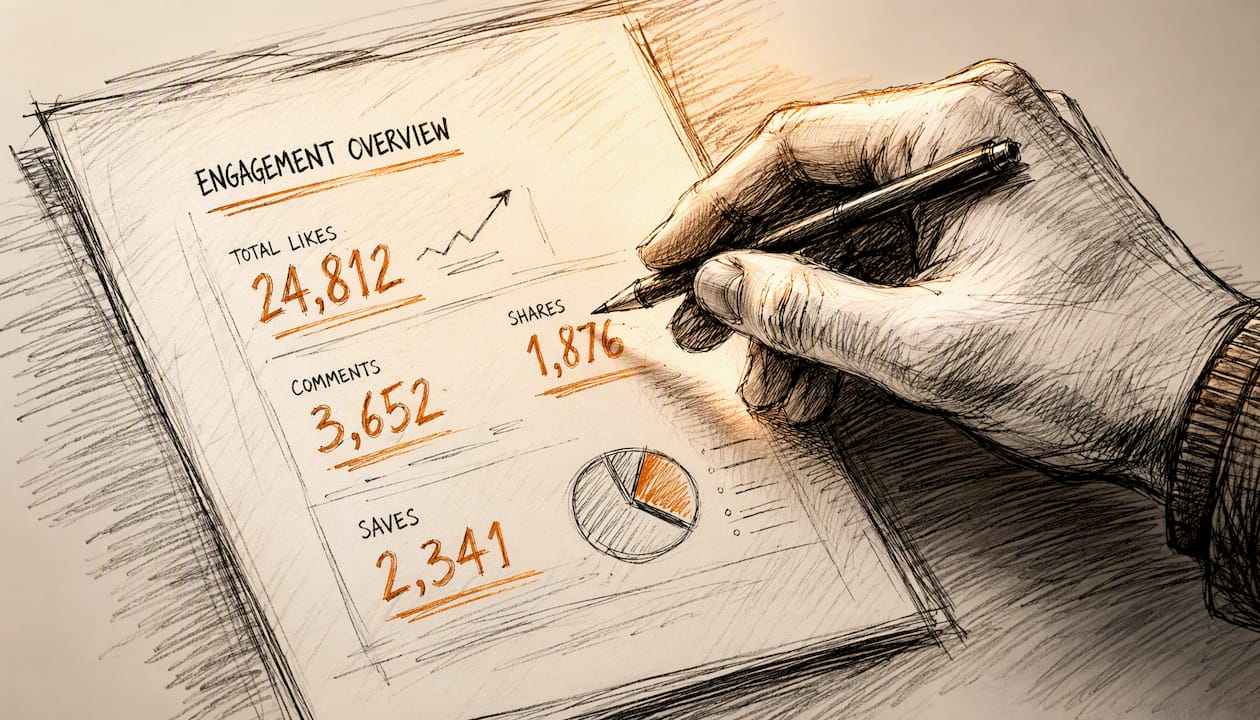
Curators aren’t A&R scouts. They’re protecting a playlist they’ve built, often over years, and every track they add is a risk to listener retention. A curator’s first question isn’t “is this good?” It’s “will my audience keep listening after this plays?” That’s the mindset your pitch needs to address.
Small, credible signals beat big, vague claims every time. “Over 10,000 streams” tells them almost nothing, because streams can be bought and passive listening inflates the number without meaning anything.
Spotify’s recommendation models weight save rate, completion rate, and listening time more heavily than follower counts when determining which tracks surface on algorithmic playlists like Discover Weekly and Release Radar. Curators who follow platform trends know this. When your pitch leads with engagement metrics instead of raw numbers, you’re speaking their language.
Which types of social proof actually move curators?
Not all proof is equal. Some signals carry weight before a release; others only exist after one. Here’s how the most common types compare:
| Proof Type | Best Timing | Strength | Example Copy |
|---|---|---|---|
| Playlist placement (named) | Post-release | High | “Added to [Playlist Name] ([X] followers) on March 3” |
| Save rate / skip rate | Post-release | High | “67% save rate in the first 10 days on Spotify” |
| Pre-save count | Pre-release | Medium | “pre-saves before release day” |
| Editorial feature | Post-release | Very high | “Featured on Release Radar, March 2026” |
| Press quote (named outlet) | Pre or post | Medium-High | “‘Haunting and precise’ — [Publication Name]” |
| Influencer/curator share | Pre or post | Medium | “Shared by [Curator Name], 14K followers” |
| Playlist follower count | Post-release | Low-Medium | Use only when the playlist is genre-specific and active |
Independent curator placements can outperform raw follower counts when the curator’s audience is genuinely engaged. A curator with 5,000 listeners who all love lo-fi hip-hop is worth more to your track than a 100,000-follower playlist where the audience is passive or mixed-genre.
Pre-release, lean on pre-saves and any press you’ve collected. Post-release, save rate and named placements are your strongest cards. Editorial features like Release Radar carry the most weight of any signal, but they’re also the hardest to earn. Editorial acceptance for independent artists without an established Spotify presence is estimated below 1%, so treat an editorial mention as a bonus, not a baseline expectation.
What makes social proof look credible to a curator?
Short, verifiable facts beat vague bragging. That’s the rule. Here’s how to apply it:
- Name the playlist, not just the number. “Added to Midnight Vibes (9,200 followers)” is credible. “Added to several playlists with thousands of followers” is not.
- Use recency. Placements from the past 60 days carry weight. Placements from 18 months ago suggest you haven’t had traction since.
- Match the metric to the claim. If you’re citing a save rate, specify the window: “68% save rate in the first 7 days.” A bare percentage with no context reads as cherry-picked.
- Link what you can. A public Spotify playlist link is more trustworthy than a screenshot. Screenshots can be edited; a live link can be checked in 10 seconds.
- Keep numbers realistic. A 95% save rate on 50,000 streams will raise eyebrows. A 65% save rate on 800 streams is believable and still impressive.
Pitches that focus on why a single track fits a specific playlist perform better than long artist-focused messages. Curators receive dozens of pitches per week. The ones that reference a specific playlist update, a recurring vibe, or a track already on the playlist show that you’ve actually listened.
Pro Tip: *Format your proof as a single line, not a paragraph.
Social proof snippets should be concise and verifiable; long blocks of image attachments or vague descriptions reduce curator trust rather than build it.
How to collect and present your social proof
The fastest source is Spotify for Artists, which shows save rate, listener counts, source of streams, and playlist adds directly in your dashboard. You don’t need a third-party tool to get started.
Steps to gather verifiable proof:
- Open Spotify for Artists and navigate to the track you’re pitching.
- Screenshot the “Saves” metric and the “Playlists” tab showing named placements. Crop tightly so the track name and metric are both visible.
- Copy the public Spotify link for each playlist that added your track. Paste it into a notes doc alongside the follower count (visible on the playlist page) and the date it was added.
- For press quotes, copy the exact sentence and the publication name. Link to the original article.
- For pre-save counts, export or screenshot from your distributor dashboard (DistroKid, TuneCore, and most major distributors show this).
For verifying playlist analytics and capturing screenshots that hold up under curator scrutiny, stick to official Spotify for Artists data. Third-party tools like Chartmetric or Soundcharts can supplement, but a curator who clicks your link and sees different numbers than your pitch claims will immediately distrust everything else you wrote.
Public playlist links are safer to share than screenshots because they’re live and checkable. If a playlist has since removed your track, don’t include it as active proof. Mention it as a past placement with a date instead.

Where to place social proof in your pitch, plus ready-to-use templates
The subject line and the first sentence are where your pitch either lives or dies. Put your strongest proof there.
Subject line variants
| Subject Line | Character Count | Proof Type | Response Intent |
|---|---|---|---|
| “3 adds in 60 days — pitching [Track] for [Playlist]” | 51 | Placement count + recency | High |
| "67% save rate | [Track Name] — [Playlist Name] fit" | 48 | Engagement metric |
| “Release Radar add + indie pitch — [Track Name]” | 47 | Editorial signal | Very high |
| “[Track Name]: press + 2 curator adds this month” | 49 | Mixed proof | Medium-High |
Pro Tip: Test two subject lines across a small batch of pitches (10–15 each) and track open rates if your email client supports it. Even rough open-rate data tells you which proof type resonates with curators in your genre.
Template 1: Editorial pitch (pre-release)
Subject: “Release Radar eligible + indie pitch — [Track Name]”
Hi [Curator Name],
“[Track Name]” releases [Date]. It’s already collected [X] pre-saves and received a press mention from [Publication]. I’m pitching it for [Playlist Name] because [specific reason tied to the playlist’s vibe or a track already on it].
Spotify for Artists link: [link] Press mention: [link]
Thanks for your time. [Your Name]
Template 2: Indie curator pitch (post-release)
Subject: “67% save rate | [Track Name] — fits [Playlist Name]”
Hi [Curator Name],
“[Track Name]” has held a 67% save rate over its first 14 days and was added to [Named Playlist] ([X] followers) on [Date]. I think it fits [Curator’s Playlist] because [specific reason].
Spotify link: [link] [Named Playlist] link: [link]
[Your Name]
Template 3: Post-release outreach (follow-up or cold pitch)
Subject: “3 playlist adds this month — [Track Name] for [Playlist Name]”
Hi [Curator Name],
“[Track Name]” has landed on [Playlist 1], [Playlist 2], and [Playlist 3] in the past 30 days, with a combined [X] followers. Save rate is sitting at [X]%. I’m reaching out because [Playlist Name] covers [specific genre/mood] and I think this track fits track [X] already on your list.
[Your Name]
For mood-playlist curators, lead with the emotional or sonic description before the metrics. For genre curators, the named placement in a similar genre playlist is your strongest opener. For algorithmic-focused pitches through Spotify for Artists, the 500-character pitch field limits you to one metric and one placement, so choose the most impressive and most recent.
For a deeper breakdown of how to complete every field in the editorial submission form, the Spotify editorial pitch guide walks through timing, field-by-field instructions, and what Spotify’s team actually reads.
What ethics and Spotify policy say about social proof in pitches
Don’t falsify metrics or buy fake streams. That’s not a moral suggestion; it’s a practical one. Curators who add a track with inflated save rates and then watch engagement collapse within a week will blacklist you. Spotify’s systems flag unusual engagement patterns, and a track that looks artificially boosted can be removed from algorithmic playlists entirely.
Common pitfalls and how to fix them:
- Inflated follower counts: Citing a playlist’s follower count from six months ago when it’s now half that size. Fix: always pull the current number from the live link.
- Old placements presented as recent: “Added to [Playlist]” with no date implies it happened recently. Fix: always include the month and year.
- Ambiguous language: “Featured by several major curators” says nothing verifiable. Fix: name the playlist or drop the claim.
- Purchased stream counts: Presenting bought streams as organic engagement. Fix: don’t do it. Curators and platforms can detect the pattern.
Ethical paid submission services focus on curator access and human review, not guaranteed streams. Transparency, including written feedback and clear refund policies when curators don’t respond, is what separates a legitimate service from a pay-to-play trap.
The ethics of paid playlist submission come down to one question: is a human curator making a real decision about your track? If the answer is yes and you get written feedback either way, that’s a legitimate service. If the answer is “your track will be added to X playlists,” walk away.
Quick pre-send checklist
Run through this before you hit send on any pitch:
- Timing: Submit at least 7 days before release for independent curators; 3–4 weeks before release is preferred for editorial consideration through Spotify for Artists.
- Character count: The Spotify for Artists pitch field caps at 500 characters. Draft in a character counter before pasting.
- Link check: Click every link in your pitch. A broken playlist link kills credibility instantly.
- Artist profile: Your Spotify artist profile should have a current bio, a recent photo, and at least one pinned track. Curators check.
- Explicit content flag: If your track has explicit content, flag it correctly in your distributor settings before pitching. Some curators filter these out automatically.
- Proof recency: Every metric and placement cited should be from the past 60 days unless you’re referencing a landmark moment (an editorial feature, a major press mention).
- Save a version: Keep a dated copy of every pitch you send. You’ll use it to compare response rates when you iterate.
For a full walkthrough of the submission process for Spotify playlists, including how to approach both editorial and independent curator submissions, that guide covers the mechanics step by step.
How to measure results and follow up the right way
After a placement, the first 7–14 days are the window that matters most. Engagement in that window helps determine whether a track stays visible or sinks, so push real listener activity immediately: share the playlist (not just your track), post about the placement, and drive your existing audience to it.
Track these metrics in Spotify for Artists during that window:
- Save rate: The single most important signal. Anything above 50% is strong.
- Completion rate: Are listeners finishing the track or skipping at the 30-second mark?
- Profile follows: A placement that converts listeners to followers has long-term value.
- Source of streams: Check whether streams are coming from the playlist or from other sources. This tells you how much the placement is actually driving discovery.
Follow-up timing:
- If you got a placement: send a brief thank-you within 48 hours. Include one data point from the first week (“the track hit a 65% save rate in the first 5 days — thank you for the add”). This builds the relationship and gives you a warm contact for your next release.
- If you got no reply after 2–3 weeks: one polite follow-up is acceptable. Reference the original pitch briefly and add any new proof that’s emerged since you sent it.
Pro Tip: *Screenshot your Spotify for Artists dashboard at day 7 and day 14 after a placement. Those two snapshots become the social proof for your next pitch.
For sample follow-up messages and timing guidance, the curator follow-up guide covers both the no-reply scenario and the post-placement thank-you in detail.
A curator-first campaign that used social proof ethically
Intonality runs campaigns by sending personalized pitches to vetted, genre-matched curators rather than blasting tracks to every playlist in a database. Each curator receives a pitch written to their specific playlist, and every decision, whether a placement or a pass, comes back to the artist as written feedback.
The result artists see most often isn’t just a placement count. It’s a feedback loop: curators explain why a track fits or doesn’t, and that information sharpens the next pitch. That’s the part automated services can’t replicate.
Intonality campaigns produce an average of 4 to 11 playlist placements per campaign depending on the service tier, with placements on real, active playlists where curators have genuine audiences. The feedback from every curator decision gives artists verifiable proof they can use in future pitches: named playlists, placement dates, and curator responses that confirm the track was actually heard.
That’s the ethical standard: human review, transparent results, and proof you can verify. No guaranteed stream counts, no bot-driven adds, no inflated metrics that collapse under scrutiny. You can see how Intonality’s genre-matched playlists work in practice on pages like the folk music playlist and the dark pop playlist, both of which reflect active curation rather than passive aggregation.
Why most artists pitch the wrong thing
The conventional wisdom says to lead with your story. Your influences, your journey, why this track matters to you. Curators don’t need any of that in the first message.
What they need is evidence that your track won’t hurt their playlist. That’s a different question entirely, and it’s the one your social proof answers. A save rate tells a curator that listeners chose to keep this track. A named placement tells them another curator already made that bet. A press quote tells them someone outside your immediate circle thought it was worth writing about.
The artists who get the most placements aren’t necessarily the most talented. They’re the ones who understand that a pitch is a risk-reduction exercise for the curator, not a self-introduction for the artist. Once you frame it that way, the right proof to include becomes obvious: whatever most directly reduces the curator’s perceived risk of adding your track.
Intonality connects your pitch to real curators
Getting your social proof right is only half the equation. The other half is making sure your pitch reaches curators who are actively looking for tracks in your genre, not an inbox that hasn’t been checked in six months.
Intonality sends personalized pitches to vetted, genre-matched curators on your behalf, with real-time updates and written feedback from every decision. Artists typically see 4 to 11 playlist placements per campaign, and every placement comes with the curator’s name, playlist link, and follower count, giving you verified proof ready for your next pitch. There are no guaranteed stream counts and no automated adds. Every curator is a real person making a real decision about your track. If you’re ready to put your social proof in front of curators who will actually read it, start a campaign with Intonality and see what a curator-first approach produces.
Sources
- Spotify for Artists
- Spotify Playlist Pitching Strategy: The Complete 2026 Guide | Tools 4 Music Blog | Tools 4 Music 2026
- Playlist Promotion Strategy: How to Win the Curator Game
- Spotify SEO Guide 2026: Rank Playlists #1 (Free Tools) | Stulyo


