Most playlist myths come down to one idea: that a placement is something you can buy, fake or force. It isn’t. Spotify playlists are won by a good song reaching the right human ears, and the myths below are the ones that send artists the other way. Each one is paired with what is true, so you can spend your budget and your release calendar on moves that hold up.
TL;DR
- Major labels and paid pluggers do not own the door: every artist can pitch unreleased music to Spotify’s editors through Spotify for Artists.
- Anyone who guarantees placements or stream counts for money is selling something Spotify’s rules prohibit. Real promotion is a pitch to real people, with no promised outcome.
- A placement is a signal, not a finish line. Listener behavior decides whether the algorithm keeps recommending the song.
- Follower counts and stream spikes can mislead. Check who curates the list and where the listeners are.
- Curator feedback, including declines, is useful data about your track, and you can act on it.
Myth 1: Only major labels get onto Spotify playlists
This is the oldest one, and it is false. Spotify’s own playlist editors say that all artists, signed or unsigned, have equal opportunities to pitch through Spotify for Artists. You do not need a label, a manager or a plugger to submit.
What you do need is a plan. Editors receive a very large volume of submissions. Rolling Stone once described the unsolicited pile as akin to a publishing-house slush pile, which tells you the competition is real. The pitch is free, so use it on every release, and write it as if a busy person will give it thirty seconds.
A few things that help your odds:
- Pitch an unreleased song. Spotify says you can pitch upcoming songs and should deliver the music at least 7 days before release so editors have time to listen.
- Keep the pitch specific: genre, mood, instrumentation, the story behind the song and any context that helps an editor place it.
- Pitch one song per release. You can’t pitch a whole catalog at once.
Our guide to nailing your Spotify editorial pitch goes through the fields line by line.
Myth 2: Editorial playlists are the only ones that matter
Artists often talk about “getting playlisted” as if there were one kind of playlist. There are several, and they work differently. Spotify describes editorial playlists as created and maintained by its editorial team, algorithmic playlists as personalized to each listener, and a third group as playlists curated by artists and by fans.
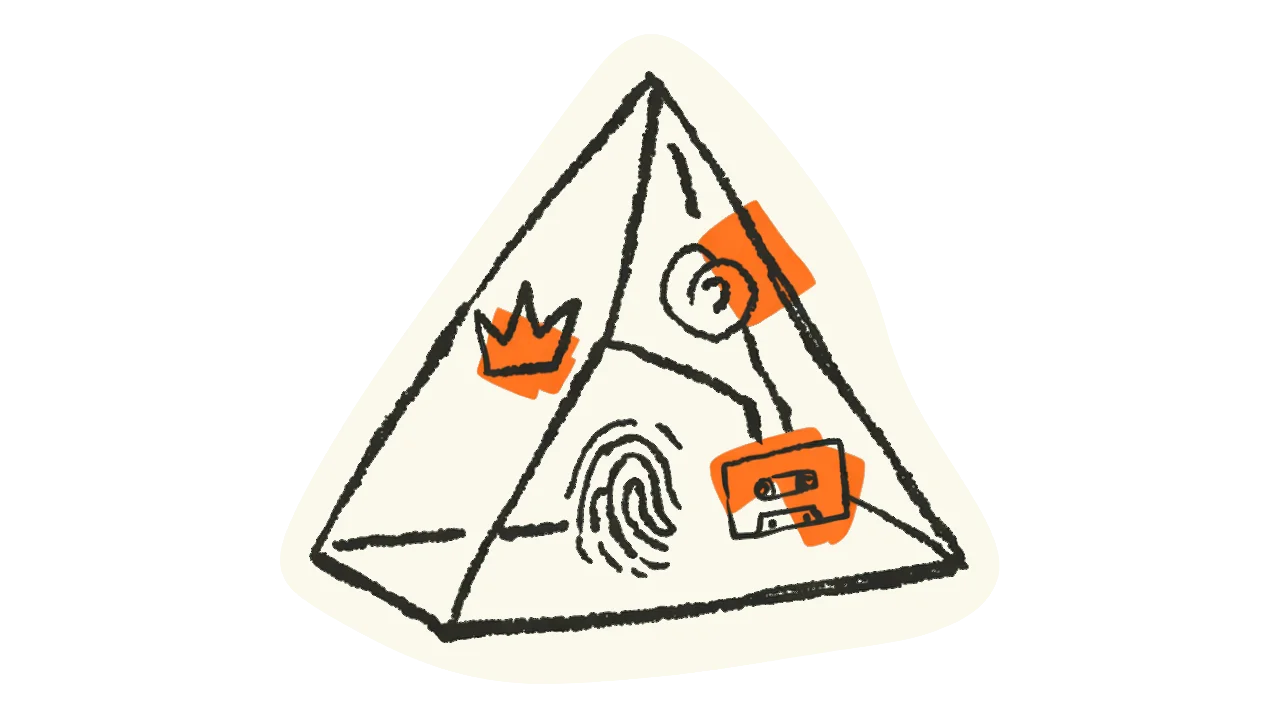
That last group is where most independent artists find their first real traction. Independent curators build lists around a genre or a mood, and their followers are often people who actively look for new music in that niche. A smaller list with the right audience can do more for you than a big list with the wrong one.
Editorial playlists can be powerful. A study by researchers at the European Commission’s Joint Research Centre found that inclusion on Today’s Top Hits raised a song’s eventual streams by almost 20 million. That is the top of the pyramid, though, and it is not a plan for a first single. The same researchers note that this power makes artists dependent on platform decisions about what to promote, which is one more reason to build a spread of placements rather than wait on one door.
Myth 3: Pitching to Spotify and pitching to curators are the same thing
They are separate routes, and you should run both.
| Spotify editorial pitch | Independent curator pitch | |
|---|---|---|
| Who reads it | Spotify’s editorial team | A person who runs a genre or mood playlist |
| Where you submit | Spotify for Artists | Directly, or through a campaign service |
| Timing | Before release, at least 7 days ahead | Before or after release |
| What you get back | Usually nothing unless you are added | Depends on the curator; some give notes |
| Cost | Free | Varies by route |
The editorial pitch is a one-shot at a single release window. Curator outreach can continue after release, and it gives you something editors rarely do: a reason. Our walkthrough on how to submit to Spotify playlists covers both routes in order.
Myth 4: You can pay for a guaranteed placement
This is the myth that costs artists the most. Spotify is direct about it: services that guarantee playlist placement for money violate Spotify’s terms, and using paid third-party services that guarantee streams can get your music removed. In the editors’ own words, a third party offering placement in exchange for money is a streaming manipulation service against Spotify’s guidelines.
The practical rule is simple. A legitimate service sells effort: a pitch, a list of vetted curators, a report of what happened. It never sells an outcome. No honest provider can promise a placement, because the decision belongs to a curator who has not heard your song yet.
That is how we build our own campaigns. We send personalized pitches to real, genre-matched curators and report every decision, including the declines. Our published average is 4 to 11 playlist placements per campaign depending on the service tier, and that is our own figure for what campaigns have produced, not a promise for your song.
If you want a checklist for telling the two apart, read our survival guide to playlist promotion scams and the section on vetting a service before you pay.
Myth 5: More streams from any source means more momentum
A stream spike feels like progress. It can also be a warning sign. Spotify’s Source of Streams view in Spotify for Artists lets you see whether listening comes from active sources like a listener’s queue or programmed sources like algorithmic recommendations and editorial playlists. Check it after every campaign.
Healthy growth tends to look uneven and human: a placement lands, streams rise, some listeners save the song or follow you, and a smaller number stay. Red flags are a different pattern. The CD Baby team lists promises of guaranteed results, anonymous curators, unexplained stream spikes and high listener counts in low-population regions as signs of fake playlists.
Why does it matter? Bot playlists, as LANDR’s team explains, serve a dual purpose of collecting royalties fraudulently and scamming artists into paying for fake streams, often by imitating real listening signals. If your song sits on one, your data gets muddied and your account can be at risk.
Myth 6: Fake streams are a harmless shortcut
They are not harmless. Spotify’s guidance says artificial streaming can lead to withheld royalties, corrected public stream counts and playlist removal, and in flagrant or repeated cases distributors may remove content or suspend accounts. Spotify also charges labels and distributors per track when flagrant artificial streaming is detected, which is why distributors tend to act quickly.
The cost is not only financial. A catalog full of streams from listeners who never return teaches the algorithm the wrong lesson about who your audience is. We cover the mechanics in what every artist must know about fake streams and in our piece on avoiding payola playlists.
If you suspect a past campaign put your song on bot playlists, stop it, check your Source of Streams data, and talk to your distributor before they contact you.
Myth 7: A playlist placement triggers the algorithm on its own
Placements help, but they do not work like a switch. Spotify’s personalized recommendations use artist-provided signals and listener behavior, and if listeners do not engage with a song, that is factored into future recommendations. In plain terms: the playlist gets listeners to the door, and what they do next decides whether the algorithm keeps sending more.
That makes the match between song and playlist the thing to optimize. A track placed on a list where listeners skip it in ten seconds does less for you than a smaller list where people save it. This is the logic behind genre-matching in our pitches: we want the people who hear your song to be the people likely to stay.
Two more details that artists get wrong:
- Release Radar. Pitching a song at least 7 days before release makes it automatically eligible for a listener’s personal Release Radar. That is a reason to pitch early, even when you expect no editorial add. Our guide to getting on Release Radar shows how curator campaigns can run alongside it.
- Discovery Mode. It lets artists and labels flag priority songs, which adds a signal that increases the likelihood of recommendations but does not guarantee them. It is a nudge, not a guarantee.
Myth 8: Timing does not matter, just pitch whenever
Timing matters at three points. Before release, the 7-day minimum with Spotify is the floor, not the target. Pitching two to three weeks ahead gives you room to correct course. In the release window, curators are most open to fresh tracks. After release, a song that is still performing can keep earning placements on lists that take newer or older material.
Our timeline for pitching playlists at every release stage lays out what to do at each point, so you are not scrambling on release day.
What curator feedback tells you (and what to do with it)
Most artists treat a decline as a closed door. It is better read as a data point from someone in your genre’s audience. A single curator’s pass says little. A pattern across ten says a lot.
How to read it:
- Sort by reason. Group responses into fit (wrong subgenre or mood), production (mix, vocal level, intro length) and timing (the list is full or has just updated).
- Look for repeats. If three curators say the intro runs long, that is worth acting on. If one dislikes the snare, it is taste.
- Separate the song from the pitch. Fit comments often point to a pitch that describes the song poorly rather than a weak song. Rewrite the genre tags and the one-line description first.
- Apply it to the next release. Fix the mix issues before mastering, not after, and shortlist playlists that matched in tone.
This is why we send every curator decision back with written feedback and publish placements and declines in your dashboard in real time. The point is that a campaign teaches you something even when a specific list passes. Artists who are building a body of work get the most from this, because feedback from this single is advice for the next one.
How to tell real promotion from the myths
Use this short filter before you pay anyone, including us:
- Does it promise a number? Guaranteed streams or placements are the first red flag.
- Can you see who the curators are? Anonymous curators are a problem.
- Is the feedback written? A service that sends results without reasons gives you nothing to learn from.
- Is the reporting open? You should see placements and declines, not just wins.
- Does it avoid bots and fake streams? Ask directly.
You can also build audience with no spend: create your own artist playlists, promote them to your fans and engage on social media. CD Baby’s team recommends exactly these proactive steps over relying on third-party services of uncertain quality. Those habits make any campaign work harder, because a curator who checks your profile finds an active artist.
Our perspective
Most of the damage we see comes from one assumption: that placement is a product you can purchase. It is a decision a person makes about a song, and the artist’s job is to make that decision easy.
That is why we built Intonality around real curators who are screened by hand and matched to genre. Every pitch is personalized, every decision comes back with written feedback, and placements and declines are published, so you can see what happened and why. We do not use fake streams or bots, and our campaigns include automatic refunds for inadequate reviews.
We also think the feedback is worth as much as the placement. A decline from a curator who runs your exact genre tells you something no stream count can. Over a few releases, that is how an emerging band gets sharper, and how a songwriter learns which rooms their sound belongs in.
Our approach also supports pre-release submissions, so you can line up curator interest while the song is still coming. Used alongside Spotify’s own pitch tool, it gives a release two chances to be heard by people who care.
Einārs
Run a campaign built on real curators
If you want your next release heard by genre-matched curators who give written feedback on every decision, our Starter, Standard, Pro and Max campaigns are the place to begin. Each one sends personalized pitches, supports pre-release submissions and gives you a live dashboard of placements and declines. We say campaigns average 4 to 11 placements depending on the tier, and our positioning is simple: a lower starting price than the best-known pitch platform, with automatic refunds for inadequate reviews.
Pick the tier that fits your release on our campaign page. You can also browse a sample curator profile such as a unique playlists curator to see what you would be pitching to. More guides are on the Intonality blog.
FAQ
Can an unsigned artist really get on a Spotify editorial playlist?
Yes. Spotify says all artists, signed or unsigned, have equal opportunities to pitch through Spotify for Artists. Competition is heavy, so a specific pitch sent at least 7 days before release gives you the best chance. A pass is common and says little about the song’s long-term potential.
Is it legal to pay for playlist promotion?
Paying for promotion such as PR, marketing or curator outreach is a normal part of releasing music. What Spotify prohibits is paying for guaranteed placements or streams, which it treats as streaming manipulation. Choose services that pitch to real people and promise no specific result.
How do I know if a playlist is fake?
Look for anonymous curators, guaranteed-result promises, sudden unexplained spikes and large listener counts from low-population regions. Then open Source of Streams in Spotify for Artists and see where your plays come from. If something looks off, stop the campaign and contact your distributor.
Does getting on a playlist grow my audience for good?
Not by itself. A placement exposes the song to listeners, and their saves, follows and repeat plays decide what the algorithm does next. Follow up with a social post, a profile worth following and your next release on schedule.
Should I read curator feedback if the answer was no?
Yes. Declines often carry the most useful notes, especially when several curators raise the same point. Group comments by fit, production and timing, then change the pitch or the mix before your next release.
Sources
- Behind the Playlists: Your Questions Answered by Our Playlist Editors, Spotify for Artists
- How Do You Get a Hit Song? Spotify Says to Pitch It, Rolling Stone
- Pitching music and videos to Spotify playlist editors, Spotify Support
- Playlisting, Spotify for Artists
- Platforms, Promotion, and Product Discovery, European Commission JRC
- Artificial streaming and paid third-party services, Spotify Support
- Learn How Fans Discover Your Music on Spotify, Spotify for Artists
- 5 tips to avoid fake Spotify playlists and artificial streams, DIY Musician
- Is My Music in a Bot Playlist?, LANDR
- Discovery Mode, Spotify for Artists