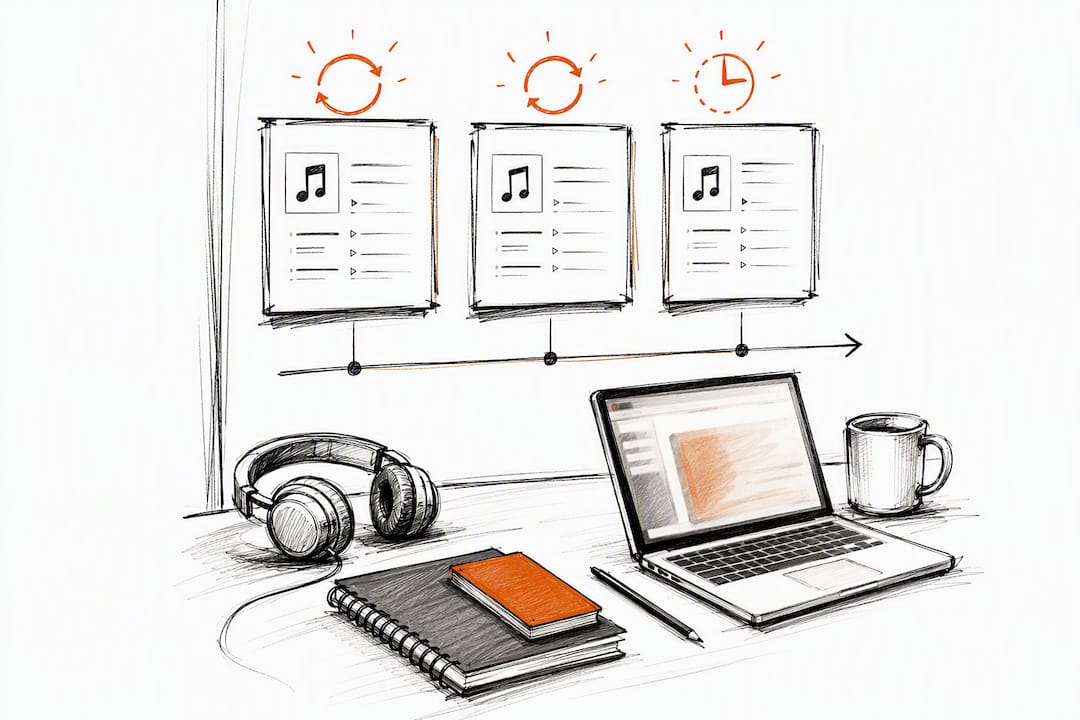
Most active independent Spotify curators refresh their playlists weekly or biweekly, with some working on a monthly cycle. Pitch your track 1 to 4 weeks before release depending on that cadence, then send one follow-up 7 to 10 days later. Judge the placement by saves and follower growth, not raw streams.
TL;DR:
- Most active independent curators update their playlists weekly or biweekly, so pitching 1 to 2 weeks before release maximizes success.
- Checking playlist last-added dates, follower growth, and curator activity helps identify the most active and valuable placements.
- Save-to-stream ratios above 4.5% after two weeks indicate strong engagement, while below 1% suggests the track should be rotated away.
- Playlists that refresh frequently build listener habit and generate ongoing exposure, unlike stagnant playlists with fixed content.
- Using tools like Intonality can streamline timing and provide real-time curator feedback, reducing guesswork and improving placement quality.
Table of Contents
- Playlist Update Frequency: What Weekly, Biweekly, and Monthly Cadences Mean for You
- How to Audit a Playlist Before You Pitch It
- When to Send Your Pitch for Each Cadence
- What Your Placement Results Actually Mean
- Does Update Frequency Actually Affect Listener Engagement?
- Algorithmic Playlists vs. Human Curators: Why the Cadence Differs
- Keeping Track of Playlist Activity Over Time
- My Routine for Staying on Top of Playlist Timing
- Skip the Guesswork: Let Curator Feedback Do the Timing for You
- Sources
- FAQ
Playlist Update Frequency: What Weekly, Biweekly, and Monthly Cadences Mean for You
Playlist update frequency isn’t a trivia detail. It’s the clock you’re pitching against. Curators running weekly rotations swap tracks every Monday or Tuesday, often to catch the Discover Weekly reset and give fresh songs a mid-week algorithmic boost. These tend to be smaller, genre-tight playlists run by one or two people who treat curation like a part-time job.
Biweekly curators are usually juggling a bigger roster or multiple lists, so they batch decisions every other week instead of daily. Monthly curators are often larger or more editorial in style, reviewing bigger submission piles less frequently but sometimes holding a spot longer once they commit.
Here’s the exposure math that trips up a lot of artists: a weekly playlist gives you four shots at visibility per month, but each add gets bumped fast. A monthly playlist gives you one shot, but that shot can sit for weeks.
- Weekly playlists: best for singles you want to test quickly and rotate based on early data
- Biweekly playlists: a middle ground, good for tracks you’re willing to let breathe for two weeks
- Monthly playlists: worth the wait for a lead single or a track backed by a bigger release push
Staggering your pitches across all three cadences avoids the “exposure cliff” where every placement drops off the same week.
How to Audit a Playlist Before You Pitch It
Spend 10 minutes checking a playlist before you send anything. This single habit filters out most wasted submissions.
- Check the last-added date. Look for a visible pattern of recent additions. If nothing has changed in three months or more, the playlist is likely abandoned.
- Confirm the follower count. Aim for playlists with a few thousand followers unless you’re specifically targeting a niche micro-audience for early traction.
- Look for real contact info. A curator bio with a working email or submission link signals an active, organized operation.
- Scan for engagement evidence. Comments on the playlist cover, curator social posts about recent adds, or a consistent track order refresh all count.
- Log it. Drop the playlist name, follower count, last-update date, and cadence guess into a spreadsheet before you move to the next one.
Red flags worth skipping entirely: a follower count that hasn’t moved in months, a tracklist frozen at the same 50 songs for half a year, or a “curator” account with no other social presence. An audit that weighs recent update behavior more than follower count predicts placement value better than size alone. A vetting checklist built for spotting fake or dead playlists can speed this process up once you’ve done it a few times.
Pro Tip: Build a simple color code in your spreadsheet: green for weekly/active, yellow for biweekly, red for anything untouched in 90+ days. You’ll spot your best targets at a glance during campaign week.
When to Send Your Pitch for Each Cadence
Timing your outreach around the release date, not just the calendar, is what separates a placement that lands on day one from one that shows up two weeks late and misses the release-week streaming bump.
The general windows that work across most independent campaigns:
- Spotify editorial pitches: 3 to 4 weeks before release, since editorial teams plan playlists well in advance
- Independent human curators: 1 to 2 weeks before release, matching their faster weekly or biweekly review cycles
- Third-party review platforms: 5 to 7 days before release, since turnaround tends to be quicker
Stagger your independent-curator pitches across that 1 to 2 week window rather than blasting everyone the same day. Sending batches on a Monday or Tuesday lines up with when many curators refresh their lists, which means your track has a better chance of landing right as their audience checks in.
Follow-up etiquette is simple: send one polite check-in at day 7 to 10 if you haven’t heard back. A second follow-up around the three-week mark is fine, but only if you have something new to report, like a placement on another playlist or a streaming milestone. Anything more than that starts to read as pressure, not persistence.
What Your Placement Results Actually Mean
Raw stream counts feel good but tell you almost nothing about whether a placement is working. Saves and follower growth are the signals that matter, because they’re the same behaviors that push Spotify’s own algorithm to notice your track.
A high stream count from one playlist with almost no saves usually means passive listening, not real interest. A smaller stream count with a strong save rate tells a different story: people liked it enough to want it back.
Practitioner guidance suggests rotating tracks that fall below roughly 1% save-to-stream after two weeks, and keeping tracks above roughly 4.5% save-to-stream in rotation longer.
Use this rule of thumb alongside the curator feedback you get:
- Save-to-stream under 1% after two weeks: consider it a weak fit and rotate your pitching toward a different curator style
- Save-to-stream above 4.5%: the track is resonating, so lean into that genre and audience for your next round of outreach
- Follower spikes tied to a specific placement date: a strong sign that playlist’s audience trusts the curator’s picks
Cross-check these numbers against your Spotify for Artists dashboard rather than relying on the curator’s word alone.
Does Update Frequency Actually Affect Listener Engagement?
Yes, and the effect runs in both directions. A playlist that refreshes weekly trains its listeners to check back often, because there’s always something new. That habit builds real engagement over time: more saves, more repeat visits, more organic growth for the curator and, by extension, for the artists in rotation.
A playlist that hasn’t changed in months does the opposite. Listeners stop returning because they already know what’s on it. Streams on that playlist tend to flatline, and any track sitting in the tracklist gets diminishing returns the longer it stays without fresh company around it.
This is why placement on an active, frequently updated playlist is worth more than placement on a bigger but stagnant one. A 2,000 follower playlist that adds four new tracks a week is circulating fresh listeners through your song regularly. A 20,000 follower playlist frozen since spring is mostly serving old subscribers who already skip past songs they’ve heard before.
For artists, the practical takeaway is to weigh cadence as heavily as follower count when picking targets. A playlist’s growth trajectory usually tracks its update habit: curators who refresh consistently tend to gain followers steadily, because word spreads that the list stays interesting. That growth compounds, which means a placement today on an active playlist can keep paying off in new listeners weeks later, long after your track has technically rotated out.
Algorithmic Playlists vs. Human Curators: Why the Cadence Differs
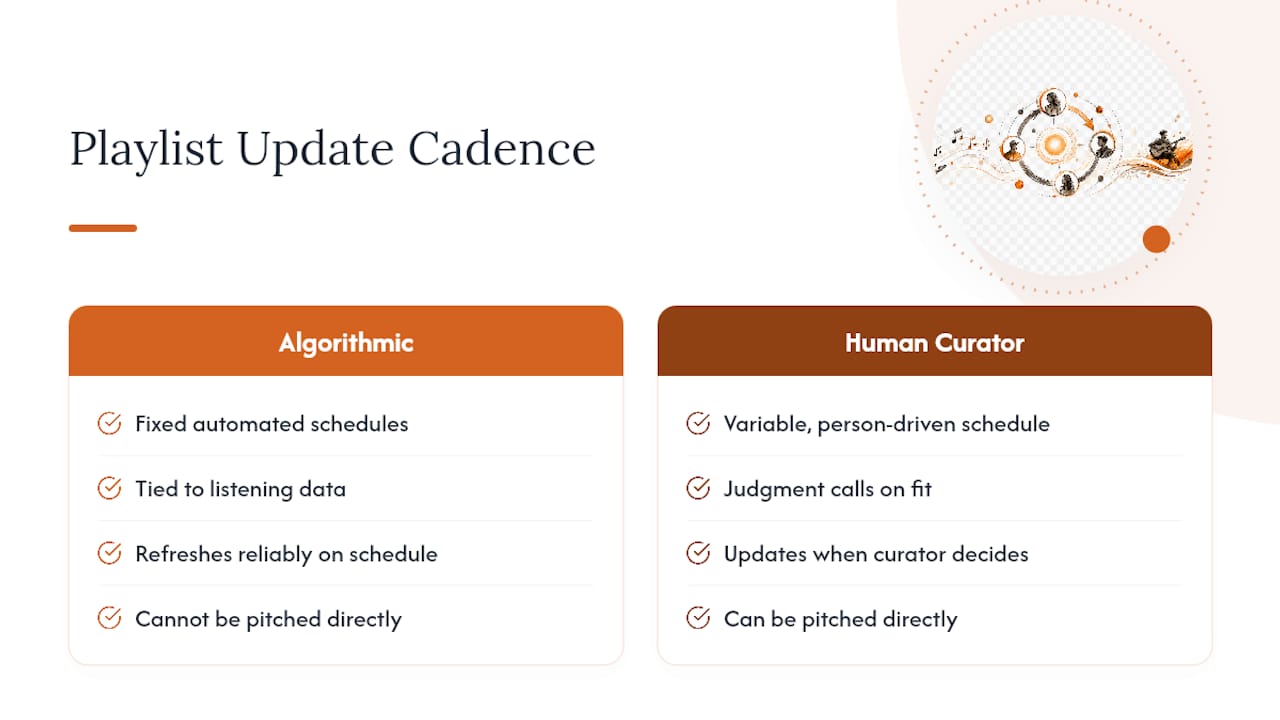
Spotify’s own algorithmic playlists, like Discover Weekly or Release Radar, refresh on fixed automated schedules tied to listening data. That’s a different mechanism entirely from what an independent human curator does, and it matters for how you plan a campaign.
Human curators make judgment calls. They listen to submissions, decide what fits their playlist’s identity, and physically add or remove tracks whenever their schedule allows, whether that’s every Monday or once a month. There’s no fixed system forcing the update. It happens because a person decided it should.
That difference is exactly why the audit habits in this article matter so much for independent playlists and matter far less for algorithmic ones. You can’t pitch your way onto Discover Weekly directly. You influence it indirectly by driving saves, skips, and listening behavior on the tracks you’ve already released. But you absolutely can influence whether a human curator adds your song, and knowing their update rhythm tells you when your pitch has the best odds of landing before their next refresh.
Independent playlists also vary far more in consistency than algorithmic ones. A curator can go quiet for a month during a busy stretch, then come back and add ten tracks in one sitting. Algorithmic playlists don’t skip a beat. That inconsistency is a real factor in campaign planning, not just a footnote, and it’s exactly why the audit step earlier in this article carries so much weight before you commit a pitch.
Keeping Track of Playlist Activity Over Time
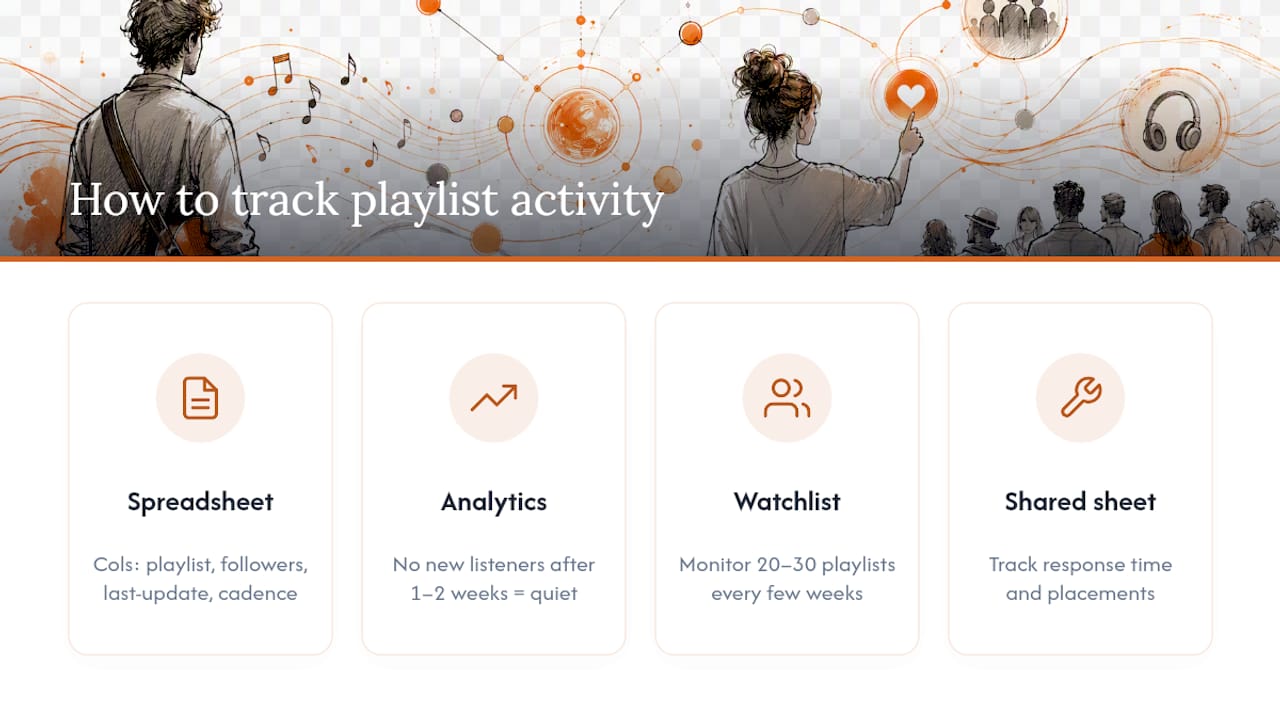
A spreadsheet is still the simplest tool most independent artists use, and it works fine for a single campaign. Columns for playlist name, follower count, last-update date, cadence guess, and pitch date give you everything you need to plan outreach without guessing.
For a longer-term view, Spotify for Artists analytics let you track how your streams and listener sources shift after a placement, which indirectly tells you whether a playlist is still active and delivering real traffic. If a placement stops generating any new listeners a week or two after the add, that’s a sign the playlist has gone quiet or your track has already been rotated out.
Some artists keep a rolling watchlist, revisiting the same 20 to 30 playlists every few weeks to note whether the tracklist has changed. This habit alone will teach you more about real update patterns than any single article, because you start to see which curators are consistent and which ones talk a bigger game than they deliver.
Browser bookmarks with playlist links, paired with a monthly check-in, cover most of what a casual campaign needs. Artists running frequent releases benefit from something more structured, like a shared spreadsheet with columns for curator response time and placement history, so campaign notes carry over from one release to the next instead of starting from scratch. Tools built for organizing content creation workflows can also help you keep pitch messages and follow-up notes consistent across a busy release calendar.
My Routine for Staying on Top of Playlist Timing
A weekly habit beats a frantic pre-release scramble every time. Once a week, I’d audit five playlists on the watchlist, update the outreach spreadsheet with any cadence changes, and send two or three fresh pitches based on what’s currently active.
Realistic expectations matter here. You won’t see meaningful save-to-stream signals for at least two weeks after a placement, so resist the urge to judge too early. Most artists who stick with this weekly loop for a full release cycle, roughly six to eight weeks, start noticing which curator relationships are actually paying off versus which ones were a one-time favor.
If you want to go deeper on the mechanics, the pre-release pitching guide and the playlist submission walkthrough both expand on pieces of this routine.
— Einars
Skip the Guesswork: Let Curator Feedback Do the Timing for You
Intonality solves the exact problem this article just walked you through: figuring out which curators are active, when to pitch them, and whether your placement actually worked. Instead of you auditing 20 playlists by hand every week, Intonality’s team sends personalized pitches to real, genre-matched curators and shows you what happened in real time, including written feedback on every decision a curator makes.
That feedback loop is the part most services skip. You’re not left guessing why a curator passed or wondering if a placement is still live. Campaigns come with context you need to plan your next release smarter. If you’ve been relying on blind submissions to third-party review platforms, see how this compares as a direct alternative or start a campaign and get your first round of curator feedback within days.
Sources
- Spotify playlist curating rules for indies | OnesToWatch
- Build Your Independent Playlist Curator Network | AndR Learning Center
- Playlist Pitching: Strategy, Timing, and Follow-Up | Orphiq
- Spotify for Artists
FAQ
How Often Do Independent Curators Update Playlists?
Most active independent curators refresh their playlists weekly or biweekly, with some working on a monthly schedule depending on their submission volume and personal routine.
When Should I Pitch Before My Release Date?
Pitch Spotify editorial 3 to 4 weeks out, independent curators 1 to 2 weeks out, and third-party review platforms 5 to 7 days out for the best odds of a timely placement.
How Do I Know If a Playlist Is Abandoned?
Check the last-added date first. If a playlist hasn’t changed in several months or more, treat it as inactive and skip pitching it.
What Metric Matters Most After a Placement?
Save-to-stream ratio matters more than raw streams. Tracks below roughly 1% after two weeks are usually weak fits, while tracks above 4.5% are worth leaning into for future outreach.
How Many Follow-Ups Should I Send a Curator?
Send one follow-up at 7 to 10 days, and only send a second around three weeks later if you have genuinely new traction to share.
Can Intonality Help Me Time My Submissions?
Intonality sends personalized pitches to genre-matched curators and provides real-time updates plus written feedback, which removes much of the guesswork around cadence and placement timing.