Prioritize small, genre-aligned playlists over massive editorial ones for most paid promotion campaigns. Spotify’s recommendation system weighs saves, skip rate, and listen-through far more heavily than a playlist’s follower count, and a track that performs well on a tightly matched 500-follower playlist propagates into algorithmic placements faster than one buried on a 2-million-follower playlist where nobody actually listens. Save big editorial pushes for releases with existing traction and real PR support.
TL;DR:
- Small, genre-aligned playlists generate stronger engagement signals like saves, skips, and completion rates, which are more impactful than follower counts.
- Prioritize niche playlists with high save rates above 20-25% and skip rates below 40% to improve algorithmic discoverability.
- Big editorial playlists are useful for reaching milestones or capturing attention but often lead to passive listening with higher skip rates and less follower growth.
- Run targeted, resource-aware campaigns with 4 to 11 carefully curated placements, focusing on actual engagement metrics rather than stream volume alone.
- Confirm playlist authenticity by monitoring for real engagement signals, such as consistent saves and follower growth, rather than spikes caused by bots or fake playlists.
Table of Contents
- Small vs Big Playlists: How Spotify’s Engagement Signals Decide Winners
- What You Gain (and Risk) With Small Niche Playlists
- When Do Big Editorial Playlists Actually Make Sense?
- How Do You Decide Which Playlist Size Fits This Release?
- Running the Campaign: A Realistic Timeline
- Why a Curator-Led Approach Fits This Engagement-First Strategy
- What I’d Test Before Spending Your Full Budget
- Submit Your Track to Real Curators Who Match Your Sound
- Sources
- FAQ
Small vs Big Playlists: How Spotify’s Engagement Signals Decide Winners
Spotify doesn’t rank tracks by playlist size. It ranks them by what listeners do once they hear them, and that distinction is the whole small vs big playlists debate in one sentence.
The platform runs what its own engineers call an “algotorial” system: human curators build candidate pools of tracks, and algorithms then personalize the order and distribution for each listener based on behavior. A track added to a small, well-matched editorial playlist can still surface into thousands of personalized Discover Weekly and Release Radar feeds if the engagement holds up, according to Spotify’s engineering team. Follower count never enters that equation directly.
What actually moves the needle:
- Saves — a listener adding your track to their library signals strong intent.
- Skip rate — how fast people bail in the first 5 to 30 seconds.
- Listen-to-end rate — whether people finish the track or bail mid-chorus.
- Repeat listens — replays within days of first exposure.
- Follower growth — new profile follows tied directly to a specific track.
Spotify’s Vice President of Personalization, Oskar Stål, has described the scale behind this: the platform processes roughly half a trillion events daily to power recommendations. That volume of behavioral data means a handful of high-intent listens on a niche playlist carries more predictive weight than a passive stream count on a giant one.
What You Gain (and Risk) With Small Niche Playlists
A playlist of a modest size built around your exact subgenre tends to convert listeners who actually want to hear you, and that shows up immediately in the numbers that matter.
The upside is concrete:
- Higher save rates and completion rates because the audience already opted into your sound.
- Better genre fit means listeners follow your profile, not just the playlist.
- Personalization research suggests recommendation algorithms favor “specialist” listeners with narrow tastes, which rewards a track that lives comfortably inside one lane.
- Lower raw stream counts upfront, but stronger long-term discoverability once the algorithm picks up the signal.
The trade-offs are real too. Curator quality varies wildly, some niche playlists are inactive or barely followed, and you need clean metadata and a decent pitch to even get considered. A mismatched genre tag or vague pitch email kills your shot before a curator even presses play.
Pro Tip: Track saves-per-1,000-listeners rather than total streams after a small playlist add. A save rate above 20 to 25 percent on a niche placement is a far stronger predictor of algorithmic pickup than raw numbers ever will be.
When Do Big Editorial Playlists Actually Make Sense?
Chasing a major editorial playlist makes sense when you already have traction to protect, not when you’re trying to create it from nothing.
Big playlists earn their place in a campaign under specific conditions:
- You have prior streaming data, a fan base, or label/PR backing that justifies the credibility play.
- You need a single large spike for a press narrative, a sync opportunity, or an investor/label conversation.
- You can afford to treat the placement as a top-of-funnel event, not the whole strategy.
The catch: large playlists often mean passive listening. A listener scrolling a 500,000-follower mood playlist is far less invested than someone who sought out a 400-follower playlist dedicated to your specific micro-genre. That passivity shows up as higher skip rates and weaker save-through, which are exactly the signals Spotify’s system discounts. Editorial adds are also competitive, and smaller editorial or themed lists are usually the realistic entry point before anything bigger opens up.
The smarter move is stacking: use a big placement for reach and credibility, then immediately follow with targeted niche pitching to convert that spike into the engagement data that actually feeds the algorithm.
How Do You Decide Which Playlist Size Fits This Release?
Run a release through four quick tests before spending a dollar on promotion.
- Define the primary goal. If you want algorithmic growth (Discover Weekly, Release Radar, autoplay), target small playlists. If you need a one-time exposure event for a press push or label pitch, big playlists fit better.
- Check the fit. Does the playlist’s stated genre, mood, and past track selections actually match your sound? A curator who mostly runs bedroom pop won’t help a metalcore release, regardless of follower count.
- Assess your resources and timeline. Small campaigns need less budget but more lead time for pitching and curator relationships. Big editorial pushes often need PR support and existing momentum you can point to.
- Set minimum engagement targets. Aim for save rates in the double digits and skip rates under 40 percent within the first week of any placement. If a big playlist add produces neither, it did not do its job even if the stream count looks good.
Most independent artists without label backing land on the small-playlist path for the majority of a campaign, then reserve one big push for a milestone release.
Running the Campaign: A Realistic Timeline
A paid playlist campaign built around engagement, not vanity numbers, follows a predictable arc.
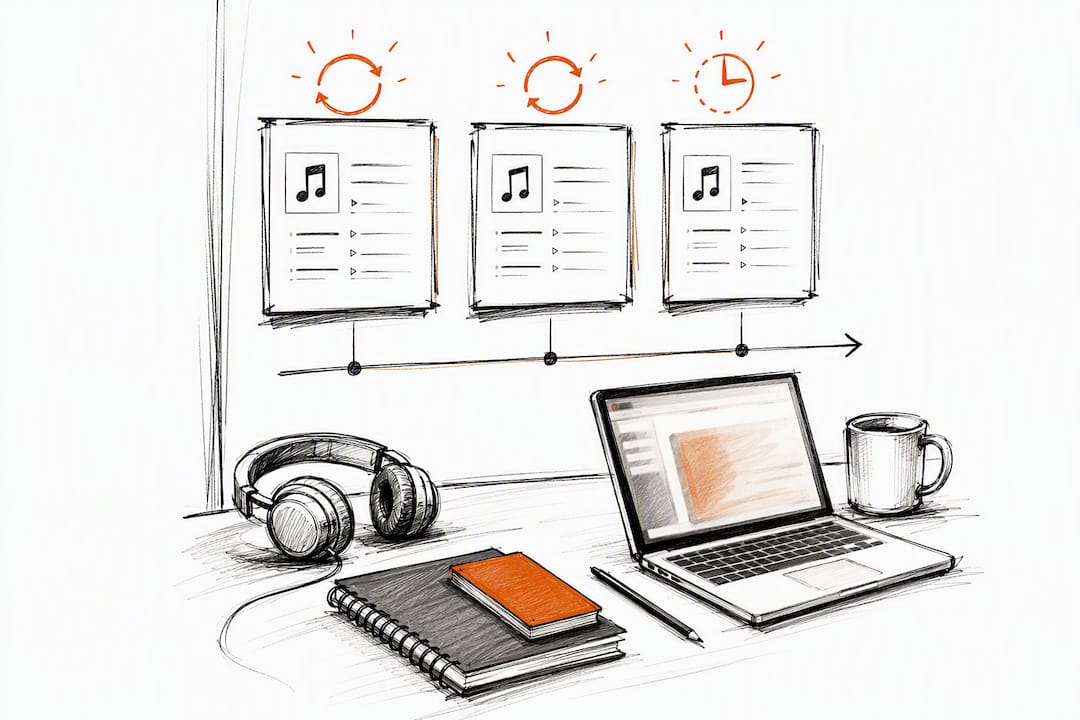
- Six to three weeks out: Clean up metadata, genre tags, and artist bio. Build a curator list matched to your actual sound, not your aspirational one. Prepare a short, specific pitch, not a generic one-size-fits-all blast.
- Launch window, days zero to seven: Coordinate placements to land close together so signals concentrate rather than trickle. Watch saves and skip rate daily in Spotify for Artists.
- Two to eight weeks post-launch: Re-pitch strong performers to slightly larger playlists in the same niche. Pull your save rate and skip data to see which curator audiences actually converted, then target similar playlists next time.
Pro Tip: If a “placement” produces a stream spike with almost no saves and no follower growth, treat that as a red flag. Legitimate curators generate real, if modest, engagement. A dead-silent spike usually means bot traffic or a fake playlist, not an audience.
Why a Curator-Led Approach Fits This Engagement-First Strategy
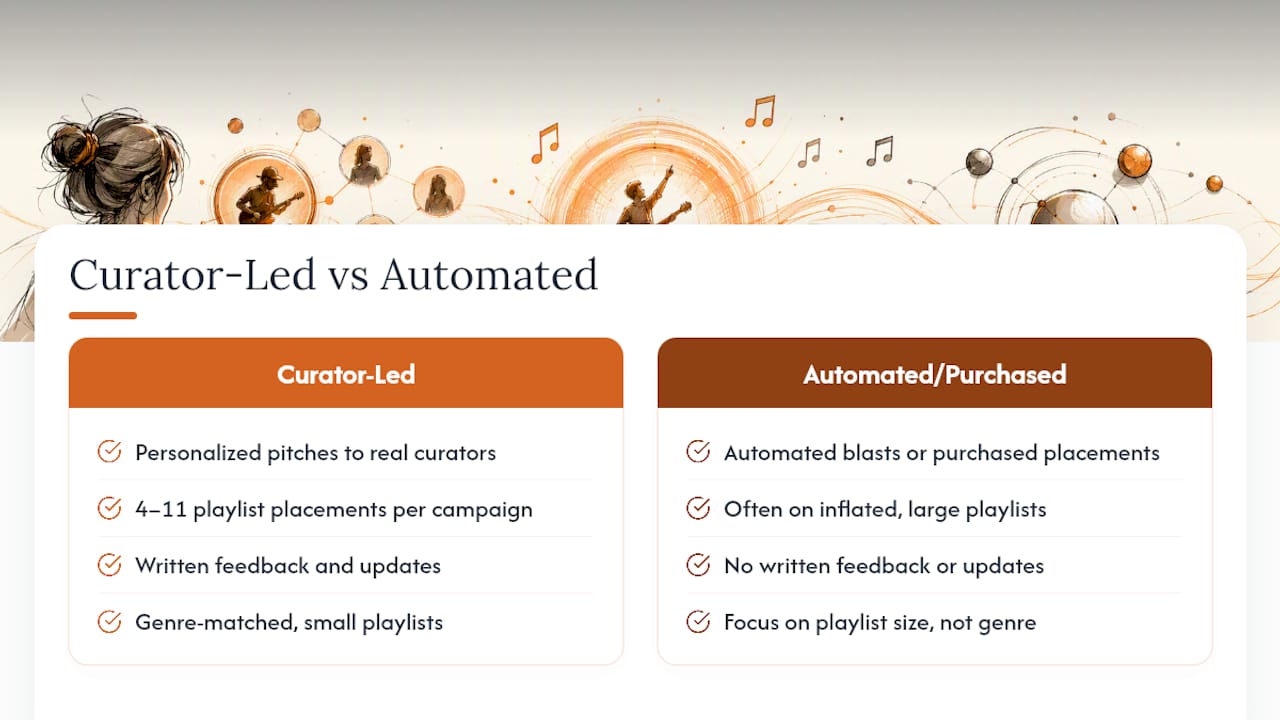
Intonality builds campaigns around personalized pitches to real, genre-matched curators rather than automated blasts or purchased placements on inflated playlists. Every submission gets written feedback and real-time updates on curator decisions, so you see exactly which playlists said yes, which passed, and why. Campaigns average 4 to 11 playlist placements depending on tier, concentrated in playlists chosen for genre fit rather than raw size. That structure directly supports the small-playlist strategy: fewer, better-matched placements tend to produce the save rates and low skip rates that Spotify’s system actually rewards, and the written feedback gives you a way to audit whether a placement is real before you count on it.
What I’d Test Before Spending Your Full Budget
Run one release with most of your budget on small, tightly matched playlists and hold back a small slice for a single bigger swing. Watch saves and skip rate, not stream totals, for the first two weeks. Whatever converts best tells you exactly where to put the next campaign’s budget.
— Einars
Submit Your Track to Real Curators Who Match Your Sound
If the small-playlist strategy makes sense for your next release, the harder part is finding curators who genuinely run playlists in your genre and will give you honest feedback either way. Intonality pitches your track directly to vetted, genre-matched curators instead of running it through automated systems or paying for placement on inflated playlists nobody listens to.
You get real-time updates as curators respond, written feedback on every decision (yes or no), and the option to submit before release day so placements can go live on launch. Campaigns run on tiers that average 4 to 11 placements, and every placement is traceable, so you can check saves and skip rate in Spotify for Artists and confirm the engagement is real. When a campaign wraps, cross-reference the results against your Spotify for Artists dashboard before deciding where to spend next. Submit your track and see which curators respond to your sound.
Sources
- Adding that extra ‘you’ to your discovery: Oskar Stål, Spotify Vice President of Personalization, explains how it works
- Humans + machines: a look behind the playlists powered by Spotify’s algotorial technology
- Pitching strategy for niche playlists and key metrics
FAQ
Are Small Playlists Really Better Than Big Ones?
For most independent artists, yes. Small, genre-matched playlists tend to produce higher save rates and lower skip rates, and those engagement signals carry more weight in Spotify’s recommendation system than raw follower counts.
How Many Small Playlist Placements Should I Aim For?
There’s no universal number, but campaigns built around genre-matched curator pitching, like those Intonality runs, average 4 to 11 placements depending on the service tier.
Can a Big Playlist Placement Hurt My Track’s Algorithm Performance?
It can if the placement produces high skip rates and few saves, since those weak signals may work against a track’s chances of further algorithmic pickup rather than help it.
What’s a Good Skip Rate to Aim For After a Placement?
Aim for a skip rate under 40 percent in the first week after any playlist add. Anything higher usually signals a genre mismatch or a low-quality audience, regardless of the playlist’s size.
How Do I Know If a Playlist Placement Is Fake?
Check for a stream spike with almost no saves and no follower growth. Legitimate curators, especially those vetted through services that provide written feedback on each decision, tend to generate real, verifiable engagement.