

A vetted Spotify curator runs a real, human-managed playlist with a transparent, coherent audience and a visible update history. Before you pitch anyone, run a short vetting check on the curator’s identity, playlist activity, and engagement, and prepare a minimal pitch pack. If anyone promises guaranteed placements or guaranteed streams, stop. That offer is not a shortcut. It is a warning sign.
TL;DR:
- Genuine, human-managed playlists with transparent activity are the most reliable targets, but require careful vetting of curator identity and engagement.
- Avoid any offers promising guaranteed streams or placements, as these are signs of scam services relying on bots or payola rather than real curators.
- Most successful placements come from independent curators with genre-specific lanes, consistent update habits, and real followings, rather than big-scale or anonymous playlists.
- A quick vetting process should include checking playlist coherence, curator identity, update frequency, and source-of-streams data after landing a placement.
- Long-term artist growth depends on building relationships with real curators, running patient campaigns over weeks, and tracking genuine engagement metrics rather than stream count alone.
Table of Contents
- Types of Spotify Curators: Editorial, Personalized, and Independent
- The 5 to 10 Minute Vetting Checklist
- What to Send: The Pitch Pack Curators Actually Open
- Red Flags: Promises That Mean Don’t Send Your Track
- How to Tell If a Placement Actually Worked
- How Manual Vetted Pitching Actually Performs
- Realistic Timelines and What to Do Next
- Start a Vetted Curator Campaign With Intonality
- Sources
- FAQ
Types of Spotify Curators: Editorial, Personalized, and Independent
Not every playlist on Spotify comes from the same kind of curator, and knowing which one you’re dealing with changes your entire approach.
Editorial playlists are built by Spotify’s own staff, organized through what the company calls Global Curation Groups, and guided by an editorial philosophy that keeps them separate from pay-for-placement deals. Spotify’s global head of editorial has described this as a mix of human judgment and algorithmic support, not one replacing the other. You reach these curators exclusively through Spotify for Artists, by submitting an unreleased track at least a week ahead. There’s no email inbox to pitch here, and no legitimate service can buy you a spot on Rap Caviar or Fresh Finds.
Personalized playlists, like Discover Weekly or Release Radar, are generated algorithmically for each listener based on their habits. You can’t pitch these directly. They respond to streaming behavior, not outreach.
Listener and independent curators run the playlists most artists actually have a shot at: real people, often with a specific genre lane and a real audience, managing their playlist as a hobby or side hustle.
- Editorial gets you visibility and prestige, but the bar is extremely high and mostly reserved for tracks already gaining traction.
- Independent curators are where relationship-building and discovery genuinely happen for emerging artists.
- Personalized playlists are the reward for strong performance elsewhere, not a pitch target.
The 5 to 10 Minute Vetting Checklist
Run through these checks before you send a single pitch. The Dynamoi vetting framework makes clear this isn’t about how big a playlist is. It’s about whether the curator is real, consistent, and running an active lane.
- Check lane coherence. Open the playlist and scan the tracklist. If it’s supposed to be indie folk but half the songs are trap beats, that’s a curator with no real editorial focus, or a bot-filled shell.
- Confirm curator identity. Look for a real name, a bio, linked social accounts, or a contact method beyond a generic form. Anonymous playlists with no trace of a human behind them are a bad sign.
- Study update behavior. Does the playlist add and remove tracks on a regular cadence, or has it sat frozen for six months with the same 40 songs?
- Read engagement signals. Compare follower count to typical streams per track. A playlist with 50,000 followers but each song showing 200 streams is hollow.
- Watch the submission language. Real curators say “for consideration.” Scammers say “guaranteed.” That single word difference tells you almost everything.
- Verify after placement. Once you land a spot, check Spotify for Artists for source-of-streams data to confirm the traffic is actually coming from that playlist.
Pro Tip: Save your vetting notes in a simple spreadsheet, one row per curator. Six months from now, when a curator you liked has gone quiet or changed direction, you’ll have a record instead of a guess.
What to Send: The Pitch Pack Curators Actually Open
Curators sift through dozens of submissions a day. A clean, short pitch gets read; a bloated one gets deleted.
Send exactly this, and nothing more:
- A working Spotify URI or share link as your primary listening option, plus a backup link (SoundCloud or a private stream) in case the first breaks.
- The release date and time zone if the track isn’t out yet, since most curators want pre-release exclusivity.
- Clean metadata: correct artist name, title, and genre tags that match how the playlist is actually organized.
- Two or three comps in the “sounds like” format (RIYL: Phoebe Bridgers, Big Thief) alongside one sentence of context about the song.
- A tight subject line: editorial-style curators respond better to something factual (“New single, indie folk, out March 6”), while independent curators often prefer a touch more personality.
Skip multi-track packages, oversized attachments, and hyperbolic language like “this will blow up” or “guaranteed hit.” One clean sentence with a working link beats a paragraph of hype almost every time, a pattern consistent with how manual pitching services describe curator response rates. If you want a full walkthrough of formatting a submission end to end, Intonality’s guide to submitting to Spotify playlists breaks down the process by curator type.
Red Flags: Promises That Mean Don’t Send Your Track
Certain phrases and behaviors should end a conversation immediately, no matter how good the pitch deck looks.
“Guaranteed placements” and “guaranteed streams” are the two biggest red flags in the entire industry. Legitimate curators can’t guarantee anything, because a real human is making a subjective call about whether your song fits their playlist. Services promising a guarantee are almost always relying on bots, click farms, or payola arrangements, and industry warnings about padded playlists point to the same pattern again and again.
Other warning signs to watch for:
- Playlists with genre whiplash, jumping from lo-fi hip hop to metalcore with no throughline.
- A curator roster that suddenly balloons or shrinks by hundreds of tracks overnight.
- Vague or missing reporting after you pay, with no specifics about which playlist your track landed on.
Artificial streaming doesn’t just waste your money. It can distort your own Spotify for Artists data and flag your account for unnatural activity. If something feels off, stop the campaign, screenshot everything, and research the curator’s other claimed placements before sending another dollar.
How to Tell If a Placement Actually Worked
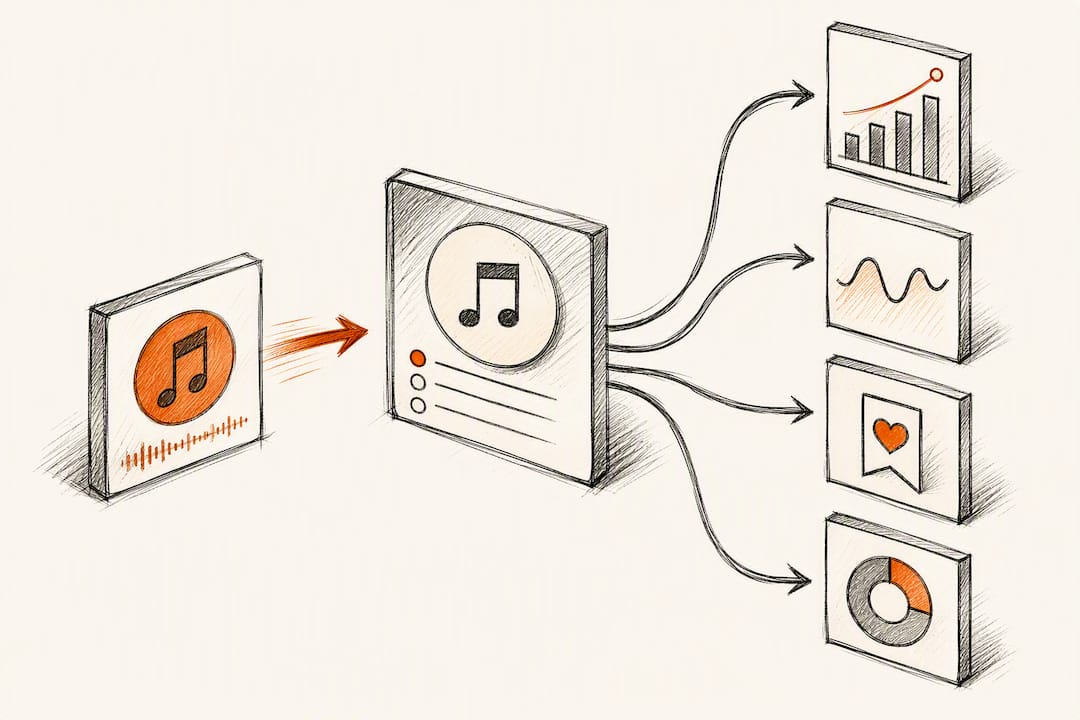
A stream spike alone tells you almost nothing. What matters is what happens around it.
Open Spotify for Artists and check the source-of-streams breakdown for the playlist in question. Real value shows up as spillover: new profile saves, a small bump in followers, and the track getting picked up by other independent curators without you pitching them. Dynamoi’s research on post-placement behavior notes that a genuine add tends to produce saves and follower growth over the following days, while a lone spike with no saves usually signals low-intent or artificial traffic.
- Track average listen time and repeat plays, since both point to real listener interest rather than a passive skip.
- Watch listener geography for consistency with the playlist’s stated audience.
- If the numbers look suspicious, gather your data and reach back out to the curator before assuming the worst.
How Manual Vetted Pitching Actually Performs
Automated blast tools and pay-for-play services promise scale. What they can’t offer is judgment, and judgment is what actually gets a song placed on a playlist that fits it.
Intonality builds every campaign around personalized pitches to real, genre-matched curators instead of automated systems or fake playlists, and every curator decision comes back with real-time updates and written feedback, so you know exactly why a track was accepted or passed on. Campaign outcomes vary by tier, but artists typically see between 4 and 11 playlist placements per campaign, depending on which service level they choose.
- No blind submissions into a void. Every response, accepted or declined, comes with a written reason.
- No guessing about performance. Real-time dashboard updates track what’s happening as it happens.
- No guaranteed-stream gimmicks. Placements come from curator judgment, not bot traffic.
For a closer look at how curator feedback can shape your next release, Intonality’s algorithm-focused breakdown explains how placements can ripple into other discovery surfaces.
Realistic Timelines and What to Do Next
Most emerging artists should expect a campaign to run several weeks, not days, and a handful of quality placements beats a hundred low-value ones every time. Curator relationships compound: a curator who trusts your taste after one good placement is far more likely to add your next single without a full re-pitch, which is worth more long term than any mass-blast approach.
If you take one thing from this article, make it this: pick one curator today, run the vetting checklist on their playlist, and draft a pitch pack before you touch a second name. Track whatever placement follows against real Spotify for Artists data, not just a stream count. That habit, repeated over a few releases, is what separates artists who build an audience from artists who just buy noise.
— Einars
Start a Vetted Curator Campaign With Intonality
Intonality is the alternative to blind mass-submission tools and pay-for-play services: every pitch goes to a real, genre-matched curator by hand, and every response comes back with written feedback so you actually learn something from a decline. Campaigns are built around Starter, Standard, Pro, and Max tiers, with placements and reasoning tracked transparently instead of buried in a vague report.
You can browse example curator profiles like amplaylists or Music of Your Mood to see the kind of lane-matching this article recommends in practice, or check a rock-focused option like RockRecords. If you want a real-world look at how a curated playlist campaign runs from pitch to placement, Intonality’s blog covers case-style breakdowns worth reading before your next release. Ready to see what a manually vetted campaign looks like for your genre? Start a campaign on Intonality and get matched with curators who actually fit your sound.
Sources
- Spotify’s Global Editorial Head on AI DJ, Playlists, Gen Alpha & More
- Spotify Playlist Curators: Find, Vet, and Pitch Safely
- Spotify Playlist Pitching Service | NotNoise
FAQ
Do Spotify curators get paid?
Legitimate independent curators are not supposed to charge for placement, and Spotify’s own editorial staff never accept payment for a spot on an official playlist. Some independent curators do run paid submission review services, but that fee covers a listen and consideration, not a guaranteed add.
Who are the best curators on Spotify?
There’s no single ranked list, since quality depends on whether a curator’s lane, audience, and update habits genuinely match your genre. The strongest approach is vetting curators individually for lane coherence and real engagement rather than chasing a name because it has the biggest follower count.
How many Spotify streams do you need to make $1,000?
Spotify payouts vary widely by market, listener type, and distributor deal, so there’s no fixed universal number. What matters more for emerging artists is building a real listener base through vetted placements, since genuine engagement (saves, follows, repeat listens) drives long-term earnings far more than a short-lived stream spike.
Why are people ditching Spotify?
Some artists and listeners have raised concerns over royalty rates and the platform’s handling of AI-generated content, but Spotify remains the dominant discovery platform for independent musicians. For most emerging artists, the more urgent issue than platform loyalty is avoiding wasted promotion spend on fake playlists or bot-driven streams.
What does Intonality charge for a vetted curator campaign?
Intonality offers multiple campaign tiers, and current pricing for each is available directly on the Intonality site. Placement outcomes vary depending on the tier selected.


